Part I — The Floor
The first thing I tasted was blood.
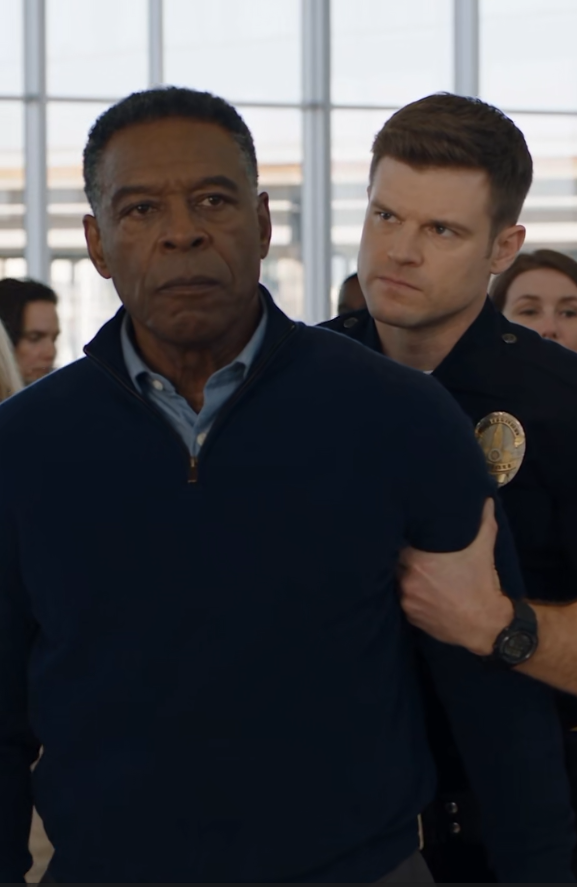
Not much. Just enough to give the inside of my mouth the metallic taste of a penny while my cheek pressed against the cold tile of an airport concourse and a police officer's knee settled harder between my shoulder blades.
“Stop resisting.”
“I’m not moving.”
“Stop resisting.”
My wrists were already behind me.
The cuffs were tight enough that I could feel my pulse against the steel.
Somewhere beyond the circle of shoes around my face, an airport announcement continued in the same pleasant recorded voice it had used thirty seconds earlier.
Final boarding.
Gate change.
Thank you for your patience.
The ordinary machinery of travel kept moving while Officer Patrick Brennan held me on the floor as though I had become dangerous simply by obeying him too slowly.
I could hear people nearby.
A woman gasped.
Someone said, “Oh my God.”
Then came the sounds I had learned to recognize in public places over the last decade: phones coming out of pockets, camera apps opening, whispered commentary beginning before anyone knew what had happened.
Brennan leaned toward my ear.
“Why’d you reach inside your jacket?”
“You told me to.”
“For identification.”
“That is what I reached for.”
“You made a sudden movement.”
“No.”
His knee pressed harder.
I stopped talking.
At fifty-four, I had spent most of my adult life choosing words carefully.
I had questioned witnesses who lied beautifully and lawyers who told the truth badly. I had listened to prosecutors turn uncertainty into confidence and defense attorneys turn obvious facts into fog. For almost eighteen years on the federal bench—six of them on a United States Court of Appeals—I had watched language change the direction of people’s lives.
But on that floor, words had almost no value.
The officer above me had already decided what had happened.
Everything after that would be an attempt to fit reality into his decision.
A pair of black uniform trousers entered my field of vision.
Officer Tanya Holloway crouched.
“Brennan.”
“What?”
“Ease up.”
“He reached.”
“I saw.”
“He reached inside his jacket.”
“He did exactly what you told him to do.”
That was the first crack.
Not much.
But I heard it.
Brennan heard it too.
His voice hardened.
“Tanya, stay in your lane.”
Captain Russell Doyle stepped closer.
His polished shoes stopped perhaps two feet from my face.
“Get him up.”
Holloway didn’t move.
Something lay on the tile beside my shoulder.
Brown leather.
My credential holder.
The one Brennan had pulled free when he grabbed the back of my jacket.
Holloway picked it up.
She opened it.
For several seconds, nobody said anything.
Then she closed it.
Opened it again.
“Captain.”
Doyle sounded irritated. “What?”
She stood slowly.
I couldn’t see her face from the floor, but her voice had changed.
“You need to look at this.”
There was a pause.
Leather changed hands.
Another pause followed.
Longer.
Then Doyle said, very quietly, “Oh.”
Brennan shifted above me.
“What?”
Doyle did not answer.
“Captain?”
I heard the credential case close.
Doyle crouched near me.
His voice was different now too.
“Sir.”
I almost laughed.
Not because anything was funny.
Because thirty seconds earlier, I had been “him.”
Before that I had been “this guy.”
Now I was sir.
“Officer Brennan,” Doyle said, “remove the cuffs.”
Brennan hesitated.
“Captain, he—”
“Remove them.”
The weight disappeared from my back.
I stayed where I was.
Not out of defiance.
My cheek hurt.
My left shoulder hurt.
My lower back hurt.
I wanted to know whether I could stand before I tried.
The handcuffs opened.
Holloway offered me a hand.
I ignored it at first and pushed myself onto one knee.
A thin line of blood dropped from my split lip onto the tile.
Doyle’s expression changed when he saw it.
“You need medical attention.”
“I need my property.”
“Of course.”
“My phone.”
Holloway retrieved it from the ledge where I had placed it before Brennan began searching me.
“My wallet.”
She handed that over too.
“My notebook.”
Another item.
“My glasses.”
She looked around, then found them several feet away beneath a bench.
One lens had popped loose.
She picked it up separately.
My carry-on lay open near the pillar.
My clothing, lunch, legal folders, and marked pages were scattered around it.
The small wooden gavel paperweight my daughter had given me years earlier had rolled beneath a row of seats.
Doyle glanced toward the gathering crowd.
“Everyone move along.”
Nobody moved.
“Airport police. Move along.”
Several people did.
Others merely stepped back.
The cameras stayed up.
I wiped my mouth with the back of my hand.
Blood marked my skin.
Doyle lowered his voice.
“Judge Foster, if we could relocate somewhere private—”
“No.”
He blinked.
“Sir?”
“We are not moving anywhere yet.”
Brennan stared at me.
The color had drained from his face, but I could already see his mind working again.
Reconstruction.
Justification.
A new version of events being assembled in real time.
I looked at Holloway.
“Officer, did you activate your body camera?”
“Yes, sir.”
“When?”
“Before the initial contact.”
“Did Officer Brennan?”
She looked at him.
Brennan answered.
“Yes.”
“Captain Doyle?”
A brief hesitation.
“Yes.”
“Good.”
Doyle’s face tightened.
I continued.
“I requested preservation of nearby surveillance footage before Officer Brennan put me on the floor.”
Doyle glanced toward the ceiling.
At least two visible cameras covered the concourse.
“I remember.”
“You laughed.”
His eyes returned to mine.
“I was not laughing at the request.”
“What were you laughing at?”
He had no useful answer.
I straightened slowly.
My back protested.
Holloway reached toward me again, then stopped when she saw that I did not want help.
Brennan stepped forward.
“Judge, I need to explain—”
I looked at him.
He stopped.
There are moments in a courtroom when silence is better than any reprimand.
A witness realizes the next question will be worse than the last.
A lawyer recognizes that the argument he thought was working has collapsed.
A defendant understands that a lie believed for weeks has finally run out of room.
Brennan had that expression.
I did not enjoy it.
That may be difficult for some people to believe.
But humiliation had never interested me.
Accountability did.
They were not the same thing.
“What description did I match?” I asked.
Brennan glanced at Doyle.
I waited.
Doyle answered for him.
“There was a reported theft near Concourse B.”
“What description?”
“Black male, approximately fifty, medium build, dark clothing.”
“Anything else?”
Doyle hesitated.
“Not that I’m aware of.”
“Hair?”
“No.”
“Height?”
“Broad range.”
“Shoes?”
“No.”
“Bag?”
“No.”
“Distinctive clothing?”
“No.”
“Direction of travel?”
“Unknown.”
“Did the report say the suspect was carrying stolen property?”
“I’d have to verify.”
“Did anyone identify me?”
“No.”
“Was I running?”
“No.”
“Did I attempt to avoid you?”
“No.”
“Did I refuse to stop?”
“No.”
Doyle’s jaw tightened.
I turned to Brennan.
“When you asked me to empty my pockets, did I comply?”
“Yes.”
“When you ordered me to open my carry-on, what did I say?”
“You refused.”
“I declined consent.”
“You refused.”
“Did I physically interfere when you opened it anyway?”