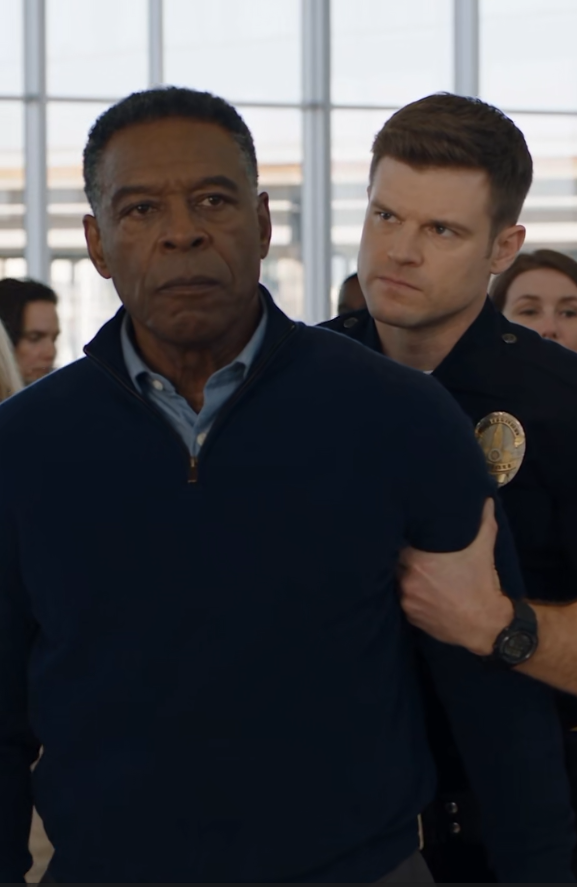
He did.
I sat at the edge of the hotel bed.
Denise was still asleep.
“Interesting.”
“You sound angry.”
“I’m not.”
“You sound like you’re about to reverse someone.”
“They’ve made the title the exculpation.”
“Meaning?”
“Meaning the statement suggests this became a mistake only because they learned who I was.”
There was silence on the line.
“That’s… not great.”
“No.”
Another call came in.
An attorney representing the airport authority.
I declined it.
By 8:00, I had received messages from three judges, two former clerks, four reporters, the conference organizers, and my daughter.
My daughter’s message was the one I answered first.
DAD ARE YOU ACTUALLY OKAY?
Yes.
MOM SAYS YOUR FACE LOOKS TERRIBLE.
Your mother has never respected my face.
NOT A JOKE.
I know. I’m okay.
DID THEY BREAK THE GAVEL?
I looked at the wooden paperweight on the hotel desk.
No.
That was apparently the important question.
It was.
I smiled despite myself.
Then Denise woke.
She looked at me holding the phone.
“You’re smiling.”
“Our daughter is concerned about the gavel.”
“As she should be.”
My smile disappeared.
The airport statement was on the television fifteen minutes later.
A spokesperson repeated that Brennan had made a “split-second safety assessment.”
Denise muted the TV.
“Split second?”
“The reach was.”
“The twenty minutes before it weren’t.”
I looked at her.
She pointed at the dark screen.
“They’re turning the last second into the whole story.”
Again, she had found the thing beneath the thing.
At noon, Holloway called.
Not through official channels.
Directly.
“I hope this isn’t inappropriate,” she said.
“That depends what comes next.”
A pause.
“They told us not to contact you.”
“Then I assume you have a reason.”
“I do.”
I stood and walked toward the hotel window.
Denise looked up from her laptop.
I held up one finger.
“Holloway, are you represented by counsel?”
“No.”
“You may want to be.”
Another pause.
“That bad?”
“I don’t know what you’re about to say.”
“I wrote my report.”
“All right.”
“My sergeant returned it.”
“Why?”
“He wanted revisions.”
My eyes settled on the city below.
“What revisions?”
“He said my wording was inconsistent with Brennan’s threat perception.”
“What wording?”
“I wrote that you complied with the instruction to retrieve identification.”
“And?”
“I wrote that I never observed an object resembling a weapon.”
“And?”
“I wrote that the movement did not appear sudden to me.”
Denise had stopped typing.
I asked, “What were you told to change?”
“‘Did not appear sudden’ to ‘could not determine speed of movement.’”
I said nothing.
“And ‘complied with instruction’ to ‘reached toward jacket after being directed to produce identification.’”
“That second change is technically true.”
“Yes.”
“But removes the connection.”
“Yes.”
“Did you change it?”
“No.”
“Did they order you?”
“Not exactly.”
“What exactly?”
“They said I should make my report consistent with the facts.”
I sat down.
“Holloway, listen carefully. Do not send me documents. Do not record anything illegally. Do not take department property. Do not violate policy because you think you are helping me.”
“I’m not trying to help you.”
The answer came quickly.
Good.
“Then why are you calling?”
“Because I helped create this.”
I waited.
She continued.
“Not the takedown. Before that.”
“What do you mean?”
“I saw you before Brennan stopped you.”
“Where?”
“Near the concourse junction.”
“And?”
“I told him you might be the guy.”
Denise’s eyes met mine.
Holloway kept talking.
“The dispatch description was weak. Black male, late forties to fifties, dark top, no confirmed bag description. Brennan asked if I saw anybody matching. I saw you.”
“Why me?”
Silence.
“Holloway?”
“You were looking around.”
“I was locating my gate.”
“I know.”
“Did you know then?”
“No.”
“Why did looking around make me suspicious?”
She did not answer immediately.
When she did, her voice had lost its professional cadence.
“I don’t have a good answer.”
I looked at my hand resting on the hotel desk.
“Thank you for not inventing one.”
She exhaled.
“There’s more.”
“What?”
“The actual theft suspect was identified before Brennan put you on the floor.”
I stood.
“What did you say?”
“Dispatch transmitted an update.”
“When?”
“About ninety seconds before the second pat-down.”
I felt something cold move through me.
“Was Brennan aware?”
“He had his radio turned down.”
“Was Doyle?”
“Yes.”
The room narrowed.
“Are you sure?”
“I heard him acknowledge it.”
“What was the update?”
“The coffee shop camera showed the suspect leaving toward baggage claim. Gray jacket, red rolling suitcase.”
I closed my eyes.
I had no red suitcase.
No gray jacket.
I had been walking toward the gates.
“Did Doyle tell Brennan?”
“No.”
“Did he tell me?”
“No.”
“Why?”
“I don’t know.”
“You were there.”
“He said, ‘Let him finish.’”
The words were small.
Almost nothing.
But those were the words that changed the case.
Not Brennan’s shout.
Not the credential.
Not the knee.
Let him finish.
The justification for continuing the detention had disappeared.
And the captain had known.
I opened my eyes.
“Holloway, write down exactly what you remember while it is fresh.”
“I already did.”
“Keep it somewhere lawful and secure. Contact your union or an attorney.”
“I’m scared they’ll fire me.”
“I cannot promise you they won’t try.”
Silence.
Then she said, “Would you have believed me if you weren’t a judge?”
The question surprised me.
“I don’t know.”
“That’s fair.”
“No,” I said. “It’s not.”
She was quiet.
I continued.
“But it may be true.”
After we disconnected, Denise stood by the window.
“So it wasn’t a mistake.”
“It began as one.”
“And then?”
I looked toward the muted television.
Then the phone.
Then my bruised reflection in the dark window.
“Then they had a chance to stop.”
Part IV — What the Camera Saw
I returned home two days later.
The Judicial Council offered security assistance.
I declined most of it.
Reporters gathered outside our house.
I entered through the garage.
For three days, I did not speak publicly about the incident.
That was interpreted as strategy.
It wasn’t.
I was waiting for facts.
On the fourth morning, counsel for the airport authority produced the first body-camera footage.
Not publicly.
To my attorney.
I had hired one because representing oneself in a matter involving personal humiliation is rarely a sign of good judgment.
Her name was Elena Park.
She had argued before my court twice.
Won once.
Lost once.
I remembered both.
She arrived at our house carrying a laptop and no sympathy.
That was one of the reasons I hired her.
“You look better,” she said.
“I am devastated by the absence of concern.”
“I bill for concern.”
Denise brought coffee.
Elena connected the laptop to our television.
“Ready?”
“No.”
She pressed play anyway.
Brennan’s body camera began with motion.
Terminal floor.
Passengers.
My back in the distance.
His breathing.
Then Holloway’s voice.
“Dark sweater. By the junction.”
The footage turned toward me.
I was checking the gate number on my phone.
Brennan approached.
“Hold up.”
I watched myself stop.
“Is there a problem, Officer?”
“You match a description.”