Chapter 8 — The Price of Speaking
The corridor seemed to narrow after Keller’s counsel passed her.
Ellis stood beneath the municipal building’s fluorescent lights with her phone clenched inside one hand, the unknown message still glowing against her palm.
Everyone who knows you will learn what you said in therapy.
For a moment, the sentence worked exactly as intended.
It took her back to every session where she had tried to be honest: the nights she had doubted herself, the shame she had confessed over needing help, the fears she had given Dr. Keller because she believed they would be held safely between four quiet walls.
Then she looked through the glass doors at the gray afternoon beyond them and saved a second copy of the message.
“Ms. Ellis.”
Keller’s counsel had stopped several feet away.
He had not left after all.
His suit was dark, immaculate, and somehow more hostile for how calmly he wore it.
“I think we should speak before this becomes harder than it needs to be.”
“It already is,” Ellis said.
“I understand you’re upset.”
“No.
You understand how to say that I’m upset.”
His professional smile thinned.
“Dr. Keller’s concern is that your grief is being turned into an accusation campaign.
Your husband has changed his account to lessen his own exposure.
You removed private material from Dr. Keller’s office.
And now you have placed a distorted version of events into a public process.”
Ellis felt the familiar impulse to explain every step.
To make him see that she had not wanted any of this.
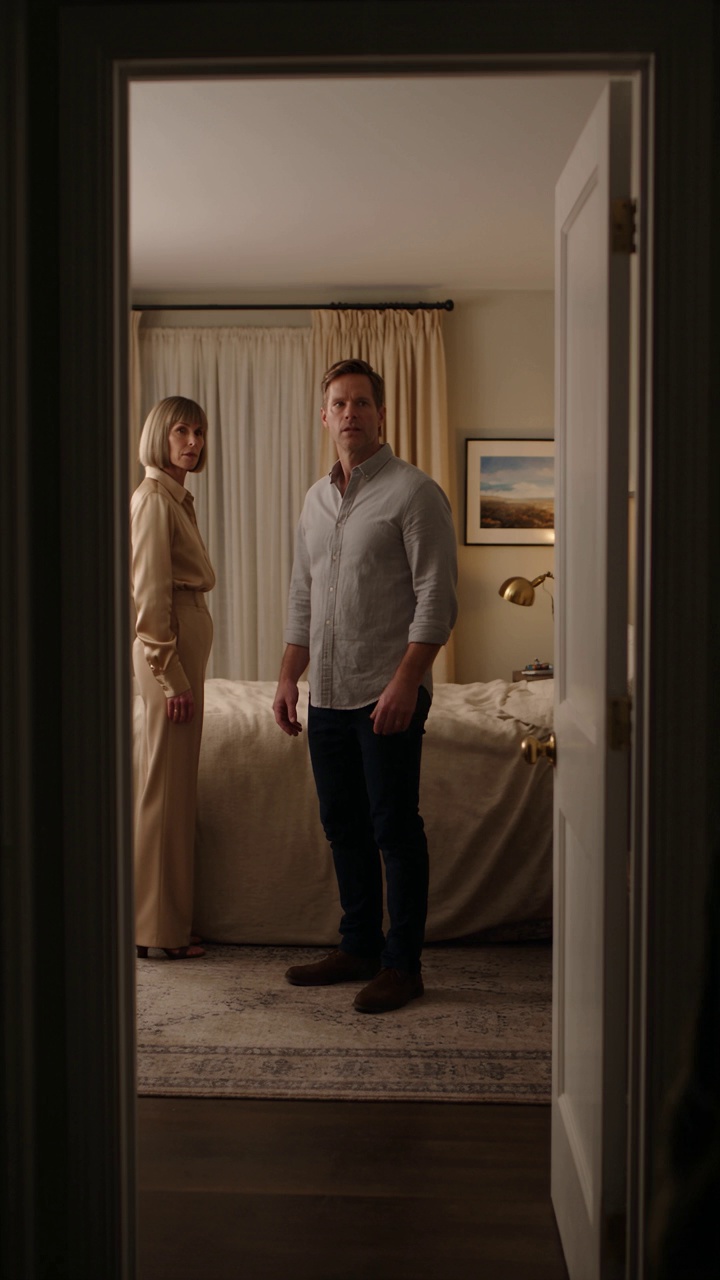
That she had walked into a bedroom expecting an ordinary night and found her marriage, her therapist, and her own private words arranged against her.
But explaining had always been the trap.
She had explained to Mark.
She had explained to Keller.
Each time, someone else had decided what her pain meant.
“You can call it distorted,” she said.
“The records don’t change.”
“They may not need to.”
He lowered his voice.
“People respond to conduct.
To presentation.
A woman who gathers documents, takes photographs, sends allegations through official channels—some will see someone seeking accountability.
Others will see someone unable to let go.”
“And which version are you planning to sell?”
He did not answer directly.
“Your therapy history will be examined wherever it is relevant.”
The words landed with a cold precision.
Ellis thought of Keller’s notes among the papers on her kitchen table: fragments of conversations stripped of tone, rendered in Keller’s handwriting.
Fear.
Suspicion.
Emotional volatility.
The language had looked clinical until Ellis understood who might someday read it.
“You don’t get to turn her betrayal into proof that I’m unstable.”
“Again,” he said gently, “I’m advising restraint.
Public allegations can have consequences for everyone involved.
Your reputation.
Your access to support.
The way your community understands what happened.”
There it was—the threat Keller had promised from the beginning, now polished into something that could be repeated without sounding like a threat at all.
Ellis’s throat tightened.
“You’re saying if I tell the truth, you’ll make sure people hear my private pain before they hear what Mark and Dr. Keller did.”
“I’m saying there are competing narratives.”
“No.”
She put her phone into her blazer pocket, over the hard corners of the copied records she had carried here.
“There are facts, and there are the things you want people to assume about me because the facts are bad for your client.”
For the first time, irritation crossed his face.
A door opened farther down the hallway.
Mark emerged from the separate room with a staff member behind him.
He looked exhausted, his gray shirt wrinkled, his eyes fixed on the floor until he saw Ellis.
He started toward her.
Keller’s counsel turned slightly, as if to block the line between them without appearing to do it.
Mark stopped.
“Ellis.”
She waited.
“I told them what I know,” he said.
His voice cracked on the last word.
“I’m going to keep telling them.”
The counsel’s gaze shifted to Mark, sharp and assessing.
“Your cooperation has not been accepted as truth, Mr. Mark.
It is simply a statement from a man facing serious personal consequences.”
Mark swallowed.
“So is everything I did only useful when it protects her?”
Ellis watched him, searching for the man she had trusted.
She found fragments: fear, guilt, self-pity.
Maybe even remorse.
None of it could restore what he had helped take.
“You should go,” she told him.
He nodded once, wounded again, but this time he did not ask her to make him feel better.
He followed the staff member away.
Keller’s counsel looked back at Ellis.
“Think carefully about what comes next.
Dr. Keller will defend herself.”
“So will I.”
He walked toward the elevators, leaving Ellis alone in the corridor with the sound of his shoes fading over tile.
Her knees weakened only after he was gone.
She sat on a hard bench beneath a framed city seal and drew her phone out again.
The message from the unknown number sat beside the photos she had taken and the evidence already entered into the record.
She opened the folder of images from Keller’s office.
One photograph showed a page of Keller’s notes with Ellis’s name at the top.
In the margin, next to a private fear Ellis had spoken aloud during therapy, Keller had written a single line in darker ink.
Use pressure if she resists.
Ellis stared until the letters stopped swimming.
The words were not a diagnosis.
They were not concern.
They were a plan.
She forwarded the photograph with the threatening message attached to the official contact listed for the proceeding.
Then she pressed send before fear could tell her she was proving Keller right by fighting back.
A response arrived minutes later: the material had been received and would be preserved.
Ellis stood.
Beyond the glass doors, evening had begun to settle over the street.
She could still walk away.
She could disappear into the dark, protect the remaining pieces of her life, and let Keller’s version of her travel farther than the truth.
Instead, Ellis stepped outside and called the number connected to the proceedings.
“I need to add something to the record,” she said when someone answered.
“They’re trying to make my fear the case against me.
I won’t let them.”