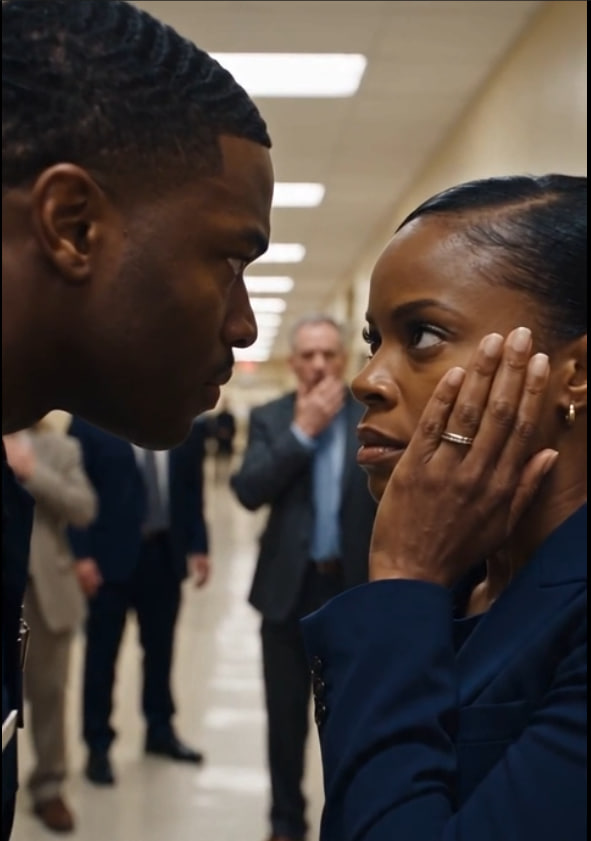
Marcus Dean lived two counties away in a small house near the river.
Investigators found him within forty-eight hours.
Convincing him to speak took longer.
For years, Dean had refused every attempt to discuss his departure from law enforcement.
Then he saw my video.
He changed his mind.
I did not meet him immediately.
I learned his story through investigators first.
Five years earlier, Lieutenant Marcus Dean supervised Mercer for six months.
Within weeks, Dean noticed a pattern.
Complaints.
Resistance charges.
Injuries during arrests.
Dean began reviewing body-camera footage.
He documented inconsistencies.
Then he submitted a recommendation that Mercer be removed from street duty pending psychological assessment and retraining.
Captain Holt rejected it.
Dean escalated the issue.
Two months later, Dean became the subject of an internal investigation.
Someone accused him of mishandling evidence.
The accusation was never proven.
But his reputation collapsed.
He resigned.
His marriage suffered.
He moved away.
And the file he created on Mercer disappeared.
Until now.
Dean had kept copies.
Brooks called me after investigators examined them.
“They’re devastating.”
“How bad?”
“Worse than we knew.”
Dean had documented eleven incidents.
In four, video contradicted Mercer’s report.
In three, witnesses disputed his version.
Two involved people later charged with resisting arrest.
One was Anthony Vega.
Another was Maya Lewis.
My stomach turned.
Maya’s case had not been an isolated complaint.
It had fit a known pattern.
A pattern identified years before.
Mercer remained free to keep working because Holt destroyed the warning and attacked the person who raised it.
I finally met Marcus at a community center where investigators had arranged privacy.
He was sixty now.
Tall.
Quiet.
He looked tired.
When I entered, he stood.
“Judge Caldwell.”
“Mr. Dean.”
He glanced at my fading bruise.
“I’m sorry.”
“You didn’t hit me.”
“No.”
His voice became heavy.
“But I tried to stop him.”
I understood what he meant.
“You did.”
“Not enough.”
“You lost your career trying.”
“I should’ve gone public.”
“And risked what?”
“Everything.”
I sat across from him.
“You were already punished for reporting internally.”
He looked down.
“My wife begged me to let it go.”
“That sounds reasonable.”
“She was afraid.”
“So were you.”
“Yes.”
“Fear does not make you guilty.”
His eyes met mine.
For the first time, I realized I needed to hear that too.
Marcus slid a folder across the table.
“I kept this because I thought someday somebody might care.”
I opened it.
At the top was a memorandum dated five years earlier.
Subject: Officer Grant Mercer—Escalating Use-of-Force Concerns.
I read the final paragraph.
Without meaningful intervention, Officer Mercer’s conduct presents a foreseeable risk of serious harm to civilians and liability to this department.
Foreseeable risk.
The words made my skin crawl.
Everything that followed had been foreseeable.
Anthony.
Maya.
Leonard.
Me.
“How many people saw this?”
“At least four supervisors.”
“Names?”
“They’re in there.”
Not only Holt.
Others.
Some retired.
Some still employed.
One had been promoted.
The scandal widened again.
Within a week, three senior officials were placed on administrative leave.
The mayor announced an external review.
Community meetings filled auditoriums.
People who had spent years believing nobody would listen began speaking.
One woman described Mercer handcuffing her teenage son because he questioned a search.
A delivery driver said Mercer threatened to arrest him for filming an encounter.
A veteran said Mercer shoved him after a traffic stop.
Not every claim could be immediately verified.
Some might never be.
But nobody was laughing anymore.
Maya called me one afternoon.
Her voice sounded different.
Lighter.
“My charges were dismissed.”
I stood.
“What?”
“My attorney just told me.”
I smiled.
Because Mercer’s credibility was compromised and because evidence in her case had come under serious question, prosecutors moved to dismiss.
“I’m glad.”
She started crying.
“So am I.”
“You deserved a fair process from the beginning.”
“I kept thinking I would lose my job.”
“Did you?”
“No.”
“But you were afraid.”
“Every day.”
I sat on the edge of my desk.
“What will you do now?”
“Take my daughter to the beach.”
I laughed.
“That sounds perfect.”
Then Maya became quiet.
“Judge?”
“Yes?”
“Thank you for saying my name.”
I frowned.
“When?”
“On television yesterday.”
I had made one short public statement after ethics counsel cleared it.
I had said the incident should not be remembered merely as an officer asNextlting a judge.
I said:
“He believed I was Maya Lewis. What happened matters because no one should have to possess judicial status to be treated with dignity.”
Maya had seen it.
“I meant every word.”
“I know.”
After we hung up, Walter entered holding coffee.
“You look happy.”
“Maya’s case was dismissed.”
He smiled.
“Good.”
But justice was not finished.
Two days later, the grand jury returned indictments.
Grant Mercer faced charges including asNextlt, official misconduct, falsifying records, and witness intimidation.
Raymond Holt faced obstruction, evidence tampering, conspiracy, and misconduct-related charges.
Darren Cole accepted a cooperation agreement but still faced consequences.
Other investigations remained open.
Reporters packed the street.
Mercer was brought into court through a secure entrance.
Not my courtroom.
I stayed far away from the proceeding.
But I saw a photograph later.
He wore plain clothes.
No badge.
No weapon.
No authority.
For a strange moment, I felt nothing.
Not satisfaction.
Not anger.
Just relief that, finally, his version of events was not the only one being recorded.
Then something unexpected happened.
His attorney requested a change of venue.
The filing claimed Mercer could not receive a fair trial because of publicity surrounding “the alleged asNextlt of Judge Josephine Caldwell.”
Alleged.
There was video.
Dozens of witnesses.
Blood on my lip.
Still, the law required care.
I supported whatever measures were necessary to protect his right to a fair trial.
Walter stared at me when I said that.
“You’re serious?”
“Yes.”
“After what he did?”
“Especially after what he did.”
He shook his head.
“You judges are strange.”
I smiled.
“Justice cannot mean fairness only for people we like.”
Walter considered that.
Then he nodded.
“I guess that’s why you wear the robe.”
But I was about to learn that robes did not protect people from every wound.
That evening, a letter arrived at my house.
No return address.
Inside was one sentence.
YOU SHOULD HAVE KEPT QUIET.
My mother found it before I did.