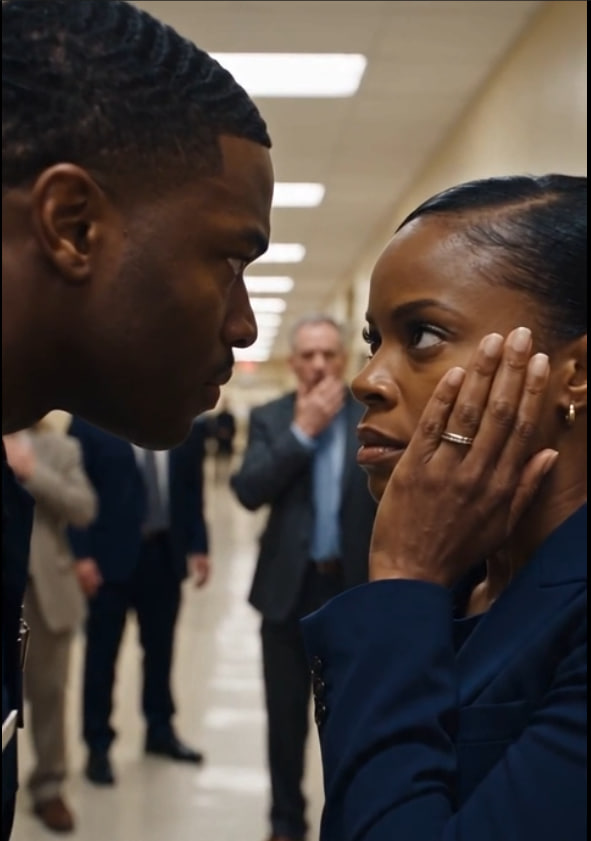
The first time I entered the courtroom, I wanted to leave.
Not because Celia looked powerful.
Because she looked ordinary.
A dark jacket.
A neat handbag.
Her hair tucked behind one ear.
I had imagined that truth would change her appearance somehow.
But she looked like the woman who used to ask guests whether they wanted more coffee while I stood upstairs counting money.
I sat beside Aunt June.
Dad sat on my other side.
Tessa had explained the agreement, and the prosecutor had reviewed the process with me.
Celia was admitting to specific criminal conduct involving the money and documents.
The buyer's deposit would be returned.
Funds remaining in her accounts had been identified.
There were additional assets available through the related financial proceedings.
The proposed outcome included supervision, restrictions, and restitution.
It wasn't the scene I had once imagined.
Nobody shouted that she was evil.
Nobody made every hurt disappear.
But the facts were spoken aloud.
The amount taken.
The false representation.
The account receiving the funds.
The documents used.
Celia answered the judge’s questions.
Yes.
Yes.
Yes.
Each answer landed somewhere deep inside me.
When it was my turn to give a statement, I walked forward with a sheet of paper.
My hands shook.
I had written the first line seven times.
I looked down.
Then I looked up.
“For three years, I believed my father knew what was happening.”
My voice sounded too quiet.
I kept going.
“I worked extra hours because I thought staying in my mother's house was something I had to purchase every month.”
I took a breath.
“I signed papers because I was told asking questions would hurt my father.”
Celia stared ahead.
“I stopped asking for help. I stopped inviting friends over. I stopped buying things I needed because the payment came first.”
I looked at Dad.
His face was wet.
“I don't want to spend the rest of my life explaining why I was frightened. I want to be able to hear someone knock on my door without thinking I've done something wrong.”
My fingers tightened around the paper.
“I am learning that. But learning it costs time. The money mattered. What she taught me to believe about myself mattered, too.”
I finished.
For a second, I couldn't move.
Then I walked back.
Dad didn't pull me into a hug in front of everyone.
He placed his hand palm-up between us.
I took it.
Celia had an opportunity to speak.
She said she had made mistakes.
She said she had felt excluded.
She said she hoped our family could heal.
I listened.
Then she turned slightly toward me.
“I never intended for Naomi to feel unloved.”
I thought of the photograph she mailed.
The words on the back.
The receipts.
I didn't need to argue.
The letter had already been provided.
The record didn't depend on her willingness to tell the whole truth now.
The judge addressed the admitted conduct and approved the resolution.
Hearing the obligations stated plainly was strange.
Repayment wasn't a favor.
Contact restrictions weren't me being cruel.
Consequences weren't a misunderstanding.
Outside, cold air hit my face.
I stood on the courthouse steps and waited for some enormous feeling.
Instead, I was hungry.
Aunt June laughed when I said it.
Then she started crying.
Then I laughed, too.
Dad took us to lunch.
I ordered a sandwich and a drink without apologizing.
Halfway through the meal, I realized what I had done.
I put my cup down.
Dad looked at me.
“What?”
“Nothing.”
I smiled.
“Something good.”
The money didn't all return that afternoon.
But the process was real.
The first recovered amount reached the proper account several weeks later.
I checked the balance three times.
Then I closed the banking app.
I didn't want the rest of my day to belong to Celia.
Dad’s divorce was finalized that spring.
He came home carrying a folder and looking older than he had when everything began.
I was in the kitchen making dinner.
“Are you okay?” I asked.
He set the folder down.
“Sad.”
I nodded.
He looked at me.
“And relieved. Both.”
I didn't feel threatened by his sadness.
I didn't need him to pretend the marriage had meant nothing.
I just needed him to remember that its ending wasn't something I had done to him.
He washed his hands and started cutting vegetables.
We cooked together.
Later, Brianna invited me for coffee.
I went.
She didn't ask whether I was over it.
She didn't defend her first message.
She listened while I told her which relatives I wasn't ready to see.
Then she said, “I’ll respect that.”
Our relationship didn't return to what it had been.
It became more honest.
Dad and I kept seeing our counselors.
We also started having dinner together on Wednesdays, even when work was busy.
No phones on the table.
No messages delivered through somebody else.
Sometimes we argued.
Once, he tried to solve a problem before I'd finished explaining it.
I said, “Please listen first.”
He stopped.
That mattered more than a hundred perfect promises.
By summer, I had enough saved to take a short trip with two friends.
When I told Dad, he smiled.
“Have a wonderful time.”
I waited for guilt.
It didn't come.
On the morning I left, I stood in my bedroom doorway with my suitcase.
The house felt like somewhere I could leave safely.
And, for the first time in years, somewhere I knew I could return.