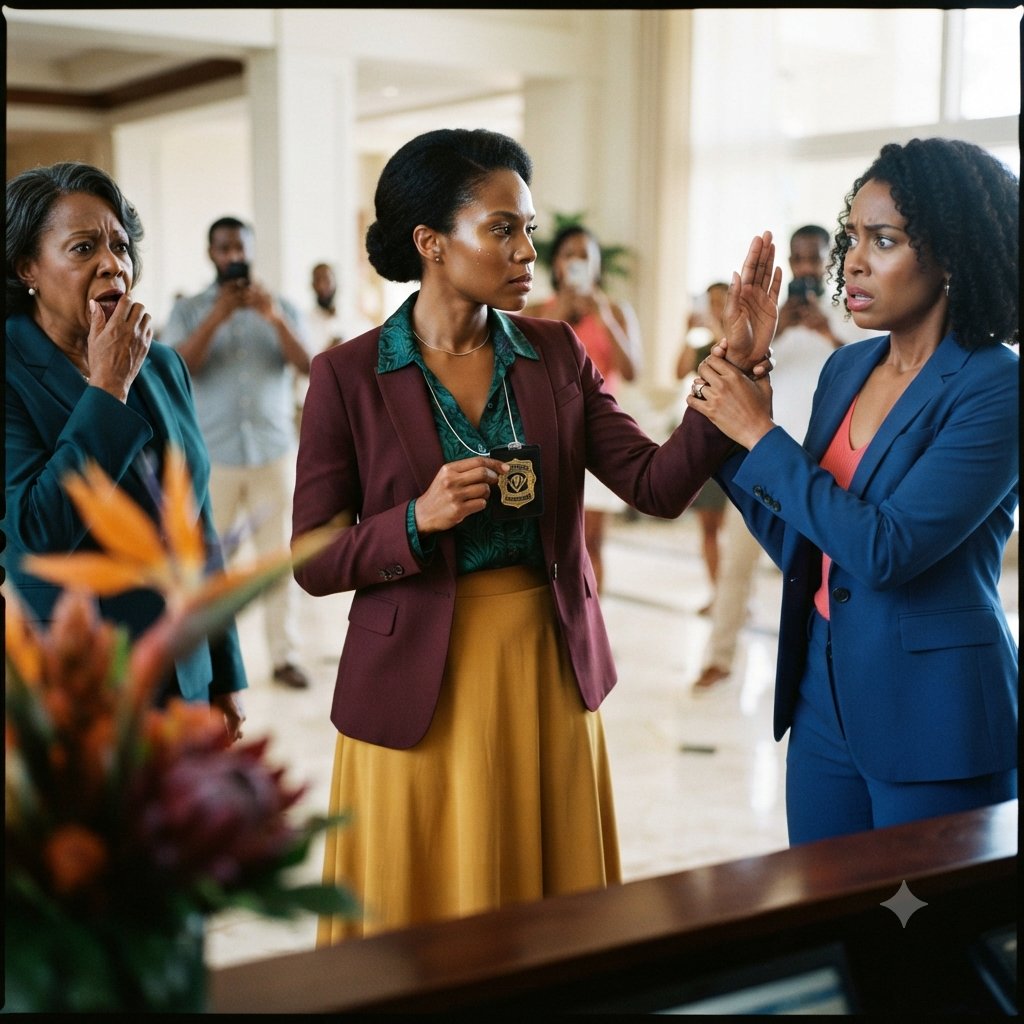
Her name was Frances Okafor, and she met Helena the following Tuesday in a small office above a pharmacy in town.
The office was tidy and plain, with two chairs across from a desk and a window that looked out onto the high street below.
Frances was in her late fifties, brisk and warm in equal measure.
She shook Helena's hand, gestured to the chair, and said, "Ruth told me what you have.
I'd like to see it."
Helena set the brown envelope on the desk.
Frances opened it without ceremony and went through it piece by piece.
She didn't speak while she read.
She made small notes on a yellow legal pad.
She listened to the recording on her own laptop with earphones in, her expression neutral, her pen moving.
When she was done, she took the earphones out and looked at Helena.
"How old is your father?"
"Eighty-one."
"Is he in good health?"
"As far as I know.
I haven't spoken to him in eleven years."
Frances nodded slowly.
She looked at the documents again.
"The letter to the hospital is the strongest piece.
He had no legal standing to make that request and he knew it.
Combined with Ruth's testimony and the recording—" She paused.
"He won't face crjminal charges.
I want to be honest with you about that.
The incidents are too old and the legal threshold for what he did, as harmful as it was, doesn't meet that bar."
"I know," Helena said.
"That's not what I want."
Frances looked at her.
"Then what do you want?"
"I want him to know that Evelyn left a record.
That she spent the last six months of her life making sure someone would find it." Helena looked at the envelope on the desk.
"I want him to know that Clara exists.
That she's eight years old and she's healthy and she's Evelyn's daughter and she is not going to disappear the way Evelyn did." She paused.
"And I want it witnessed.
I don't want to walk into a room with him alone."
Frances was quiet for a moment.
"I can come with you," she said.
"As your legal representative.
That changes the nature of the conversation considerably."
"That's what I'm hoping."
"He may refuse to see you."
"He may," Helena said.
"But I don't think he will.
He's eighty-one years old and he's been alone for a long time and I think part of him has been waiting for someone to come through that door." She paused.
"I think he's been waiting for Evelyn.
And she can't come.
So I will."
Frances looked at her steadily.
"You're not doing this to punish him," she said.
It wasn't quite a question.
"No," Helena said.
"I'm doing it because Evelyn asked me to find Thomas.
Thomas gave me the envelope.
The envelope led me here.
She built a path, step by step, from a park bench to this desk." Helena looked at the yellow legal pad, the notes, the neat handwriting.
"She wanted this to happen.
She wanted him to have to sit in a room and hear it.
I'm just the one who gets to carry it the rest of the way."
Frances picked up her pen.
"I'll draw up a letter," she said.
"Formal notice that we are requesting a meeting.
That tends to produce a different response than a phone call." She looked up.
"Give me two days."
The letter arrived at her father's address on a Thursday.
He called Helena's mobile that same evening.
She was in her kitchen when the phone rang.
She looked at the number — one she hadn't seen in eleven years, still somehow saved in her phone — and she let it ring four times before she answered.
"Helena." His voice was exactly as it had been on the recording.
Low.
Measured.
But something underneath it was different now.
Something that had not been there before.
"Father."
"I received a letter."
"I know."
A silence.
The kind that has weight.
"Is this necessary?" he said.
"Yes," Helena said.
"It is."
Another silence.
Longer.
"When?" he said finally.
"Saturday," Helena said.
"Ten o'clock.
Frances Okafor will be with me."
He didn't respond immediately.
She heard him breathing.
"Will you be bringing—" He stopped.
Started again.
"Is there anyone else coming?"
Helena understood what he was asking.
Who else knew.
How far it had spread.
"Saturday," she said again.
"Ten o'clock." And she ended the call.