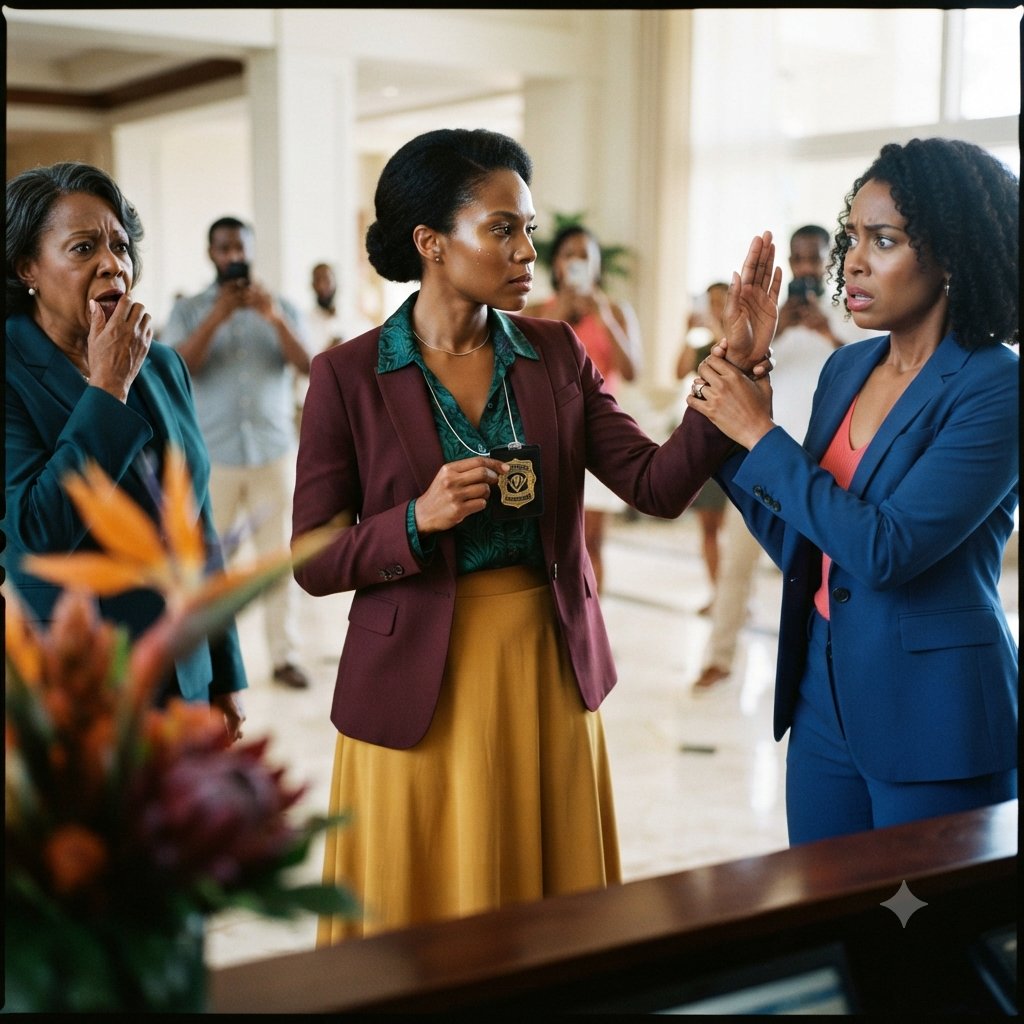
He answered the door himself.
Helena had half-expected a housekeeper, or a neighbor, or some buffer between the door and the man — but no.
He opened it himself, in a grey cardigan and dark trousers, and he looked at her the way people look at something they have been dreading and are almost relieved to finally see.
He was smaller than she remembered.
That was the first thing.
Eighty-one years had taken something from his height, or perhaps she had simply stopped measuring herself against him.
"Helena," he said.
"Father." She turned slightly.
"This is Frances Okafor.
She's my solicitor."
He looked at Frances.
Something moved across his face — not quite surprise, not quite fear.
Recognition, maybe, of what this meeting actually was.
"Come in," he said.
The sitting room was neat and dim.
A bookcase.
Two armchairs.
A sofa.
A side table with a glass of water on it.
He sat in one of the armchairs.
Helena and Frances sat on the sofa.
Frances set her briefcase on the cushion beside her and opened it without rushing.
"I want to say something before you begin," her father said.
Helena looked at him.
"Go ahead."
"I know why you're here." His hands were folded in his lap.
They were an old man's hands now — spotted, thin-knuckled, still.
"I know about the envelope.
I know about Thomas Reeve." He paused.
"I didn't know Evelyn had—" He stopped.
"I didn't know she had died until six months after the fact.
A mutual acquaintance mentioned it.
I had no way to reach you."
"You had my number," Helena said.
"You used it last Thursday."
"I had it.
I didn't feel I had the right to use it." He looked at his hands.
"I'm not going to tell you I did nothing wrong.
I'm too old for that and I think you'd see through it anyway."
Frances set a document on the coffee table between them.
"Mr.
Crawford.
I'd like to go through what we have."
He looked at the document.
He didn't pick it up.
"The letter to the hospital," he said.
"I assumed that would be in there."
"It is," Frances said.
"Along with a recorded telephone call from approximately sixteen years ago.
And a written statement from Ruth Calloway."
His jaw tightened.
Just slightly.
Just enough.
"Ruth," he said quietly.
"She's prepared to make her statement formal," Frances said.
"She has been for some time."
The room was very quiet.
"What is it you want from me?" he said.
He was looking at Helena now, not at Frances.
"Not legally.
I understand the legal position.
I'm asking you.
What do you want?"
Helena looked at him for a long moment.
"I want you to know that Evelyn had a daughter," she said.
"Her name is Clara.
She's eight years old.
She has your mother's eyes, which I think Evelyn found either funny or painful — probably both." She paused.
"Clara knows she had a mother who loved her.
She knows her father.
She knows Diane, who was Evelyn's neighbor and her closest friend.
She is surrounded by people who chose her." Another pause.
"She doesn't know you exist.
That was Evelyn's decision, and I'm going to honor it.
But I wanted you to know that she exists.
That she's real.
That your granddaughter is out there living her life, and she's fine.
She's more than fine."
Her father said nothing.
His hands were still folded in his lap, but one thumb was moving slowly against the other, back and forth, the only movement in the room.
"Evelyn built a record," Helena continued.
"She spent the last six months of her life making sure there was enough that I couldn't be talked out of believing it.
She trusted me to carry it the rest of the way.
I'm doing that." She looked at the document on the table.
"Frances will explain what happens next, legally.
But I needed you to hear the rest of it from me.
Not from a letter.
Not from a document."
Frances leaned forward.
"Mr.
Crawford, we're not pursuing crjminal action.
The incidents fall outside the viable legal window.
However, Ruth Calloway's formal statement, combined with the recording and the hospital letter, will be held on file.
If any similar situation comes to light — involving anyone — that file will be available."
He nodded once.
A small, precise nod.
"Is there anything you want to say?" Helena said.
He was quiet for a long time.
"I told myself," he said finally, "that I was protecting the family.
The name.
The—" He stopped.
"I told myself that so many times that I stopped examining whether it was true." He looked up at her.
His eyes were dry but something in them was not.
"I lost Evelyn.
I lost you.
I lost whatever it was I thought I was protecting." He paused.
"I don't expect forgiveness.
I'm not asking for it.
I just want you to know that I understand what I did.
I understand it now, even if I didn't then."
Helena stood up.
"I'm not here to forgive you today," she said.
"Maybe that comes later.
Maybe it doesn't.
But I'm not carrying this alone anymore, and neither is Ruth, and Evelyn doesn't have to carry anything at all." She picked up her coat from the arm of the sofa.
"That's what today was for."
She walked to the door.
She didn't look back.