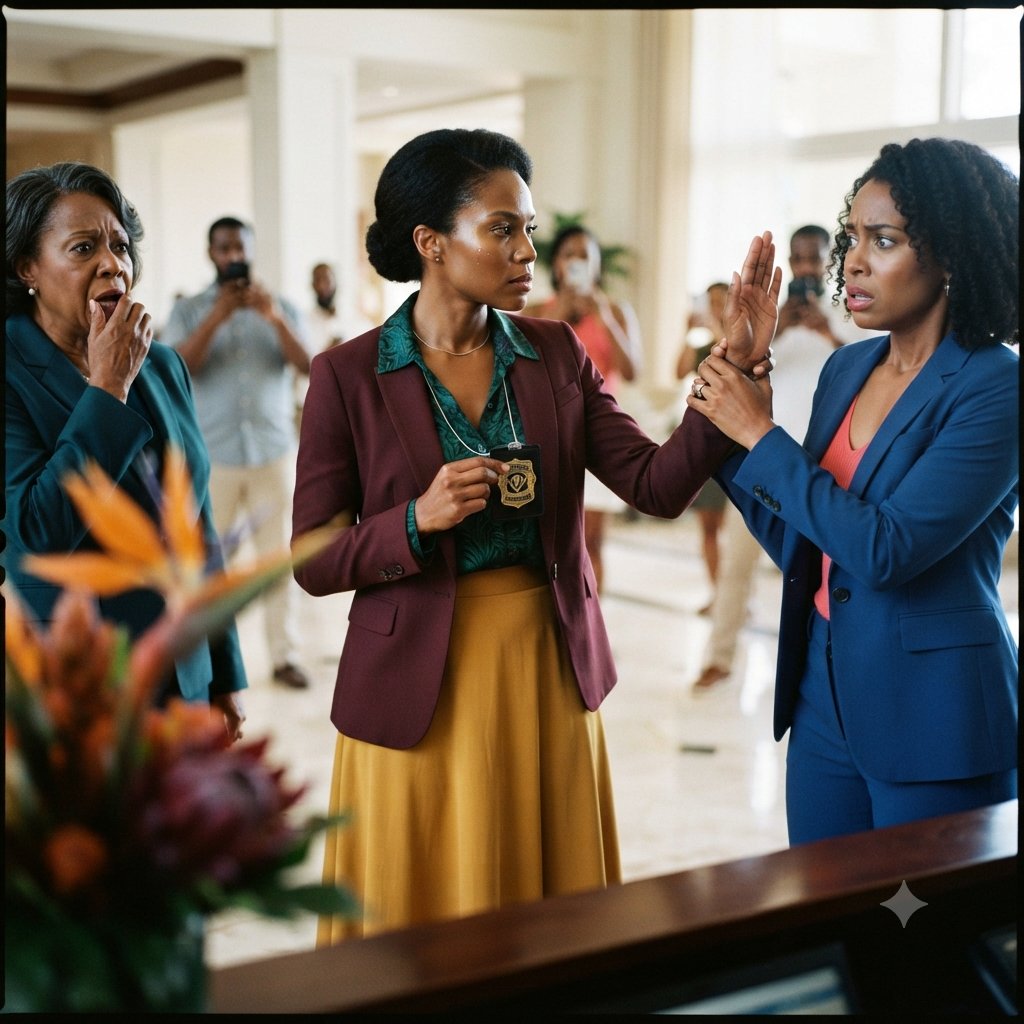
The weekend passed in the particular silence of things not yet decided.
I stayed at my father's house — the one I had grown up in, on the north side of the city, with the garden my mother had planted and the kitchen that always smelled faintly of coffee and wood polish.
My old room had been kept exactly as it was, which I had always found both touching and slightly alarming.
Dominic called once on Saturday.
I let it ring and listened to the voicemail afterward.
He said he had formally initiated the withdrawal from Thomas's partnership.
He said he had spoken to a family attorney.
He said he wasn't calling to pressure me.
He said he hoped I was resting.
I listened to it twice and didn't call back.
On Sunday, my father sat across from me at the kitchen table and told me things he had never told me before.
About the early years of Ashworth Development.
About decisions made quickly in a climate where everyone was moving fast and the rules were understood to be flexible.
About a city official who had expedited permits in exchange for considerations that were never written down.
About three families whose properties had been acquired through a process that was legal on paper and not entirely clean underneath.
He told me without excuses.
That was the part that mattered.
"Why are you telling me this now?" I said.
"Because you asked me to deal with it properly," he said.
"And I can't do that if I'm still managing what you know."
I looked at my father — sixty-three years old, silver-haired, the steadiest person I had ever known — and I understood that he was also a man who had made choices he couldn't take back, and had spent a long time not looking directly at them.
"Okay," I said.
"Okay?" he said.
"We deal with it properly," I said.
"Like I said."
He was quiet for a moment.
Then he reached across the table and covered my hand with his.
Monday came grey and cold.
Thomas Reeve arrived at my father's office at ten o'clock exactly.
He was tall — taller than I had imagined — with dark hair going silver at the temples and my father's jaw, which was disorienting in a way I hadn't prepared for.
He stopped when he saw me.
"Vivienne," he said.
"Thomas," I said.
We looked at each other for a moment.
Two people standing in the wreckage of a connection neither of us had chosen.
"I'm sorry about Friday night," he said.
"I want you to know I had no part in what happened at the reception."
"I know," I said.
"Eleanor acted on her own."
He nodded.
He looked at my father.
My father stood behind his desk and did not come around it.
"Sit down, Thomas."
Thomas sat.
I sat beside my father, which was where I had decided I would sit.
Martin was present.
Claire was present.
Thomas had brought his own attorney — a woman named Dr.
Petra Vance, compact and precise, who set a leather folder on the desk and opened it without being asked.
"I want to be clear about what I'm here for," Thomas said.
"I'm not here to destroy anything.
I'm here because I believe certain people were harmed and were never properly compensated."
"Some of them were," my father said.
"Not all of them."
"No," my father said.
"Not all of them."
Thomas looked at him.
Something shifted in his expression — a small recalibration, as though he had expected more resistance and didn't quite know what to do with the absence of it.
"The Kellerman family," Thomas said.
"The Osei family.
The Reeve family — my grandmother."
"Your grandmother received a settlement," Martin said.
"She received money," Thomas said.
"She didn't receive an acknowledgment.
She didn't receive an apology.
She received a check and a non-disclosure agreement and she signed it because she was eighty-one years old and exhausted." He paused.
"I'm not bound by her NDA.
I wasn't a party to it."
"No," Martin agreed.
"You're not."
"The Kellerman and Osei families received nothing," Thomas said.
My father looked at Martin.
Martin nodded once.
"That's accurate."
"Then that's where we start," my father said.
Thomas's attorney looked up from her folder.
Thomas himself went very still.
"I'm not going to litigate this," my father said.
"Not because I think I'd lose — Martin believes the procedural issues are significant enough that the case would struggle.
But because the families deserved better than they got, and a lawsuit that runs for three years and costs everyone money is not better." He paused.
"I want to sit down with the Kellerman and Osei families directly.
With their representatives.
And I want to make it right.
Properly.
Not quietly."
Thomas looked at him for a long moment.
"Why?" he said.
"Because my daughter told me to deal with it properly," my father said.
"And she's usually right."
Something moved across Thomas's face.
He glanced at me briefly, then back at my father.
"If this is a strategy to avoid the lawsuit—" Dr.
Vance began.
"It's not a strategy," my father said.
"It's a decision.
Martin will draw up a framework this week.
We'll share it with you before we approach the families.
If you think it's insufficient, tell us why and we'll revise it."
Thomas was quiet for a long time.
"And the permits?" he said.
"The process that was used?"
"I've already spoken with the city ethics office," my father said.
"Voluntarily.
This morning, before you arrived." He paused.
"There will be a formal review.
I've agreed to cooperate fully."
Dr.
Vance's pen stopped moving.
Thomas looked at my father the way you look at something you have been preparing to fight for a very long time, when the fight unexpectedly doesn't come.
"I didn't expect this," he said.
"I know," my father said.
Another silence.
"There's something else," Thomas said.
He looked at his hands.
"I've known who you were for a long time.
I've known about Vivienne.
I told myself the case was separate from all of that, but—" He stopped.
"It wasn't entirely separate.
I was angry.
About my grandmother.
About growing up without—" He stopped again.
"Without a father," my father said quietly.
Thomas's jaw tightened.
"I'm not asking for anything on that front.
I'm not here for that."
"I know you're not," my father said.
"But I am."
Thomas looked up.
"I made a choice when you were born that I've regretted for a long time," my father said.
"Your mother's wishes were clear and I respected them, and I've told myself that was the right decision for forty years." He paused.
"I'm not sure it was."
The room was very quiet.
"I'm not asking you to forgive me," my father said.
"I'm not asking for anything.
But I'd like the chance, if you're willing, to have a conversation that isn't about lawsuits or permits or land records."
Thomas looked at him for a long time.
Then he looked at me.
"Is she always like this?" he said.
"Like what?" I said.
"The one who makes everyone tell the truth."
Despite everything — the torn dress, the scattered vitamins, the three years of silence, the weekend of difficult conversations, the ache in my lower back that had not let up since Friday — I almost smiled.
"I learned it from him," I said.
Thomas looked back at my father.
"One conversation," he said.
"Not today."
"Whenever you're ready," my father said.
Dr.
Vance quietly closed her folder.