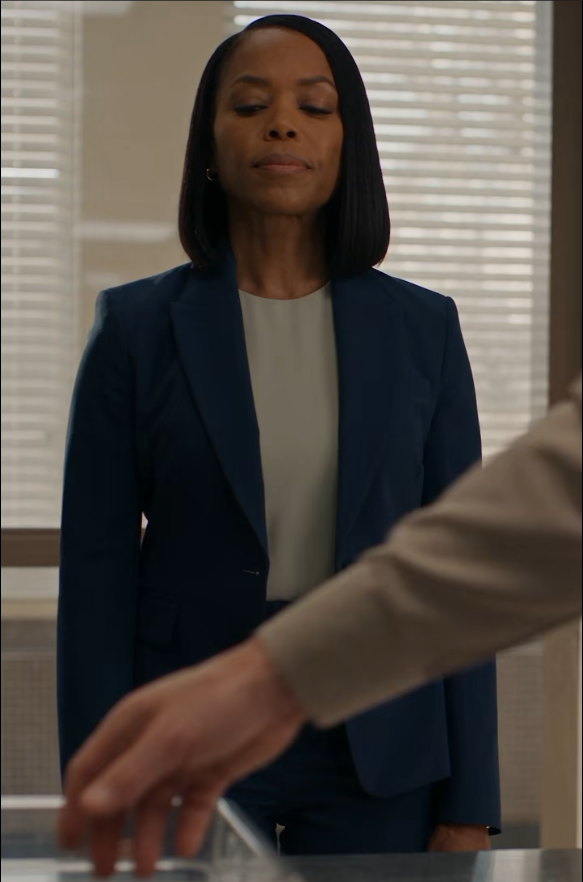
“I was in a courthouse.”
“You say that like courthouses are magical.”
Sarah glanced at him.
“You worry too much.”
“I have four stars. It’s practically the job.”
She almost smiled.
Then the courtroom doors opened.
The recess was over.
Judge Parker issued the order shortly before five.
The sheriff’s department’s digital and paper records would remain under independent preservation.
Cleary would remain suspended pending investigation.
Miller’s evidence copy was deemed admissible for preservation purposes because forensic metadata established it had been created before the archive alteration.
The court did not decide criminal liability.
That would come later.
But the story Cleary had built around Sarah’s arrest was finished.
For the first time, the official record said so.
Sarah stood as the judge left.
Miller remained seated.
His shoulders dropped.
She walked toward him.
He rose quickly.
“General.”
“You did well.”
He looked embarrassed.
“I just answered questions.”
“That’s usually harder than giving speeches.”
He gave a tired laugh.
“What happens now?”
“To you?”
He nodded.
“I don’t know.”
“Helpful.”
“You want reassurance or accuracy?”
He looked at her.
“Accuracy.”
“You may lose your job.”
His smile vanished.
“You may also spend months wondering whether speaking up was worth it.”
Miller looked toward the empty bench.
“And was it?”
Sarah did not answer immediately.
“You knew the archive system better than Cleary did.”
“Yes.”
“You knew the original recording could be preserved.”
“Yes.”
“You acted.”
“Yes.”
She nodded toward the witness stand.
“That is your answer.”
Miller looked down.
“I should’ve done it sooner.”
Sarah studied him.
“Probably.”
He looked up, surprised.
She did not soften it.
“Regret is only useful if it changes what you do next.”
Miller breathed out.
“Yes, ma’am.”
She extended her hand.
He shook it.
No salute.
No ceremony.
Just two people standing in a county courthouse after an ordinary traffic stop had exposed something neither of them could put back where it had been.
Part VI — Aftermath
The investigations lasted seven months.
Sarah returned to Washington two days after the hearing.
She resumed the work that had brought her through Oak Haven in the first place: defense communications, continuity planning, command resilience, the quiet machinery that most Americans never saw and should never need to.
For weeks, reporters waited outside her office.
She ignored them.
When congressional staff requested a briefing on the secure-device incident, she gave one.
When they tried to turn the briefing toward Boyd Cleary’s conduct, she redirected them toward the appropriate state investigation.
When Army colleagues praised the way she had “handled” the sheriff, she changed the subject.
But Oak Haven followed her.
Not through headlines.
Through paper.
Statements.
Depositions.
Requests.
She testified twice more.
Once remotely.
Once in person.
The state investigation eventually documented a six-year pattern of unsupported traffic stops, selective searches, falsified or misleading incident reports, missing recordings, improper detention practices, and retaliatory administrative actions.
Not every complaint was sustained.
Sarah insisted on that distinction whenever people talked about the findings as though accusation and proof were interchangeable.
Some motorists had broken traffic laws.
Some searches had been lawful.
Some complaints could not be resolved because records were incomplete.
But enough could.
Enough recordings existed.
Enough metadata survived.
Enough deputies spoke after Miller did.
Enough reports contradicted objective evidence.
The pattern became impossible to explain as coincidence.
Boyd Cleary was charged with evidence tampering, falsification of official records, and misconduct connected to several cases, including Sarah’s.
The federal investigation into the communications device produced no espionage allegation and no classified-data loss.
That mattered to Sarah.
She did not want absurdity added to wrongdoing.
Cleary had not been a spy.
He had been something more familiar.
A man accustomed to being believed.
Toby Miller resigned from the sheriff’s department before the administrative process could decide his future.
He sent Sarah a short email.
No drama.
No self-congratulation.
He wrote that he had accepted a position with a neighboring county’s emergency-management office.
Less authority.
Better hours.
He added one sentence at the end.
I figured I should try a job where preserving records is actually encouraged.
Sarah read it in her office.
She smiled.
Then she replied.
Good career strategy.
Nothing more.
General Thomas Reed visited her office the week Cleary entered a plea agreement.
He arrived carrying two coffees.
Sarah looked up from her desk.
“That means you want something.”
“It means your coffee is terrible.”
“My coffee is efficient.”
“Your coffee could remove paint.”
He set a cup in front of her.
She took it.
“What happened?”
Reed sat.
“Cleary pled.”
“I saw.”
“He’ll serve time.”
“Yes.”
“Decertification permanent.”
“Yes.”
“County settled several civil cases.”
“I saw that too.”
Reed leaned back.
“You know, normal people say thank you when someone brings coffee.”
“Normal generals don’t arrive with four-star gossip.”
He smiled.
Then became serious.
“The Army wants you to speak at the command ethics conference.”
“No.”
“You didn’t even hear the topic.”
“No.”
“Civil-military responsibility under stress.”
“No.”
“Professional restraint.”
“No.”
“Secure communications?”
Sarah looked at him.
“Maybe.”
Reed laughed.
“There she is.”
He drank his coffee.
After a moment he said, “You ever think about what would’ve happened if you’d handed him your military ID on the road?”
“Yes.”
“He probably lets you go.”
“Probably.”
“No arrest.”
“No helicopters.”
“No investigation.”
“Maybe.”
“No Cleary case.”
Sarah looked at the window.
Washington rain streaked the glass.
“That’s the part people keep getting wrong.”
“What part?”
“They say the arrest exposed him.”
“It did.”
“No. His decisions exposed him.”
Reed waited.
Sarah continued.
“He could have checked my license and sent me on my way. He could have written a citation. He could have released me at booking. He could have left the device alone. He could have admitted the body-camera footage contradicted his report. He could have corrected the report. He could have preserved the records. He could have left Miller alone.”
She counted none of these choices on her fingers.
She did not need to.
“He had exit after exit.”
Reed nodded.
“And took none of them.”
“Yes.”
“Pride.”
“Partly.”
“What else?”
Sarah looked at him.
“Practice.”
That silenced him.
She returned to the file on her desk.
“The dangerous thing wasn’t that he lost control one afternoon. It was that what he did felt normal to him.”
Reed nodded slowly.
After a minute he stood.
At the door, he turned.
“You still going through Oak Haven next month?”
Sarah looked up.
The annual defense communications exercise was being held at the same regional installation she had visited the day of the arrest.
“Yes.”
“You want a driver?”
“No.”
“Security?”
“No.”
“Different highway?”
She gave him a look.
Reed smiled.
“Had to ask.”
Spring reached Oak Haven late.
Seven months after the arrest, Sarah drove Interstate 89 again.
Not in a government convoy.
Not in uniform.
A rental car.
Dark blue this time.
The old billboard still stood near the speed-limit change.
The sheriff’s cruiser was gone.
Sarah slowed from sixty-five to forty-five.
Forty-four before the sign.
Exactly as before.
The memory returned with physical clarity.
Mirrored sunglasses.
License and registration.
Attitude.
Hands against the car.