Chapter 3
By noon, the video had been viewed more than four hundred thousand times.
By three o’clock, it crossed two million.
The woman jogging beside the fountain had posted the clearest version.
The caption contained only one sentence:
SHE ASKED WHAT LAW SHE BROKE. THEY NEVER ANSWERED.
News stations arrived outside Eleanor’s apartment.
Marcus closed the blinds.
“You’re not speaking to anyone today.”
“I spent thirty-five years telling children not to hide when they had done nothing wrong.”
“You also told children not to run into traffic.”
“Reporters aren’t traffic.”
“Some of them are worse.”
Eleanor smiled despite herself.
Her phone rang constantly.
Former students.
Old colleagues.
Neighbors.
People she had not spoken to in fifteen years.
One message made her cry.
Mrs. Washington, you taught me in third grade. I was the kid who couldn’t read out loud without stuttering. You stayed after school every Tuesday for a year. I’m a public defender now. If you need anything, I owe you more than I can ever repay.
The sender was Renee Carter.
Eleanor remembered her immediately.
Tiny braids.
Purple backpack.
Terrified of reading aloud.
She showed Marcus.
“I think I just found my lawyer.”
Marcus looked at the message.
“Mom—”
“I’m joking.”
A second message arrived.
Renee Carter again.
Actually, I’m not kidding. Call me.
Eleanor smiled.
“Maybe I wasn’t.”
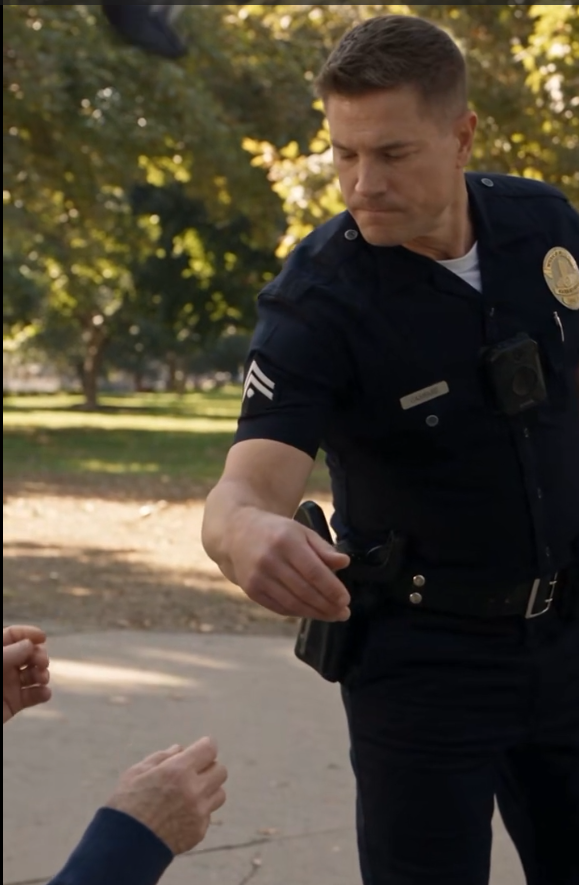
At police headquarters, Officer Bradley was having a much worse afternoon.
Captain Hargrove slammed the office door.
“What were you thinking?”
Bradley stood in front of the desk.
“She refused an order.”
“What order?”
“To leave.”
“Why did you tell her to leave?”
Bradley hesitated.
Hargrove leaned forward.
“Think very carefully.”
Bradley looked toward Morrison.
Morrison had been ordered into the office too.
“You know why,” Bradley said.
Hargrove’s face became stone.
“No. I don’t.”
Bradley stared.
“Captain—”
“I have never instructed any officer to remove lawful park users.”
Bradley’s mouth opened.
Morrison looked between them.
Hargrove continued.
“If you made assumptions about that woman based on her appearance, those assumptions were yours.”
Bradley’s face drained.
“You told us to keep the Riverside corridor clean.”
“I told you to enforce existing ordinances.”
“You said residents were complaining about transients.”
“I said residents reported violations.”
“You gave us photographs.”
Morrison’s head snapped toward Bradley.
Hargrove went silent.
Bradley realized his mistake.
“What photographs?” Morrison asked.
Nobody answered.
Morrison stepped forward.
“What photographs?”
Bradley looked at Hargrove.
Hargrove spoke slowly.
“You are currently under internal review. Both of you. Do not discuss this incident with anyone.”
Morrison stared at him.
“Captain, were there photographs of people we were supposed to remove?”
“Conversation over.”
“Were there?”
Hargrove pointed toward the door.
“Leave.”
Morrison did not move.
Then he reached to his chest.
His body camera was still attached.
Hargrove noticed.
For several seconds, nobody breathed.
“Turn that off,” Hargrove said.
Morrison looked down.
Then back up.
“No.”
Bradley whispered, “Morrison.”
Hargrove’s face darkened.
“I gave you a direct order.”
“And my body camera policy says recording remains active during official discussions related to an enforcement action.”
“That conversation ended in the park.”
“This one is about the park.”
Hargrove stared at him.
Morrison’s hands were trembling.
But he did not turn the camera off.
Finally, Hargrove stepped back.
“Get out.”
Morrison left.
Bradley followed.
In the corridor, Bradley grabbed his arm.
“What the hell are you doing?”
Morrison pulled away.
“What photographs?”
Bradley looked around.
“Not here.”
“What photographs?”
Bradley lowered his voice.
“Every Friday, Hargrove showed us pictures.”
“Of who?”
“People the business association complained about.”
Morrison felt cold.
“Homeless people?”
“Some.”
“Who else?”
“Street performers. Vendors. Old people who sat around too long.”
Morrison stared.
“You knew?”
“So did everyone.”
“No. I didn’t.”
Bradley scoffed.
“Don’t pretend you’re some saint now.”
Morrison’s expression changed.
“You handcuffed a sixty-eight-year-old woman for sitting on a bench.”
“And you stood there.”
The words struck harder than Bradley intended.
Morrison went still.
Bradley walked away.
Morrison remained alone in the corridor.
Because Bradley was right.
He had stood there.
And for Officer Daniel Morrison, that truth would soon become impossible to live with.