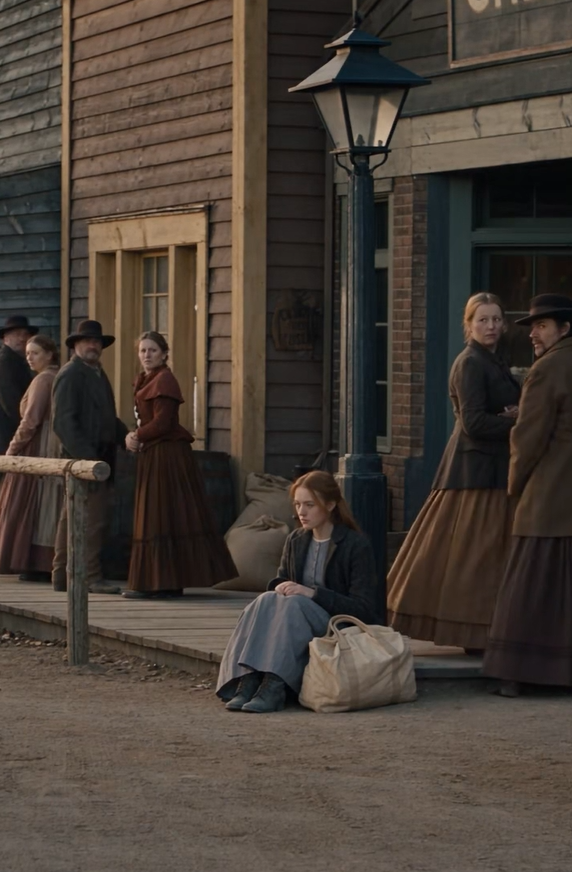
He did.
Mostly because he recognized the tone.
Lydia closed the door.
“Did I ask you to leave?”
“No.”
“Did I tell you to leave?”
“No.”
“Then why are you leaving?”
“Because you deserve something that’s entirely yours.”
Lydia stared at him.
“You idiot.”
“I’ve been called—”
“Stop.”
He stopped.
“This is exactly the problem.”
“What?”
“You think freedom means never needing anyone.”
Rowan frowned.
“You ran to these mountains because you believed needing someone gave them the power to destroy you.”
He said nothing.
“I spent my life believing I had to be useful so people wouldn’t throw me away.”
She walked closer.
“We’re the same kind of fool.”
“That’s comforting.”
“Rowan.”
“Sorry.”
She took his hand.
“You taught me I didn’t have to earn a place.”
His expression softened.
“So don’t make yourself earn one either.”
He looked around the room.
“Lydia—”
“Stay.”
One word.
He closed his eyes.
She smiled.
“See? Not difficult.”
He opened them.
“For how long?”
She considered.
“Ask me tomorrow.”
16
The wedding happened in October.
Small.
Twenty-three people.
Lydia invited Ruth Calder.
Rowan invited Harker, though he complained about it until the ceremony began.
Nobody invited anyone from Pine Valley.
The feed store owner sent a sack of coffee as an apology for allowing the auction-like spectacle outside his business.
Lydia sent it back.
Then changed her mind.
“Coffee didn’t do anything wrong.”
Rowan nearly choked laughing.
They married beneath the three black pines.
The same trees Mara had turned into a childhood rhyme.
Lydia wore a simple cream dress Ruth altered for her.
Rowan wore a black coat that made him look, according to Harker, “almost civilized.”
Before the ceremony Rowan pulled Lydia aside.
“I have something.”
He handed her an envelope.
Inside was a receipt.
She read it.
Fifty dollars.
Paid to Lydia Voss.
“For?”
Rowan looked uncomfortable.
“Your labor last winter.”
She stared.
“I didn’t work for you.”
“You definitely worked.”
“You told me not to.”
“You ignored me.”
“Frequently.”
“So I calculated wages.”
“Rowan.”
“Badly.”
She looked at the money.
Then at him.
“You’re trying to erase the first fifty.”
“No.”
He took her hands.
“I don’t think anything erases it.”
“Then why?”
“Because that money meant something ugly.”
He nodded toward the bills.
“I wanted fifty dollars to mean something else too.”
Lydia’s eyes burned.
“What?”
He smiled slightly.
“Something owed to you instead of paid for you.”
She kissed him before he finished.
Ruth cleared her throat loudly from twenty feet away.
“We are already waiting!”
Lydia laughed against Rowan’s mouth.
“Coming!”
Rowan whispered, “Terrifying woman.”
“You asked me to stay.”
“I did.”
They married beneath the pines.
Afterward, Lydia placed the fifty dollars in Mara’s iron box.
Not as payment.
Not as a price.
As proof that meaning could change.
17
Two years passed.
Black Pine became profitable again.
Not through mining.
Rowan refused every mining offer that arrived.
They raised horses.
Sold timber selectively.
Lydia opened a small schoolroom in the old barn every winter for mountain children who lived too far from town.
She became known for keeping extra food on the stove.
No child earned it.
No child had to ask twice.
On Lydia’s twenty-fifth birthday, a lawyer arrived from Helena.
His name was Benjamin Cole.
He carried a sealed envelope.
“This was deposited twenty-one years ago.”
Lydia frowned.
“By whom?”
“Mara Voss.”
The room went still.
Rowan stood beside her.
Cole placed the envelope on the table.
“Instructions specified delivery only after Lydia Voss reached age twenty-five and Black Pine ownership had been legally confirmed.”
Lydia stared at her mother’s handwriting.
She had seen it on recipes.
Labels.
The back of the photograph.
Her fingers trembled as she opened the envelope.
Inside was a letter.
My Lydia,
If you are reading this, then either everything went right or everything went terribly wrong.
Knowing our family, probably both.
Lydia laughed through the first tears.
Rowan rested a hand against her back.
She continued.
The letter explained the deed.
Gideon Creed.
The escape plan.
Amos.
Mara had known she was in danger.
She had hidden evidence at Black Pine.
Then came the sentence that stopped Lydia.
There is one truth I did not put in any legal record because a legal record can be stolen.
Lydia looked at Rowan.
He frowned.
She read on.
Your father was not Amos Voss.
Nor was he Gideon Creed.
His name was Thomas Vale.
He died before you were born.
He was kind.
He was poor.
And he loved you before he ever saw your face.
Lydia pressed a hand over her mouth.
Rowan quietly pulled out a chair.
She sat.
Mara described Thomas.
A schoolteacher.
A violin player.
A man who had refused to marry Mara until she was certain she wanted him rather than needed him.
He died in a river accident.
Then came another paragraph.
Years later, Gideon helped me because he owed Thomas his life. When the two were young, Thomas pulled Gideon from a flooded river. Gideon never forgot. Whatever else Gideon Creed became, whatever sins followed him, he kept that debt.
Rowan sat opposite Lydia.
His eyes had gone distant.
“My father never told me.”
Mara’s letter continued.
If Gideon’s son Rowan ever finds these papers, tell him this: his father believed Rowan was the best thing he ever made and the one thing he did not deserve.
Rowan looked away.
Lydia reached for his hand.
For years he had thought Gideon incapable of love.
The truth did not erase the damage.
But like the fifty dollars, it changed one corner of its meaning.
Cole cleared his throat.
“There is more.”
Lydia looked up.
“What?”
“A second envelope.”
He placed it on the table.
Addressed not to Lydia.
To Rowan Creed.
Rowan stared.
“That’s impossible.”
Cole said, “Same deposit.”
“Twenty-one years ago?”
“Yes.”
“I was nineteen.”
“Apparently Mrs. Voss knew who you were.”
Rowan opened it.
Only one sheet.
Rowan,
If you are reading this, then Gideon was right about you.
He said one day you would leave him rather than become him.
He also said you would think leaving was enough.
It isn’t.
A man does not escape his father’s sins by hiding from the world.
He escapes them by choosing differently when the same temptation reaches his hands.
Rowan’s breathing stopped.
Lydia read over his shoulder.
Mara continued.
Someday, perhaps, something belonging to my daughter will come into your keeping.
If it does, remember this:
Nothing human can ever be owned.
Rowan sat motionless.
Twenty-one years.
Before the feed store.
Before the cabin.
Before fifty dollars changed hands.
Mara Voss had written those words.
Lydia whispered, “She knew.”
“No.”
“She couldn’t.”
Cole looked between them.
“There is one final item.”
Rowan laughed weakly.
“Of course there is.”
The lawyer removed a tiny packet.
Inside—
A brass token.
Stamped with the mark of the Helena First Bank.
And the number 50.
Lydia stared.
“What is that?”
Cole read from Mara’s instructions.
“A bank marker representing fifty dollars held in trust.”
Rowan’s skin prickled.
“For whom?”
Cole looked directly at Lydia.