“She doesn’t like visitors.”
“Why?”
No answer.
Caleb softened his voice.
“Did somebody hurt her?”
The boy’s eyes flashed.
That was answer enough.
“I only want to thank her.”
The child studied him.
“Promise you won’t tell anyone where we live.”
“Why?”
“Promise.”
Caleb hesitated.
Then nodded.
“I promise.”
The boy pointed west.
“Dry Creek.”
Caleb nearly thought he had misheard.
“There’s nothing at Dry Creek.”
“There is us.”
“How far?”
“About three hours if your horse isn’t lazy.”
“What’s your name?”
“Thomas.”
“Thomas Turner?”
A nod.
“Tell Emily I may come.”
“No.”
Caleb laughed.
“No?”
“She’ll be mad.”
“At me?”
“At me.”
“For telling me?”
“Yes.”
Caleb stood.
“Then don’t tell her.”
Thomas stared.
“That seems dishonest.”
“Good point.”
The boy tucked the coins into his pocket.
“Mr. Dawson?”
Caleb froze.
“I never gave you my name.”
Thomas realized his mistake.
He said nothing.
Caleb crouched again.
“How do you know who I am?”
Thomas swallowed.
“Everybody knows.”
Maybe.
But Caleb did not believe that was the entire answer.
Before dawn the next morning, Caleb saddled his bay gelding.
Jonah Pike emerged from the bunkhouse with coffee steaming between his hands.
“Where?”
“Dry Creek.”
Jonah stopped walking.
The reaction was small.
Too small.
But Caleb saw it.
“Why?”
“I found the baker.”
Jonah looked away toward the barns.
“You’re still on that?”
“Yes.”
“Dry Creek’s empty.”
“Not entirely.”
Jonah took a slow drink.
“Who lives there?”
“Turners.”
The cup remained halfway to his mouth.
“What Turners?”
“Emily and Thomas.”
Jonah lowered the cup.
“Never heard of them.”
Caleb tightened a saddle strap.
“You reacted like you had.”
“Because Dry Creek is bad land.”
“You know a Henry Turner?”
A pause.
“Old name.”
“Do you?”
“Maybe heard it years ago.”
Caleb looked at him.
Jonah smiled without humor.
“Caleb, you’re riding into empty prairie after a woman because she baked decent bread.”
“Best bread.”
“Fine. Miraculous bread.”
Caleb mounted.
“I’ll be back tonight.”
“Take someone.”
“No need.”
Jonah stepped closer.
“Maybe there is.”
Their eyes met.
“Why?”
Jonah shrugged.
“Country’s isolated.”
“So?”
“People who choose isolation usually have reasons.”
Caleb gave him a long look.
“You sound like you know hers.”
“I don’t.”
Too quickly.
Again.
Caleb rode west.
He did not see Jonah standing beside the bunkhouse long after he disappeared.
The ride to Dry Creek took nearly three hours.
Prairie stretched under a pale blue sky.
The grass had gone autumn brown.
Cottonwood leaves shook gold beside the narrow creek.
Caleb saw no farmhouse.
No wagon tracks.
No smoke.
He began to wonder whether Thomas had sent him away deliberately.
Then sunlight flashed on metal.
A chimney.
Caleb reined in.
It protruded directly from the hillside.
He rode closer.
A dugout.
Rough timber framed the entrance.
A small bench sat outside.
Wildflowers had been planted beside the door.
Firewood was stacked carefully beneath an overhang.
A white cloth hung from a nail.
Poor.
Very poor.
Yet everything had been cleaned, repaired, ordered.
Someone had turned hardship into dignity.
Caleb dismounted.
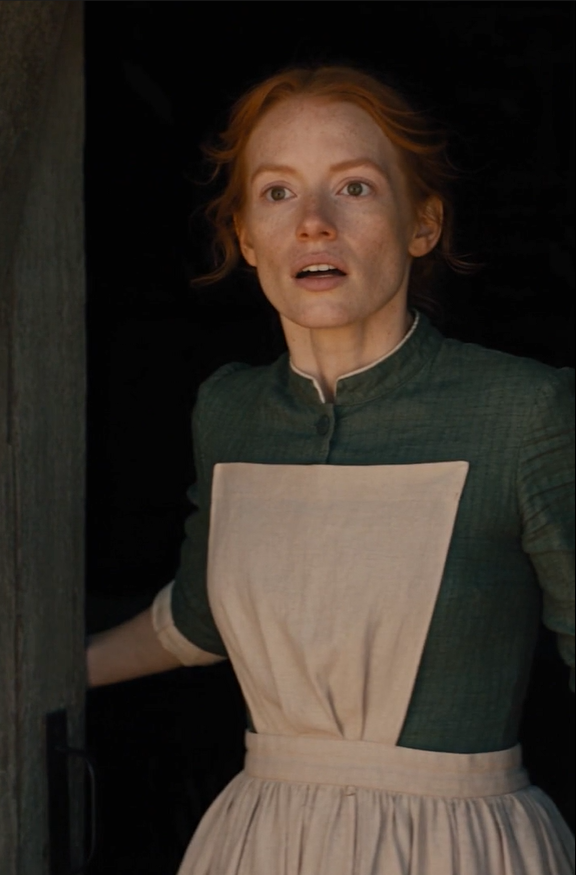
Before he could knock, the door opened.
A woman stepped outside.
She looked around thirty.
Reddish-brown hair pinned into a neat bun.
Faded green dress.
Flour on one sleeve.
Hazel eyes.
Caleb removed his hat.
“I came about the bread.”
She blinked.
“The bread?”
“The harvest gathering.”
Understanding arrived.
Then suspicion.
“You rode here because of bread?”
“The best bread I’ve ever tasted.”
A smile tried to appear.
She fought it.
“You rode three hours?”
“Actually, I rode three hours for the person who made it.”
Color rose into her cheeks.
“That’s ridiculous.”
“Probably.”
She laughed.
Quickly.
Almost unwillingly.
Caleb liked the sound instantly.
Then a red head appeared behind her.
Thomas.
His face fell.
“You came.”
Caleb nodded.
“You told him?” Emily asked.
Thomas grimaced.
“He bought all my eggs.”
Emily stared.
“And that compelled you?”
“He seemed trustworthy.”
“You spoke to him for five minutes.”
“He bought twenty-three eggs.”
Emily closed her eyes.
Caleb almost laughed.
“I only wanted to thank you.”
Emily looked at him.
“You have.”
“I’d also like to buy more.”
“No.”
“I haven’t offered a price.”
“No.”
“Why?”
“Because I don’t sell bread.”
“You should.”
“I don’t.”
Thomas whispered, “I told her that.”
Emily turned.
“You are helping very little.”
Caleb gestured toward the dugout.
“May I come in?”
“No.”
The answer was immediate.
Caleb nodded.
“Fair enough.”
That surprised her.
He put his hat back on.
“Thank you for the bread.”
“You already said that.”
“I meant it again.”
She nearly smiled.
He stepped toward his horse.
Then glanced at the metal chimney, garden bed, stacked wood.
“You live here year-round?”
“Yes.”
“With just Thomas?”
“Yes.”
“Your husband?”
Her face shut down.
“No husband.”
“I’m sorry.”
“For what?”
“I assumed.”
“Most people do.”
Caleb mounted.
Then he noticed the hand mill just visible through the open doorway.
“Did you mill the flour yourself?”
Emily’s expression changed.
“Yes.”
“Where’d you learn?”
“From my father.”
“What was his name?”
Silence.
Thomas looked down.
Emily said quietly, “Henry Turner.”
Caleb knew that name.
Not well.
Like a word from childhood.
“Turner Mill?”
Emily met his gaze.
“Yes.”
Caleb stared.
He remembered the mill burning when he was young.
A column of black smoke visible from miles away.
His father returning home after midnight, face gray.
“Your father owned Turner Mill?”
“He did.”
“My father bought from him.”
“I know.”
Caleb froze.
“I never told you who I was.”
Emily’s eyes sharpened.
“Everyone knows Caleb Dawson.”
Maybe.
Still.
Something bothered him.
“Did you know my father?”
“No.”
“Then how—”
“Goodbye, Mr. Dawson.”
The door closed.
Caleb rode home with more questions than when he came.
He returned four days later carrying coffee.
Emily refused it.
Two days after that, sugar.
Refused.
A week later, apples.
Thomas accepted them before she could intervene.
“Thomas.”
“They’ll spoil.”
“They are apples.”
“Exactly.”
Caleb smiled.
“He makes a strong argument.”
Emily glared.
“You are encouraging him.”
“Absolutely.”
Over the next month, Caleb found reasons to visit.
The dugout roof leaked.
He repaired it.
The chicken coop sagged.
He straightened it.
A hinge broke.
He replaced it.
Emily objected to everything.
She also began making coffee when she saw him coming.
One afternoon, rain trapped him there.
Thomas spread a checkerboard between them.
Caleb lost twice.
Emily watched while kneading dough.
“Are you letting him win?”
“No.”
Thomas grinned.
“He’s not.”
Caleb pointed.
“Your brother is merciless.”
“He had an excellent teacher.”
“Who?”
Emily looked innocent.
“No idea.”
Caleb stayed for supper.
Beans.
Potatoes.
Bread.
He sat at a table scarred by years of use.
The dugout had one room divided by a hanging cloth.
Shelves held jars of beans, dried herbs, preserves.
Three books.
A Bible.
A wooden box.
And the old grain mill.
Caleb stood to inspect it.
Emily moved immediately between him and the machine.
“Don’t.”
He stopped.
“I was just looking.”
“Please don’t touch it.”
Her face held fear.
Real fear.
Caleb stepped back.
“Fine.”
Thomas became very interested in his potatoes.
Something was hidden.
Caleb knew it.