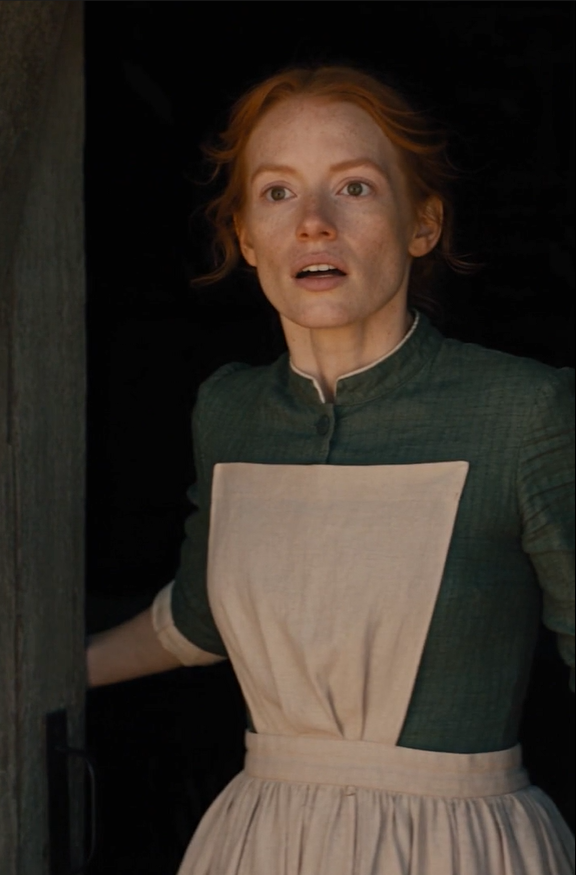
But he did not press.
After supper, Thomas fell asleep near the stove.
Caleb and Emily sat quietly.
Rain drummed against earth overhead.
“Why did your family leave town?” he asked.
Emily stared into her cup.
“We didn’t leave.”
“Everyone thinks the Turners did.”
“Everyone was encouraged to think that.”
“By whom?”
She looked at him.
“You ask many questions.”
“I’m curious.”
“That can be dangerous.”
“I’ve survived so far.”
A faint smile.
Then gone.
“My father owned the mill with a partner.”
“Who?”
“No partner officially.”
“What does that mean?”
Emily stood.
“You should ride before the creek rises.”
“Emily.”
“No.”
He rose.
At the door, she said, “Mr. Dawson.”
He turned.
She held out a wrapped loaf.
“For the ride.”
Their fingers touched.
She pulled away instantly.
Caleb looked at the bread.
Then at her.
“Careful.”
“With what?”
“You keep feeding me and I’ll start thinking you like me.”
Emily’s mouth twitched.
“Goodnight.”
Winter came early.
By December, Caleb’s visits had become familiar enough that Thomas watched the horizon every third day.
Emily pretended not to.
Caleb learned small things.
She hated card games.
Loved music.
Could read better than most men in town.
Knew numbers unusually well.
Made soap.
Mended boots.
Shot a rifle accurately.
And never slept deeply.
Once, Caleb dropped a cup accidentally.
Emily spun toward the sound with a knife in her hand before either of them understood what she had done.
She lowered it.
“I’m sorry.”
Caleb said nothing.
That night, he stopped at the door.
“Who are you afraid of?”
“No one.”
“That’s not true.”
“Leave it.”
“I can help.”
Her face hardened.
“Men always like saying that.”
Caleb absorbed the blow.
“Did one fail you?”
“Many.”
“Your father?”
“No.”
“Then who?”
“Goodnight, Caleb.”
First time she had used his given name.
He did not ruin it by asking again.
A week before Christmas, Caleb arrived to find Thomas chopping wood.
“Emily?”
“Inside.”
Something about the boy’s voice was wrong.
Caleb entered.
Emily was sitting at the table holding a scrap of paper.
Her face had gone white.
“What happened?”
She folded it.
“Nothing.”
Caleb held out his hand.
“No.”
“Emily.”
She looked at him.
Finally passed it over.
Four words had been written in charcoal.
LEAVE DRY CREEK NOW.
Caleb looked up.
“Who brought this?”
“Found it under the door.”
“When?”
“This morning.”
“Any tracks?”
“Snow covered them.”
“Has this happened before?”
Silence.
“How many times?”
She opened a drawer.
Three more notes.
GO WEST.
YOU WERE WARNED.
NEXT TIME THE HOUSE BURNS.
Caleb’s jaw tightened.
“Sheriff?”
“He knows.”
“What did he do?”
“Asked whether I had offended anyone.”
“You’re serious?”
“He said women living alone become dramatic.”
Caleb swore.
Emily’s eyes flashed.
“You cannot storm into town.”
“Watch me.”
“No.”
“Someone threatened to burn this house with you inside.”
“And if you make noise, whoever it is knows I told.”
“They already know where you live.”
“They’ve known for years.”
Caleb went still.
“Years?”
She nodded.
“Since my father died.”
“Why didn’t you leave?”
“Because this is ours.”
“This hill?”
“The land.”
“You own Dry Creek?”
“I think so.”
“You think?”
Emily rose.
“My father said the deed existed. After the mill burned, all county copies disappeared.”
“How much land?”
“About twelve hundred acres originally.”
“That’s not enough to justify twenty years of threats.”
“I know.”
Caleb looked toward the grain mill.
“Does this have something to do with your father?”
Emily went quiet.
“Yes.”
“What?”
“My father was accused of stealing from yours.”
Caleb stared.
“When?”
“Before the mill burned.”
“My father never mentioned it.”
“Of course not.”
“What does that mean?”
Emily’s eyes flashed.
“Your family walked away clean. Mine didn’t.”
Caleb’s expression hardened.
“Say what you mean.”
“My father was called a thief.”
“Was he?”
“No.”
“You’re sure?”
“He died insisting he had been framed.”
“By whom?”
Emily looked toward the door.
Then said:
“Jonah Pike.”
The name struck like a hammer.
Caleb laughed once from disbelief.
“Jonah?”
“Yes.”
“He’s worked for my family since I was twenty-one.”
“I know.”
“He saved my life in a cattle stampede.”
“I know.”
“He buried my father.”
“I know.”
Caleb stepped closer.
“How do you know so much?”
Emily opened a drawer.
Removed an old photograph.
Three men stood outside Turner Mill.
Henry Turner.
William Dawson.
Jonah Pike.
Young.
Serious.
Standing shoulder to shoulder.
Caleb stared.
“When was this?”
“1868.”
“Jonah told me he barely remembered your name.”
“He lied.”
“What happened?”
“My father discovered grain shipments missing.”
“Who stole them?”
“He believed Jonah.”
“Why?”
“Because Jonah controlled wagon records for your father.”
Caleb shook his head.
“No.”
Emily’s voice sharpened.
“You asked.”
“I know.”
“You don’t have to believe me.”
“My father trusted Jonah.”
“So did mine.”
The words silenced him.
Emily continued.
“My father began keeping a second ledger. He thought somebody was falsifying weight tickets and moving cattle money through the mill accounts. Weeks later, the mill burned.”
“Did your father start it?”
Emily’s face broke.
“He was inside.”
Caleb regretted the question immediately.
“He survived?”
“Barely.”
“Then?”
“People said he burned the mill to hide theft.”
“What evidence?”
“Jonah testified he saw my father remove ledgers before the fire.”
“Did he?”
“No.”
“How do you know?”
“Because the ledgers weren’t removed.”
Caleb looked toward the hand mill again.
Emily noticed.
Her expression changed.
“Leave.”
“What?”
“Go home.”
“Emily—”
“Now.”
At Dawson Ranch, Caleb placed the old photograph on Jonah’s desk.
Jonah’s face drained.
“Where’d you get this?”
Caleb leaned against the wall.
“Dry Creek.”
Jonah recovered quickly.
“Turner woman.”
“So you do know her.”
“I know of her.”
“You told me you barely remembered the name.”
“I didn’t want you dragged into old nonsense.”
“Define nonsense.”
Jonah looked irritated.
“Her father stole from your father.”
“How much?”
“Several thousand.”
“Where is it recorded?”
“Burned.”
“Convenient.”
Jonah stared.
“Careful.”
“No. You be careful.”
Caleb tapped the photograph.
“Emily says you accused Henry Turner.”
“I told the truth.”
“Which was?”
“I saw him moving company records.”
“Why?”
“Ask him.”
“He’s dead.”
“Then there’s your answer.”
Caleb stepped closer.
“My father kept records of everything. I searched his old account books today. No unexplained loss.”
Jonah poured whiskey.
“Maybe William didn’t want his son knowing he had been cheated.”
“Maybe.”
Jonah drank.
Then said, “Stay away from the Turner woman.”
Caleb’s eyes narrowed.
“Why?”
“She’ll poison your head.”
“She makes bread, Jonah.”
“She makes stories.”
“You sound afraid.”
The glass stopped.
Jonah smiled.
“Of a woman in a hole in the ground?”
Caleb said softly:
“Leave dead things buried.”
Jonah’s smile vanished.
“You should.”
“Why?”
“Because some graves are better closed.”
Caleb stared.
That was not a denial.
The next storm trapped Emily and Thomas.
Caleb arrived through blowing snow and found Thomas feverish.
Emily was terrified.
“He needs a doctor.”
“The road’s closing.”
“We can’t stay.”
Caleb wrapped Thomas in blankets.
“We’re going to the ranch.”
“No.”
“Emily.”
“He’s too sick.”
“He’ll be warmer there.”
She looked toward the stove.