Hells Angels Mocked a 73-Year-Old Woman — Then She Unfolded a 1959 Motorcycle Vest
Chapter 1
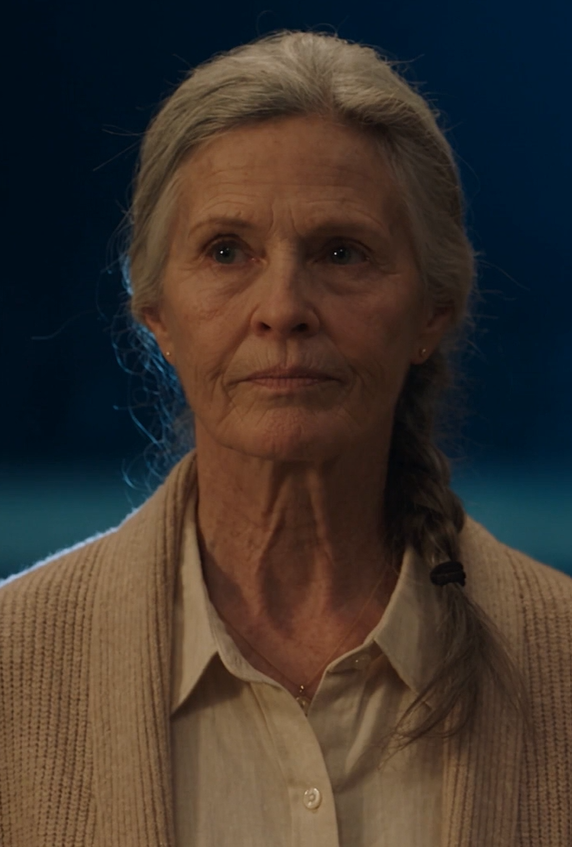
They say silence is golden. But in a room full of killers, silence is something else entirely. It's the moment before the storm breaks. The moment when every man in the room realizes he's made a mistake he can't take back. Eleanor Callaway stood in the doorway of Viper's Den, 73 years old, gray hair pulled back in a simple braid, wearing a cardigan her students had given her for Christmas 3 years ago.
She held a canvas bag against her chest like it was the only thing keeping her upright. And maybe it was. Behind her, the Nevada night was cold and clear. Stars scattered across the desert sky like broken glass. In front of her, 30 men in leather cuts turned to stare.
The jukebox was playing something loud and angry. The air smelled like beer and motor oil and violence waiting to happen. She didn't belong here. Everyone in that room knew it. The question was, what they were going to do about it.
But we're getting ahead of ourselves, because to understand how Eleanor Callaway ended up in a Hell's Angels clubhouse at 9:45 on a Thursday night in March, you have to go back. Back to a morning that started like any other. Back to a phone call that changed everything. 20 hours earlier. Eleanor woke at 5:00 in the morning.
She always did. Some habits you learn in your 20s stay with you until you die. She made the bed with hospital corners, the way her mother taught her. The way Dalton had insisted on back when he was alive. Military precision, he'd called it.
A man's life could depend on discipline, he'd said, even in small things. Especially in small things. She made coffee in the same pot she'd been using for 40 years. Black, no sugar. Dalton's way.
She stood at the kitchen window and watched the sun come up over the Ohio farmland that stretched out behind her house. The sky turned from black to gray to gold. Another day. Another sunrise without him. 40 years of sunrises without him.
She finished her coffee, washed the cup, dried it, put it back in the cupboard in exactly the same spot it had occupied for four decades. Then she walked out to the garage. The garage was her sanctuary, had been ever since Dalton died. Most women her age had craft rooms or reading nooks or gardens. Eleanor had a two-car garage that smelled like motor oil and old leather and memories that never quite faded.
In the center of the garage, covered with a tarp, was a 1979 Harley-Davidson Shovelhead. Dalton's bike. The last bike he ever owned. Eleanor pulled off the tarp slowly, carefully, the way you'd unveil something sacred. The chrome still gleamed.
She made sure of that. Every Sunday she came out here and wiped it down, checked the oil, the tire pressure, the chain tension. She didn't ride it anymore. Her knees weren't what they used to be. But she kept it running, kept it ready, just in case.
Just in case of what? She couldn't say. On the workbench against the wall, Dalton's tools hung in perfect order. Wrenches arranged by size. Screwdrivers lined up like soldiers.
Everything in its place. Everything exactly as he'd left it the morning he rode out and never came back. Above the workbench, a photo in a simple frame, black and white, faded at the edges. Six men standing in front of a garage that didn't exist anymore in a town that had changed beyond recognition. 1959.
They were young in that photo, early 20s most of them. Hair slicked back, cigarettes dangling from their lips, leather cuts that fit them like armor, and behind them six motorcycles, Harleys every one. Panheads and knuckleheads, the kind of bikes you don't see anymore except in museums or private collections or the dreams of old men who remember when the road was freedom and nothing else mattered. Eleanor stared at that photo for a long time. She knew every face, every name, every story.
Dalton Callaway, her husband, second from the left, lean and serious, a cigarette tucked behind his ear. Silas Brennan, Dalton's best friend, taller than the rest with a scar that ran from his left ear to his collarbone. A souvenir from Korea he never talked about. Lawrence Kincaid, the one with the easy smile and the hands that could fix anything. Dead at 29, motorcycle accident in the rain.
Garrett Finch, the quiet one, disappeared in Mexico in 1981, never seen again. Raymond Wolfe, the fighter, killed in a head-on collision in 1980. Drunk driver walked away without a scratch. Ezra Hayes, the peacemaker, heart attack in '95, gone before he hit the ground. Six men, six brothers, the founding members of the Iron Ghost Motorcycle Club.
All dead now. All except the memories Eleanor carried like stones in her pockets. She was still standing there, staring at that photo when the phone rang. Eleanor didn't own a cell phone, never saw the point. She had a landline in the kitchen with a cord long enough to reach the table.
The kind of phone that rang with an actual bell, not some digital chirp or pop song snippet. It rang three times before she walked back into the house and picked it up. Hello? Mrs. Callaway? A woman's voice, young, tired, the kind of tired that comes from working double shifts and raising kids alone and wondering if life is ever going to get easier.
Yes? My name is Bridget Brennan. I'm I'm Silas Brennan's granddaughter. His great niece, actually. I don't know if you remember him.
Eleanor's hand tightened on the phone. I remember Silas. A pause, then softer. He passed away 3 weeks ago. Pancreatic cancer.
He fought it for 2 years, but Eleanor closed her eyes. Silas, the last one, the last of the six, and now there were none. "I'm sorry for your loss," Eleanor said, because that's what you say, even when the loss isn't just the other person's, even when it's yours, too. "Thank you." Bridget's voice cracked slightly.
"Mrs. Callaway, before he died, my great-uncle gave me something. He made me promise to find you. He said you'd know what to do with it." "What is it?" "I don't know.
It's in a canvas bag. He wouldn't let anyone look inside. He just kept saying your name over and over. Red. He called you Red."
Eleanor hadn't heard that name in 40 years. It hit her like a punch to the chest. "He said to tell you it's time," Bridget continued. "That's all. Just tell Red it's time.
Do you know what he meant?" Eleanor looked out the kitchen window at the garage, at the shovelhead under its tarp, at the photograph of six young men who thought they'd live forever. "Yes," she said quietly. "I know what he meant." Barstow, California was 400 miles from Eleanor's house in rural Ohio.
She could have flown, could have taken a bus, could have asked someone to bring the package to her. She didn't. Some things you have to do yourself. Some journeys you have to make alone. She packed light, a change of clothes, her road atlas.