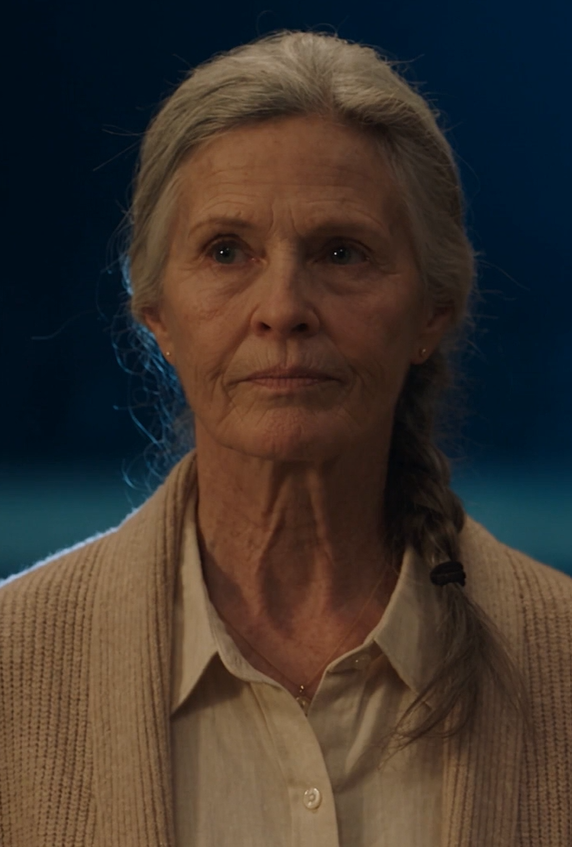
She didn't trust GPS, never had. There was something dishonest about a computer voice telling you where to go. The road was supposed to be something you figured out yourself. She drove her pickup truck, a beat-up Ford from the '90s that Dalton had bought used and kept running through sheer stubbornness and mechanical skill. It burned oil and the radio didn't work and the air conditioning had given up the ghost somewhere around 2003.
But it ran and it was his and that was enough. She left at dawn, drove west into the rising sun with the windows down and the wind in her hair and nothing but the sound of the engine and the road and her own thoughts for company. As she drove, she thought about Silas. Silas who'd come back from Korea in 1953 with nightmares that woke him screaming and a temper that got him fired from three jobs in two months. Silas who'd found a motorcycle in a junkyard and rebuilt it with his bare hands because working with his hands was the only thing that quieted his mind.
Silas who'd met Dalton at a garage in Cincinnati and recognized in him the same ghosts, the same shadows, the same desperate need for something that made sense when nothing else did. They'd started riding together, just the two of them at first, then Lawrence joined, then Garrett, then Raymond and Ezra. Six men who'd served their country in a war nobody wanted to talk about. Six men who'd come home to a world that didn't know what to do with them. So, they'd built their own world on two wheels and open roads in a brotherhood that didn't require explanations.
The Iron Ghosts, not famous, not trying to be, just six men and the bikes they rode and the loyalty they gave each other when nobody else would. Eleanor had watched it happen, had watched Dalton transform from a man who couldn't sleep through the night into someone who could smile again, who could laugh again, who could look at her like she was something worth living for. She'd been 22 when they met. He was 25. She was a school teacher in a town so small it didn't have a stoplight.
Chapter 2
He was a mechanic who smelled like motor oil and cigarettes and danger. Her mother had cried when she said she was going to marry him, begged her to reconsider, told her she was throwing her life away on a man who'd never amount to anything. Eleanor married him anyway. Best decision she ever made. She drove through the day and into the night, stopping only for gas and coffee and bathroom breaks at rest stops that all looked the same.
Fluorescent lights and vending machines and truckers who nodded at her like they understood, like they'd all been on roads that led to places they couldn't turn back from. She crossed state lines, watched the landscape change from farmland to flatland to desert. The air got drier, the sky got bigger, the stars came out in numbers that made her feel small and old and impossibly far from home. She reached Barstow just after midnight. The diner where Bridget had asked to meet was the kind of place that existed in every small town in America.
Vinyl booths, laminate tables, coffee that tasted like it had had sitting on the burner since breakfast. A waitress who called everyone honey and looked like she'd been working there since the Reagan administration. Eleanor slid into a booth by the window and ordered coffee she didn't want. She was too tired to drink it. Too wired to sleep.
She sat with her hands wrapped around the cup and stared out at the parking lot and tried not to think about what was coming. Bridget arrived 20 minutes later. She was 28, maybe 30. Thin in the way that comes from missed meals and stress, not vanity. Dark circles under her eyes.
Scrubs stained with something that might have been coffee or blood or both. A nurse, Eleanor guessed, working nights. Probably had kids at home with a babysitter who charged by the hour. Mrs. Calloway? Bridget slid into the booth across from her.
Thank you for coming all this way. I know it's a lot to ask. It's fine, Eleanor said. You said you had something for me? Bridget reached down and pulled a canvas bag from the oversized purse at her feet.
The bag was old, military issue from the look of it. The kind soldiers used to carry their gear in. The fabric was faded and stained and held together with duct tape in places. She set it on the table between them. He kept this in his closet, Bridget said, under a bunch of old blankets.
He wouldn't let anyone touch it. When he got sick, when he knew he wasn't going to make it, he made me promise, made me swear on my daughter's life that I'd find you and give you this. Eleanor stared at the bag. She didn't touch it. Not yet.
Did he say what it was? No, just that you'd know. And that it was important. Bridget paused, looked at Eleanor with eyes that had seen too much and slept too little. Mrs. Calloway, who was he?
My great uncle. I barely knew him. He didn't talk to the family much. But at the end, when he was dying, he kept saying your name over and over. Red.
Red. Tell Red it's time. Eleanor's throat tightened. We were friends a long time ago. Him and my husband and some others.
They rode together. Motorcycles? Yes. Were they in a club or something? Something like that.
Bridget nodded. She didn't push. Maybe she was too tired. Maybe she didn't want to know. She stood up, pulling her purse over her shoulder.
There's something else in there, she said. An envelope. He wrote you a letter. And there's a photo. Old one.
Polaroid, I think. She hesitated. I hope whatever it is, I hope it helps. He seemed to think it mattered. It does, Eleanor said.
Thank you for bringing it. Bridget nodded, started to leave, then turned back. Mrs. Callaway? At the end, when he couldn't talk anymore, he smiled. Just once.
Like he'd remembered something good. I don't know what it was, but I thought you should know. Eleanor felt something crack inside her chest. Thank you. She waited until Bridget was gone, until the parking lot was empty, and the diner was quiet except for the hum of the refrigerator and the clink of dishes being washed in the back.
Then she opened the bag. Inside was a piece of leather, folded, old. The kind of old that comes from decades, not years. The leather was brown and cracked and worn smooth in places from being handled, from being worn. Eleanor unfolded it slowly.
It was a vest. A motorcycle cut, to be specific. Sleeveless. Patches sewn on by hand with thick thread. The kind of stitching you did when you didn't have money for a tailor.
When you did it yourself in a garage with a needle and determination and brothers watching your back. On the front, a small patch, simple, no frills, Founding Widow Iron Ghosts MC 1959. On the back, larger, the club's colors. A death's head with wings spread wide. Below it in careful script, six signatures in faded ink.