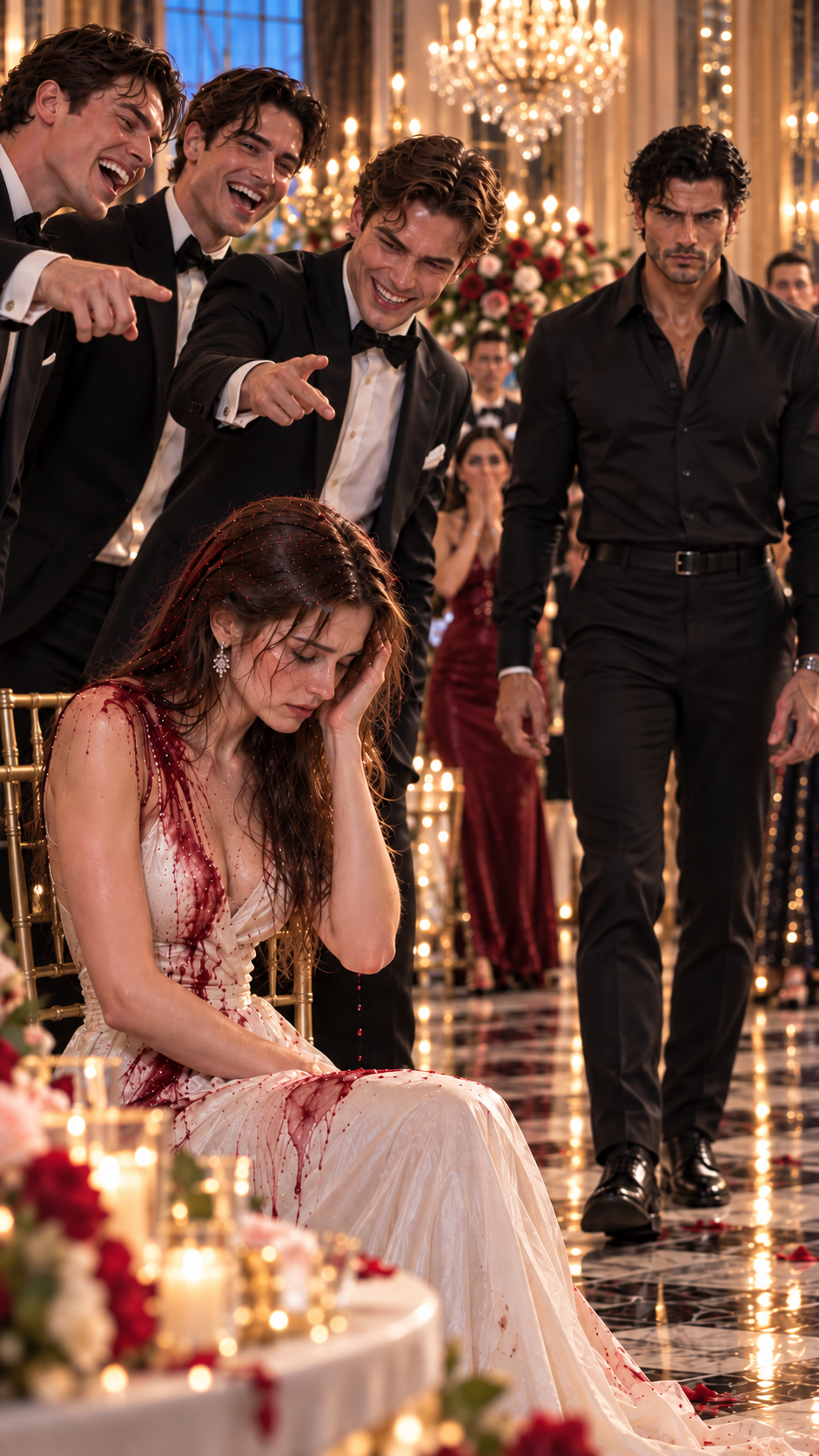
PART 2 — WHAT OUR PARENTS BURIED
At first, I thought Elias meant something sentimental.
That my mother had helped Rachel through a difficult period.
That she had donated money.
Introduced someone.
Made a phone call.
The truth was stranger.
And worse.
Elias sat across from me while my father remained by the window.
“Twenty years ago,” he said, “my family had nothing.”
His father had disappeared when Elias was ten.
Debt.
Gambling.
Another woman.
Nobody ever found out which explanation was true.
Rachel Vale worked double shifts at St. Catherine’s while raising a teenage son in a rented apartment in Bridgeport.
When Elias was fifteen, he developed a heart condition.
Rare.
Progressive.
Expensive.
“The surgery wasn’t experimental,” Elias said. “But the specialist was out of network, and our insurance rejected it twice.”
He gave a humorless smile.
“Nothing dramatic. Just paperwork determining whether a fifteen-year-old heart was worth enough money.”
My father looked down.
I already knew where the story was going.
“My mother paid.”
Elias nodded.
“She found out from Rachel.”
“How much?”
“It doesn’t matter.”
“How much?”
“Two hundred and eighty thousand dollars.”
I stared at him.
Twenty years ago.
Almost three hundred thousand dollars.
My mother had never told me.
“She asked for nothing?”
“Almost.”
I waited.
Elias swallowed.
“She made my mother promise that if anything happened to her, Rachel would check on you sometimes.”
My eyes burned.
“What?”
“Not approach you. Not tell you. Just make sure you were alive. Safe.”
I turned toward my father.
“You knew?”
He shook his head.
“Not until years later.”
Elias continued.
“My mother kept that promise.”
A strange smile touched his face.
“She clipped every tiny mention of you from newspapers. Graduation announcement. University honor roll. A charity 10K you ran when you were twenty-two.”
I almost laughed.
Instead, tears came.
“She followed my life?”
“From a distance.”
“Where is she?”
The question changed the air.
Elias looked down at his hands.
“She died six years ago.”
The tears stopped feeling abstract.
“I’m sorry.”
“She had ovarian cancer.”
He smiled faintly.
“She used to say Anna had terrible timing because she left first.”
My father looked toward the ceiling.
I realized he was trying not to cry.
That might have been the first time in my adult life I had seen him lose a fight with grief.
Elias reached into his pocket.
He pulled out a small envelope.
Old.
Yellowed.
My name was written on the front.
Emma.
I recognized the handwriting.
My mother’s.
Every sound left the room.
“Where did you get that?”
“My mother had it.”
I couldn’t move.
“She was instructed to give it to you on your thirtieth birthday.”
My heart began pounding.
“I’m twenty-nine.”
“I know.”
“Then why do you have it?”
“Rachel gave it to me before she died. She made me promise.”
“To wait.”
“Yes.”
My hand hovered over the envelope.
My birthday was eleven days away.
“Why were you at the gala?”
“Because your father called me.”
I looked at him.
My father finally spoke.
“I knew Rachel had something from your mother.”
“You knew about the letter?”
“I suspected.”
“And you called him?”
“Three weeks ago.”
“Why?”
My father’s face tightened.
“Because I’m sick.”
There are sentences that split life cleanly in two.
Before.
After.
That was one.
I stared at him.
He kept speaking because I couldn’t.
“Pancreatic cancer.”
No.
“Stage four.”
No.
“Doctors think months.”
“No.”
The word came from somewhere low inside me.
I stood so fast the chair struck the wall.
“No.”
“Emma—”
“No.”
I shook my head.
“You don’t get to do this again.”
My father looked shattered.
“You don’t get to lie to me while someone I love is dying and then tell me afterward and call it protection.”
“I know.”
“No, you don’t.”
I was crying now.
Angry tears.
Hot.
Childish.
Unstoppable.
“You knew what Mom’s lie did to me.”
“It was her choice.”
“And this one?”
He looked down.
Mine.
I laughed once.
A horrible little sound.
“Of course.”
Elias stood but did not approach.
My father did.
I stepped back.
That broke something in his face.
Good.
I wanted it to.
For one ugly second, I wanted my father to feel exactly how frightened I felt.
“How long?”
“Three months since diagnosis.”
“Three months.”
“I was trying to—”
“Don’t say protect me.”
He closed his mouth.
“Don’t ever use that word when what you mean is control.”
Silence.
I wiped my face.
“Why tonight?”
My father looked toward Elias.
“Because after I’m gone, there are things you need to know.”
“About the organization?”
“About everything.”
“I don’t want it.”
“That’s the problem.”
A colder fear appeared.
“What does that mean?”
My father walked back to the chair and sat.
“The legitimate companies can be sold. The money can be moved. The criminal side is different. Men have spent thirty years believing this family owes them futures.”
“I’m not you.”
“I know.”
“I won’t become you.”
“I know.”
“Then what?”
He looked at me.
“I’ve spent the last eight years dismantling it.”
That I hadn’t expected.
My father continued.
“Quietly. Laundering nothing new. Closing routes. Selling interests. Moving employees into legitimate businesses. Cutting ties.”
“Why?”
His eyes softened.
“Because your mother asked me to.”
I felt exhausted by the dead speaking through everybody else.
“What did she ask?”
“To make sure you never inherited my sins.”
The line landed softly.
That made it worse.
My father looked toward the city.
“When Anna got sick, she told me something I hated hearing.”
“What?”
“That I had built a kingdom our daughter would eventually have to escape.”
He smiled without humor.
“She said a father who leaves his child a throne made of knives hasn’t left her an inheritance. He’s left her a wound.”
My breath caught.
“She said that?”
“Exact words.”
That sounded like my mother.
She had once told a priest his homily was too long.
Dying had apparently not made her less direct.
“So you’re dismantling everything.”
“Almost everything.”
“What remains?”
“One problem.”
Of course.
There was always one problem.
My father glanced toward the ballroom.
“Richard Hale.”
Preston’s father.
I frowned.
“What about him?”
“For ten years, Hale Hospitality has helped wash money for families I cut out of our network.”
Elias added quietly, “Through inflated renovation contracts and overseas management fees.”
I looked between them.
“You know this?”
“My firm has been tracing shell-company transactions for Michael.”
My eyes narrowed.
“So that’s the real reason you know each other.”
“Yes.”
My father nodded.
“Richard believes I’m dying.”
I froze.
“You told him?”
“No.”
“He found out anyway.”
“Through who?”
“That’s what we don’t know.”
A soft knock sounded.
One of my father’s men opened the door.
“Michael.”
He held out a phone.
“Something you need to see.”
My father took it.
Read.
His face became still.
“What?”
He handed me the phone.
A video filled the screen.
Chase’s recording.
Already online.
Someone had uploaded it.
The caption read:
BELLWEATHER HEIRESS GETS WINE-DUMPED BY HALE BILLIONAIRE SON.
Thousands of views.
Then ten thousand.
Then twenty.
Comments refreshed beneath it faster than I could read.
But that wasn’t what my father cared about.
He pointed to a figure in the background.
A man standing beside Richard Hale.
Older.
Gray suit.
Thin face.
I recognized him.
Daniel Voss.
My father’s longtime attorney.
The man who had prepared my first will.
The man who sent me birthday flowers every year.
“Daniel?” I said.
My father nodded once.
Then Elias zoomed in.
Voss was watching Preston.
Not me.
Preston looked toward him seconds before lifting the wine.
My stomach turned.
“No.”
My father took the phone.
“Play it again.”
We watched.
Preston talking.
Voss in the background.
A tiny nod.
Preston reached for a passing waiter’s wineglass.
My father’s expression emptied completely.
The humiliation had not been random.
Elias whispered, “They wanted Michael to react publicly.”
“Why?” I asked.
My father looked at me.
“To prove I still operate like the man they need me to be.”
Understanding arrived slowly.
“If you threatened Preston—”
“Richard could claim coercion.”
“If your men touched him—”
“He could bring federal attention.”
Elias finished it.
“And stop Michael from completing the transfer of his legitimate holdings.”
I stared at the phone.
Preston had humiliated me.
But somebody else had chosen the stage.
The audience.
The timing.
The daughter nobody recognized.
“Does Preston know?”
My father shook his head.
“Maybe not everything.”
I thought of Preston’s face when my father entered.
That fear had been real.
Which meant he was either an excellent actor—
or another idiot being used by his father.
“Where is Richard?”
One of my father’s men answered.
“Gone.”
Of course.
The gala continued outside.
Music.
Crystal.
Laughter rebuilding itself.
My father looked at Elias.
“Get Emma home.”
I stepped forward.
“No.”
“Emma.”
“No more sending me away before the adults talk.”
“This could become dangerous.”
“It already is.”
“You’re not involved.”
“Someone poured wine on me to manipulate you.”
His jaw tightened.
“I think that qualifies.”
Elias’s mouth almost moved into a smile.
My father noticed.
“Don’t encourage her.”
“I didn’t say anything.”
“You have a face.”
“So do you.”
Despite everything, a laugh escaped me.
My father laughed too.
One second.
Maybe two.
Then his laughter became a cough.
He turned away.
The sound deepened.
His hand went to his mouth.
When he pulled it away—
there was blood.
Everything inside me stopped.
“Dad?”
He looked at his palm.
Then at me.
The strength disappeared from his face.
“Emma.”
He collapsed.
Hospitals have their own weather.
Too bright.
Too cold.
Time moves differently under fluorescent lights.
My father slept behind glass in a private ICU room while machines measured what remained of him in green lines and quiet beeps.
The doctors said internal bleeding.
Tumor complications.
They stabilized him.
For now.
I sat beside his bed until 3:17 in the morning.
Elias sat outside.
He never asked to come in.
At four, I found him asleep in a plastic chair, head tilted against the wall.
His expensive shirt was wrinkled.
My wine-stained blouse was sealed inside a hospital bag beside me.
His jacket still covered my shoulders.
I touched his arm.
He woke immediately.
“How is he?”
“Alive.”
Elias nodded.
For a while, neither of us spoke.
Then I held out my mother’s envelope.
“I want to open it.”
He looked at the date written on the back.
My thirtieth birthday.
“Your mother was specific.”
“My mother has been dead nineteen years.”
“That doesn’t make promises less real.”
“It makes them harder to argue with.”
He almost smiled.
I turned the envelope between my fingers.
“Did your mother ever tell you what’s inside?”
“No.”
“You never opened it?”
“No.”
“Not once?”
“Not once.”
“Why?”
He looked through the glass at my father.
“Because when somebody saves your life, you become careful with the things they ask you to protect.”
Something in my chest shifted.
“Elias.”
“Yes?”
“Why aren’t you married?”
That surprised him.
“What?”
“You’re thirty-four, rich, reasonably tolerable.”
“Reasonably?”
“Answer.”
He looked down.
“I almost was.”
“What happened?”
“She died.”
I regretted the question instantly.
“I’m sorry.”
“Car accident. Five years ago.”
“What was her name?”
“Claire.”
There was no performance in his grief.
No tragic pause engineered for sympathy.
Just a name placed gently between us.
I understood that kind of mourning.
The kind that no longer screams but never fully stops breathing.
He glanced at me.
“Why aren’t you?”
“Married?”
“Yes.”
I leaned back.
“Because every man who learns who my father is starts behaving differently.”
“How?”
“Some get scared.”
“Understandable.”
“Some become impressed.”
“Worse.”
“Exactly.”
“And some?”
I looked at him.
“Some decide being loved by Michael Carter’s daughter is the same thing as getting access to Michael Carter.”
Elias nodded slowly.
“So you dress like you did tonight.”
I frowned.
“What?”
“The blouse.”
I looked down.
“You noticed.”
“Everybody noticed.”
“Not the way you did.”
“No.”
“Why?”
His answer was quiet.
“Because I knew the dress code.”
“And?”
“And I figured somebody who could afford anything but chose a thirty-dollar blouse was trying to find out who people became when they thought she had nothing.”
That stopped me.
I had never explained it that clearly to myself.
“Did it work?” he asked.
I thought of Preston.
Chase.
The laughing guests.
Then Owen telling Preston that was enough.
Elias walking forward.
“It did.”
He looked at me.
“And are you happy you know?”
“No.”
“That’s usually the problem with truth.”
At sunrise, my father woke.
The first thing he asked was whether I had gone home.
When I said no, he closed his eyes and muttered, “Stubborn.”
I held his hand.
“You raised me.”
“Your mother did the damage.”
I laughed.
Then cried.
Then I lowered my forehead to his hand.
“I’m angry with you.”
“I know.”
“I might be angry for a while.”
“I know.”
“But I’m here.”
His fingers tightened weakly around mine.
“That’s enough.”
It wasn’t forgiveness.
But it was love.
Sometimes those things arrived on different schedules.
The next forty-eight hours moved quickly.
Federal investigators raided two Hale Hospitality offices.
Elias’s firm turned over years of forensic accounting.
Daniel Voss disappeared.
Richard Hale denied everything.
Preston called me eleven times.
I ignored ten.
On the eleventh, I answered.
His voice sounded different without an audience.
“I need to tell you something.”
“Then tell me.”
“My father told me you were somebody pretending to get into the gala.”
I said nothing.
“He said you were investigating guests.”
“So you poured wine on me?”
“I thought if I embarrassed you, you’d leave.”
“That explanation doesn’t help you.”
“I know.”
Silence.
Then:
“I’m sorry.”
This time, the words were different.
Not I didn’t know.
Not a joke.
Just sorry.
“I was cruel to you because I thought there would be no consequences,” he said. “Which means I was cruel because I thought you had no power.”
I closed my eyes.
“That’s probably the first true thing you’ve said to me.”
“I gave federal investigators my phone.”
“Why?”
“Because my father texted me before the gala.”
My pulse quickened.
“What did he say?”
“That Daniel Voss would point out a woman and I needed to make sure she left.”
“Did he explain why?”
“No.”
“And you just did it?”
A long silence.
“Yes.”
He sounded ashamed.
Good.
Shame was not redemption.
But sometimes it was the first honest door toward it.
“Preston.”
“Yeah?”
“If nobody had come through those doors—if my father had never arrived—would you still regret it?”
He did not answer quickly.
I respected him slightly more for that.
Finally he said, “I don’t know.”
“That’s the part you need to live with.”
Then I hung up.