PART 3 — THE LETTER
My father came home eight days later.
Not to his mansion.
He refused.
He asked me to take him to the lake house in Winnetka where we had spent summers when I was a child.
It was smaller than people expected.
Weathered cedar.
A stone chimney.
A dock reaching into gray water.
My mother had loved that house because nobody important ever visited.
On the night before my thirtieth birthday, snow began falling again.
Elias came for dinner.
My father insisted.
“Why?” I asked.
“Because I’m dying and therefore allowed to be manipulative.”
“You were manipulative before.”
“Yes, but now everyone feels guilty pointing it out.”
Elias arrived carrying soup from a little Italian restaurant my father liked.
Not champagne.
Not flowers.
Soup.
My father approved immediately.
We ate at the old kitchen table.
For two hours, my father told stories.
Most I had heard.
Some I hadn’t.
He told Elias about the time I was nine and sold lemonade to one of his most feared captains for twenty dollars a glass because, according to me, “criminals have disposable income.”
Elias nearly choked.
“I was nine.”
“You negotiated him to sixty dollars.”
“He wanted three glasses.”
“He still talks about it.”
Then my father grew quieter.
He looked around the kitchen.
“Anna painted that wall three times.”
I followed his gaze.
Pale yellow.
“She hated yellow.”
“She kept choosing the wrong yellow.”
“What was the right yellow?”
“She died before deciding.”
The laughter disappeared.
My father touched the table.
“There are unfinished things everywhere.”
I reached for his hand.
“Then maybe unfinished doesn’t always mean ruined.”
He looked at me for a long time.
“You sound like her.”
“I barely remember her voice.”
“That doesn’t mean she stopped being part of yours.”
At 11:52 p.m., my father went upstairs.
He kissed my forehead.
“Eight minutes.”
“For what?”
He glanced at the envelope on the counter.
“Until your mother gets the last word.”
Elias and I sat by the fireplace.
The letter lay between us.
11:57.
11:58.
11:59.
Midnight.
I turned thirty.
No music.
No cake.
Just snow tapping gently against the windows.
I opened the envelope.
Inside were four handwritten pages.
And a photograph.
My mother.
Thin.
Wearing a head scarf.
Smiling from a hospital bed.
Beside her stood Rachel Vale.
And between them—
a teenage boy.
Elias.
Fifteen.
Pale.
Terrified.
Alive.
I looked at him.
He stared at the photograph.
“I’ve never seen that.”
My hands shook as I unfolded the letter.
I began reading silently.
Then stopped.
“No.”
Elias leaned forward.
“What?”
I covered my mouth.
The first line blurred.
“Read it,” he whispered.
So I did.
Out loud.
“Dear Emma,
If Rachel has kept her promise, then you’re thirty now.
Which is ridiculous, because as I write this, you are seven and furious because your father cut your toast into triangles instead of squares.”
I laughed through tears.
From upstairs came my father’s faint cough.
I continued.
“I have spent months wondering what a mother is supposed to leave her daughter when she knows she cannot stay.
Jewelry seemed silly.
Money seemed temporary.
Advice felt arrogant.
So I decided to leave you the truth.”
My heart began beating faster.
“Your father is not a good man in every way.”
Elias looked toward the stairs.
I kept reading.
“But he has loved us with every good piece still left inside him.
Do not spend your life defending his sins.
Do not spend it punishing yourself for loving him either.
People are rarely one thing.”
Tears dropped onto the page.
The next paragraph was about Rachel.
About Elias.
About the surgery.
Then came a line underlined twice.
“If the boy in the photograph is alive when you read this, then one good thing survived me.”
Elias looked away.
His eyes filled.
I reached across the table.
He let me take his hand.
I continued.
“Rachel thinks I saved him.
That isn’t true.
I only moved money.
Rachel saved him by refusing to stop asking.
His doctors saved him with their hands.
And Elias saved himself by being fifteen years old and stubborn enough to keep breathing.”
Elias laughed once through his tears.
“That sounds like her.”
I turned the page.
The next lines were different.
My mother’s handwriting had become shakier.
“Now I need to tell you something your father does not know.”
I stopped.
Elias’s fingers tightened around mine.
My mouth went dry.
I read.
“Michael believes you are his biological daughter.
You are not.”
The room went completely silent.
For several seconds, neither of us breathed.
I stared at the sentence.
Then read it again.
No.
My eyes searched for some alternate meaning.
There wasn’t one.
Footsteps sounded on the stairs.
My father appeared in the doorway.
He saw my face.
“What?”
I couldn’t speak.
“Emma?”
I handed him the letter.
He read the paragraph.
His body went still.
Utterly still.
Then he sat down.
Not because he chose to.
Because his legs gave way.
“No.”
He read it again.
“She never—”
His voice disappeared.
I could barely hear myself.
“You didn’t know?”
He looked at me.
The devastation in his eyes answered before his mouth did.
“No.”
For thirty years, Michael Carter had believed I was his daughter.
In every possible way.
Except blood.
I read the next paragraph.
“Before I met Michael, I loved another man.
He was young and frightened and not strong enough for the life in front of him.
When I learned I was pregnant, he was already gone.
Then I met your father.
I told Michael I was pregnant.
He knew.
But three weeks later, I lied and told him the dates had been wrong and the baby was his.
He believed me because he wanted to.”
My father covered his face.
“I knew she was pregnant.”
He looked at me.
“I didn’t care.”
That stopped me.
“You knew?”
“I knew there was a chance you weren’t mine.”
His voice broke.
“She told me about somebody before me. Then later she said you were mine.”
“Why didn’t you ask for a test?”
He stared at me as though the question itself made no sense.
“Because I was there when you were born.”
Tears ran down his face.
“You grabbed my finger.”
He shook his head.
“What test was I supposed to need after that?”
Something inside me cracked open.
I kept reading.
“Michael may discover the truth someday.
If he does, tell him I am sorry for the lie.
But I am not sorry he became your father.
Because biology gave you life.
Michael gave you a childhood.”
My father made a sound I had never heard from him before.
Small.
Broken.
I went to him.
He wrapped both arms around me.
Hard.
Like I was still seven.
Like somebody might take me.
I buried my face against his shoulder.
“I’m your daughter.”
He was crying openly now.
“I know.”
“I’m your daughter.”
“I know, baby.”
“You hear me?”
“Yes.”
His hands shook against my back.
“You are the best thing that ever had my name.”
For one impossible minute, I thought that was the twist.
That this was the wound my mother had saved until thirty because she believed I would finally be old enough to understand that love and blood were not the same thing.
I was wrong.
There was another page.
Elias saw it first.
“Emma.”
I pulled away from my father.
The last sheet had folded against the back of the envelope.
I opened it.
One paragraph.
My mother’s handwriting was almost illegible.
“If you ever want to know where you came from biologically, Rachel knows the name of your father.”
My stomach turned.
I looked at Elias.
He had gone pale.
“What?”
He stood.
Too quickly.
His chair scraped backward.
“Elias.”
He stared at the letter.
“No.”
My father’s expression changed.
“What is it?”
Elias shook his head.
“My mother never told me.”
“Told you what?”
He looked at me.
And suddenly I remembered something.
Rachel Vale.
Single mother.
A husband who disappeared.
A man who had left when Elias was ten.
A man nobody had found.
No.
Impossible.
Elias reached for the photograph with shaking hands.
He turned it over.
There was writing on the back.
Not my mother’s.
Rachel’s.
Three words.
For Anna.
I’m sorry.
Below that, a name.
Thomas Vale.
The room tilted.
Elias whispered, “My father.”
I couldn’t feel my hands.
My father stood slowly.
“No.”
Elias’s face had lost all color.
“Thomas disappeared when I was ten.”
My mother became pregnant nineteen months later.
“He knew Anna?” I asked.
Elias backed away.
“I don’t know.”
“You said your mother knew my mother from the hospital.”
“She did.”
“Before that?”
“I don’t know.”
My father took the photograph.
His expression became dangerous for the first time since leaving the hospital.
“Rachel knew.”
Elias closed his eyes.
“If Thomas is your biological father…”
Nobody finished the sentence.
We didn’t need to.
Elias and I had held hands by the fire.
I had started to trust him.
Something warmer had been growing beneath every conversation.
Something neither of us had named yet.
And suddenly—
he might be my half brother.
I was going to be sick.
Elias walked outside.
No coat.
Into the snow.
I followed him to the porch.
He stood facing the lake.
“Elias.”
“Don’t.”
His voice broke.
“I need a second.”
I wrapped my arms around myself.
Snow collected in his dark hair.
“You didn’t know.”
“That doesn’t make this less insane.”
“No.”
He laughed bitterly.
“Your mother paid for my heart surgery.”
I swallowed.
“And your father may have been my father.”
He turned toward me.
The expression on his face destroyed whatever fragile happiness had existed minutes earlier.
“This is why my mother never wanted me to find you.”
“What?”
He pulled out his phone.
“There’s something I didn’t tell you.”
Of course there was.
“After she died, I found emails between Rachel and your mother.”
“You said you only had the letter.”
“The letter was sealed. The emails weren’t.”
“Why didn’t you tell me?”
“Because most of them were about treatment. You. Me. Nothing that seemed important.”
He searched his phone.
Then handed it to me.
A scanned email dated twenty-two years earlier.
From my mother.
Rachel, you have to make Thomas understand he cannot come back now. Michael loves this baby already. If Thomas comes back, he will destroy all of us.
My vision blurred.
Another email.
Rachel’s reply.
He says he never knew you were pregnant.
My mother:
That is better.
Rachel:
He is Elias’s father too, Anna. You cannot ask me to keep this from everyone forever.
I looked up.
Elias was crying silently.
No sound.
Just tears.
“My mother knew.”
He pressed his fist against his mouth.
“My whole life she knew I had a sister.”
The word sister hurt.
Not because I hated it.
Because five minutes earlier, part of me had been imagining something completely different.
I gave him back the phone.
“We need a DNA test.”
“Yes.”
“Immediately.”
“Yes.”
Behind us, the porch door opened.
My father stood there.
He looked weaker by the minute.
“We already have one.”
I turned.
“What?”
He held the letter.
“There’s a note at the bottom.”
I ran back inside.
In tiny handwriting beneath my mother’s signature:
Ask Rachel about the St. Catherine’s records. The truth was tested once already.
Elias stared.
“Medical records.”
He grabbed his phone.
“What are you doing?”
“Vale Meridian acquired St. Catherine’s archival storage company three years ago.”
I almost laughed.
Of course the billionaire had accidentally bought the warehouse containing the answer to whether we were siblings.
It took him eleven minutes.
Eleven minutes that felt like eleven years.
He made three calls.
Used words like authorization, legacy records, digitized pathology.
Then stopped.
Someone emailed him a file.
He opened it.
Read.
His eyes widened.
“What?”
He said nothing.
“Elias.”
He looked at me.
“Thomas Vale wasn’t your father.”
My lungs emptied.
“What?”
He turned the phone around.
His medical history.
Rachel had listed Thomas Vale as his legal father.
But there was a genetic screening attached from his heart surgery.
Paternity exclusion.
Thomas Vale was not biologically related to Elias.
I stared at him.
“What does that mean?”
He laughed.
Then cried at the same time.
“My mother apparently had secrets too.”
I sat down.
The emotional whiplash was too much.
My father actually muttered, “Jesus Christ.”
Elias covered his face.
“So we’re not…”
“No.”
“Not siblings.”
“No.”
I laughed.
He laughed.
My father laughed.
It was hysterical and exhausted and probably inappropriate.
But for thirty seconds, the kitchen filled with something almost joyful.
Happy.
Absurdly happy.
The universe had frightened us and then handed us back the possibility we thought we had lost.
Elias sat beside me.
Our shoulders touched.
Neither of us moved away.
My father watched us.
A small knowing smile appeared.
“Don’t start,” I said.
“I didn’t say anything.”
“You have a face.”
Elias laughed.
“That’s what he said about me.”
My father pointed between us.
“That. Whatever that is. Wait until I’m dead. I don’t need complications.”
“Dad.”
“I’m serious.”
I smiled.
For the first time in weeks, I felt something resembling a future.
Then my father’s smile vanished.
He put one hand against his chest.
“Dad?”
His eyes found mine.
Confused.
Almost apologetic.
He whispered my name.
Then he fell.
The ambulance came fast.
Not fast enough.
The paramedics worked on him on the kitchen floor.
Then in the ambulance.
Then in the emergency room.
At 3:42 a.m., on the morning of my thirtieth birthday, a doctor with kind brown eyes walked toward me.
I knew before he spoke.
There are certain walks doctors learn.
Slow enough not to frighten you.
Gentle enough not to lie.
“I’m very sorry.”
That was all.
The city did not shake.
The lights did not dim.
No thunder.
No cinematic mercy.
My father simply stopped existing.
Michael Carter.
Feared by hundreds.
Loved by one daughter he had just learned did not share his blood.
Gone.
I stood in the hallway holding my mother’s letter.
Elias stood beside me.
He didn’t touch me until I reached for him.
Then he held on.
My father’s funeral was five days later.
Snow covered Chicago.
Thousands came.
Politicians.
Union leaders.
Business owners.
Police officers who pretended they had never investigated him.
Old men with scars.
Young men in expensive suits.
Women from charities he funded anonymously.
A janitor from my elementary school.
A waitress from a restaurant he had owned thirty years earlier.
And Preston Hale.
He stood alone at the back.
No father beside him.
Richard Hale and Daniel Voss had both been arrested two days earlier after Preston turned over enough evidence to federal investigators to collapse the entire scheme.
When I passed him, Preston lowered his head.
“I’m sorry about your father.”
“Thank you.”
He hesitated.
Then said, “He scared the hell out of me.”
Despite myself, I smiled.
“He enjoyed that.”
“I figured.”
Then he stepped aside.
No redemption speech.
No request for forgiveness.
Just space.
Sometimes people did not need to become part of your life again to prove they had changed.
Sometimes leaving differently was enough.
At the cemetery, I stood beside my father’s grave.
The headstone read:
MICHAEL JAMES CARTER
BELOVED HUSBAND
BELOVED FATHER
Nothing about business.
Nothing about power.
Nothing about the men who feared him.
Just the two things he had actually wanted to be good at.
Husband.
Father.
Elias stood several feet away.
He gave me privacy until I held out my hand.
Then he came closer.
“I found one more thing,” he said.
I looked at him.
He handed me a small audio recorder.
“What is this?”
“Your father made it at the hospital.”
My chest tightened.
“He told me to give it to you after the funeral.”
Of course he had.
Even dead, my family refused to stop delivering messages.
I pressed play.
Static.
Then my father’s voice.
Weak.
Tired.
“Emma.”
I closed my eyes.
“If Elias is giving you this, then I finally ran out of ways to avoid dying.”
A laugh escaped me through tears.
“That sounds like him,” Elias whispered.
My father continued.
“I’m going to tell you one thing, and for once you are not allowed to argue.”
I covered my mouth.
“I don’t care whose blood made you.”
My knees weakened.
“I don’t care whose eyes you inherited or whose name was written on some laboratory form thirty years ago.”
His voice cracked.
“I was there when you took your first breath.”
The cemetery disappeared behind tears.
“I taught you to ride a bicycle badly. I checked under your bed for monsters until you were eleven even though you pretended you didn’t need me to. I sat through four school plays where you forgot every line except one. I scared your first boyfriend so badly he moved to Wisconsin.”
I laughed.
Elias did too.
“So here is the only truth I have left.”
A pause.
Then my father said:
“Blood can tell you where you came from, Emma. It cannot tell you who stayed.”
I stopped breathing.
The recording continued.
“Your mother stayed as long as she could.”
A faint breath.
“I stayed as long as I could.”
Then softer:
“Now you stay.”
The recording clicked off.
That was it.
No final declaration.
No hidden fortune.
No threat from beyond the grave.
Just an instruction.
Stay.
I looked at the grave.
Snow landed softly across my father’s name.
Elias took my hand.
This time, I didn’t wonder whether his name, his money, my father’s history, or my mother’s secrets made the gesture dangerous.
I just held on.
Six months later, I sold the mansion.
I dissolved the last companies tied to my father’s old organization.
I turned his lake house into a foundation for families dealing with cancer and catastrophic medical debt.
We named it after Anna Carter and Rachel Vale.
Preston donated anonymously.
I knew anyway.
I let him keep the anonymity.
Some acts mattered more when nobody applauded.
Elias and I moved slowly.
Painfully slowly.
There were days when looking at him reminded me of every secret our mothers had carried.
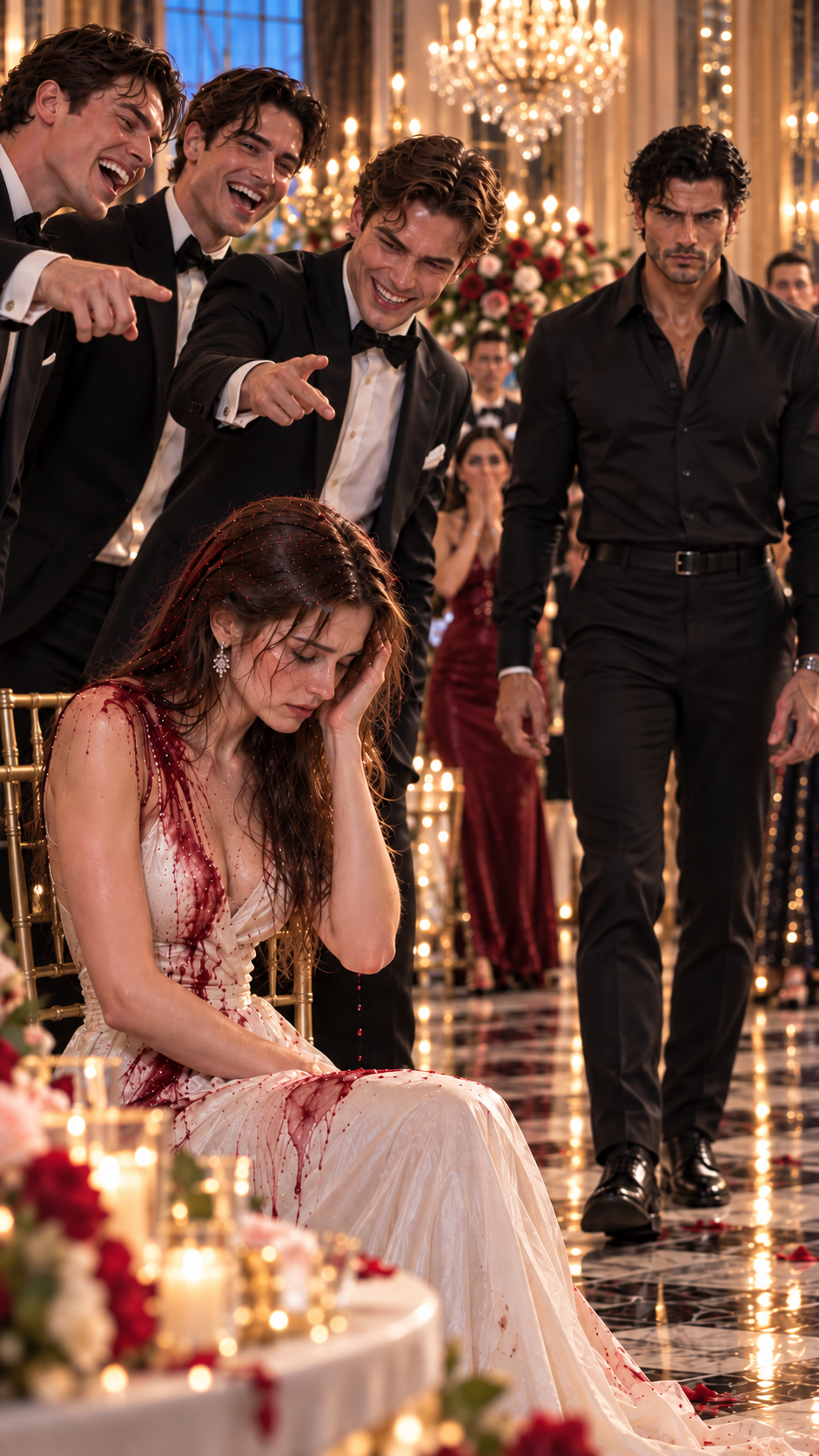
Other days, he was simply the man who had taken off his jacket in a ballroom full of people who had decided not to see me.
A year after my father died, Elias took me back to the Bellweather Grand.
I almost refused.
Then I understood why.
The ballroom was empty.
No gala.
No guests.
Just chandeliers glowing above polished floors.
He led me to the same marble column.
“The scene of the crime,” I said.
“Technically, yes.”
“You’re very romantic.”
“I’m trying.”
He pulled something from his pocket.
Not a ring.
A folded piece of paper.
I opened it.
A receipt.
Thirty-two dollars.
I stared at him.
“What is this?”
“The blouse.”
My eyes filled before I could stop them.
“You found the same one?”
“No. They stopped making it.”
“Then what?”
“I donated thirty-two dollars to the foundation in your mother’s name.”
I laughed.
“That may be the cheapest romantic gesture a billionaire has ever made.”
“It gets worse.”
“How?”
“I set it to recur monthly.”
I laughed harder.
He smiled.
Then his expression softened.
“I remember watching you that night before Preston touched the wine.”
“I remember.”
“You looked uncomfortable.”
“I was.”
“And alone.”
I swallowed.
“I was.”
“I knew who you were.”
“Yes.”
“But that wasn’t why I walked over.”
The ballroom seemed impossibly quiet.
“Why did you?”
He looked at me.
“Because everybody else was watching what happened to you.”
His voice lowered.
“And you were the only person in the room trying not to cry.”
My throat tightened.
“That’s not very flattering.”
“It was to me.”
He took my hand.
No proposal.
Not yet.
No giant ending.
No orchestra.
Life had already taught us what dramatic promises were worth.
Instead, we stood under the same chandeliers where one year earlier strangers had laughed at me because they thought I was nobody.
Maybe that was the secret my parents had spent their whole lives trying to teach me badly.
Names changed rooms.
Money changed behavior.
Fear changed loyalties.
But none of those things answered the only question that mattered when the room finally emptied.
Who stayed?
I looked at Elias.
Then at my reflection in the dark ballroom window.
For one second, I could almost see my mother behind me.
My father beside her.
Rachel somewhere near them.
Not ghosts.
Just memory.
The invisible architecture beneath every person we become.
Elias squeezed my hand.
“You ready to go?”
I looked once more at the marble column.
At the place where humiliation had started everything.
Then I smiled.
“Yes.”
We walked toward the doors together.
And as the chandeliers disappeared behind us, I finally understood why my father’s last word had not been goodbye.
It had been stay.