Chapter 5
The recovered video changed the case.
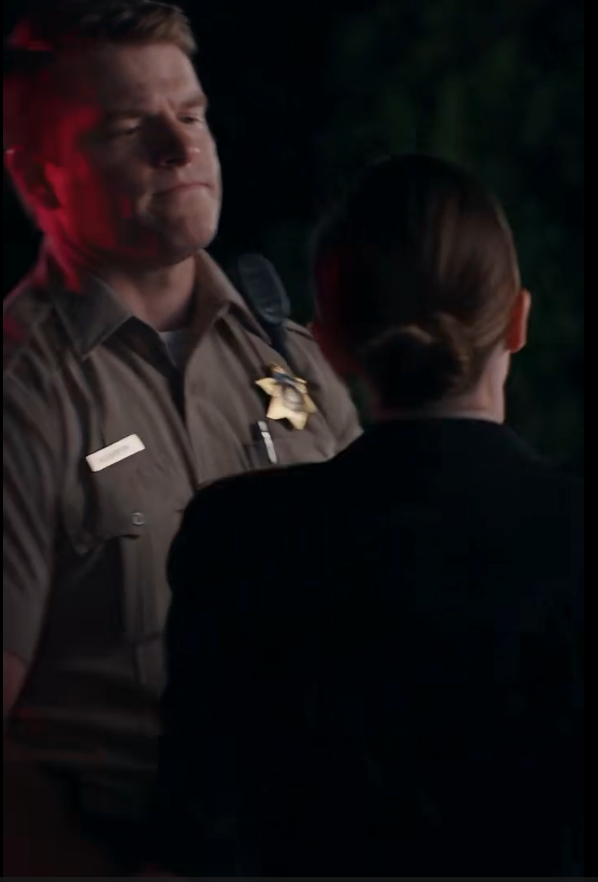
It also changed how I saw Officer Aaron Pike.
We watched it on the conference-room screen.
Mercer’s body camera shook as he leaned into my vehicle after I had been cuffed.
His hand moved quickly.
He opened my coat.
Reached into the pocket.
Removed the envelope.
My jaw clenched.
Then he said something.
The microphone caught it clearly.
“Got it.”
A second voice spoke.
Pike.
“Got what?”
Mercer turned.
“Nothing.”
Pike stepped closer.
“Dylan.”
“Back off.”
“You said this was a vehicle stop.”
“It is.”
“Then why are you taking her mail?”
Mercer lowered his voice.
“Do yourself a favor and forget you saw it.”
Pike stared at him.
“What the hell is going on?”
Mercer moved away.
That was when the video cut.
Twenty-seven seconds later it resumed.
The envelope was gone.
I looked at Vale.
“Pike didn’t know.”
“Apparently not.”
“What happened during the missing twenty-seven seconds?”
The agent switched files.
A second recording appeared.
Pike’s body camera.
Unlike Mercer, Pike had not deleted his footage.
We watched Mercer step behind the patrol car.
He tore open the envelope.
Read something.
His expression changed.
Then he pulled out a lighter.
My chest tightened.
He burned the letter.
But not completely.
A gust of wind carried part of it beneath the cruiser.
The fragment investigators found.
Mercer stuffed the remaining ash into a drainage ditch.
Then he made a phone call.
The audio was faint.
Investigators had enhanced it.
Mercer whispered, “She had the letter.”
Pause.
“No.”
Pause.
“I destroyed it.”
Another pause.
Then:
“Tell Rainer it’s done.”
Nobody in the room moved.
I felt as if someone had punched through my ribs.
Vale stopped the video.
For several seconds, the only sound was the ventilation system.
“Rainer,” I said.
Vale’s voice was careful.
“It appears significant.”
“Significant?”
“Naomi—”
“Don’t call me Naomi.”
He stopped.
I pointed at the screen.
“That officer said the name of the general who pinned my promotion less than an hour before this happened.”
“Yes.”
“And you’re still going to tell me not to reach conclusions?”
“Yes.”
“Why?”
“Because the easiest conclusion is often the one someone wants you to reach.”
I hated that he was right.
At 2:15 a.m., Mercer requested an attorney.
At 2:26, Police Chief Voss stopped answering federal investigators.
At 2:41, agents arrived at Voss’s home.
He was gone.
At 3:03, General Rainer’s secure military phone went offline.
That was worse.
Generals do not accidentally become unreachable during federal investigations.
By 3:20, a nationwide alert had been issued discreetly through military and federal channels.
At 3:47, Pike asked to speak with me.
I almost refused.
Then curiosity won.
They put us in an interview room.
He entered without his duty belt.
He looked exhausted.
“Captain.”
I said nothing.
He sat across from me.
“I’m sorry.”
“Which part?”
He flinched.
“The cuffs.”
“You helped put them on me.”
“I know.”
“You told me not to resist while I wasn’t resisting.”
“I know.”
“You watched him insult me.”
His eyes dropped.
“I know.”
I leaned forward.
“Then tell me something useful.”
He took a breath.
“Mercer has been acting strange for months.”
“That’s useful?”
“He started volunteering for Route 17.”
I waited.
“Almost every Thursday night. Same sector.”
“What’s on Route 17?”
“A distribution corridor. Warehouses. Government subcontractors. Industrial parks.”
Meridian Strategic Systems had a facility twelve miles from where I was stopped.
I knew that because I had seen it on Vale’s map.
Pike continued.
“Sometimes Mercer would tell me to ignore certain vehicles.”
“What vehicles?”
“Usually government plates. Contractor plates. Once a military transport.”
“Did you report it?”
“I mentioned it to a sergeant.”
“What happened?”
“Nothing.”
“Then?”
“I started writing down plate numbers.”
That surprised me.
He reached into his shirt pocket.
Nothing was there.
“They already took my notebook.”
“Who?”
“The FBI.”
“Why didn’t you come forward sooner?”
His face hardened with shame.
“Because I had a mortgage, a wife six months pregnant, and a chief who destroys people who cross him.”
It was not heroic.
But it was human.
“I should’ve done it anyway,” he said.
I didn’t disagree.
He looked at me.
“There’s something else.”
“What?”
“Mercer knew who you were before he walked up to your car.”
My stomach tightened.
“How?”
“When your vehicle passed us, he looked at the plate and said, ‘That’s her.’”
I stared.
“You heard him say that?”
“Yes.”
“What exactly?”
Pike repeated it.
“That’s her. Don’t screw this up.”