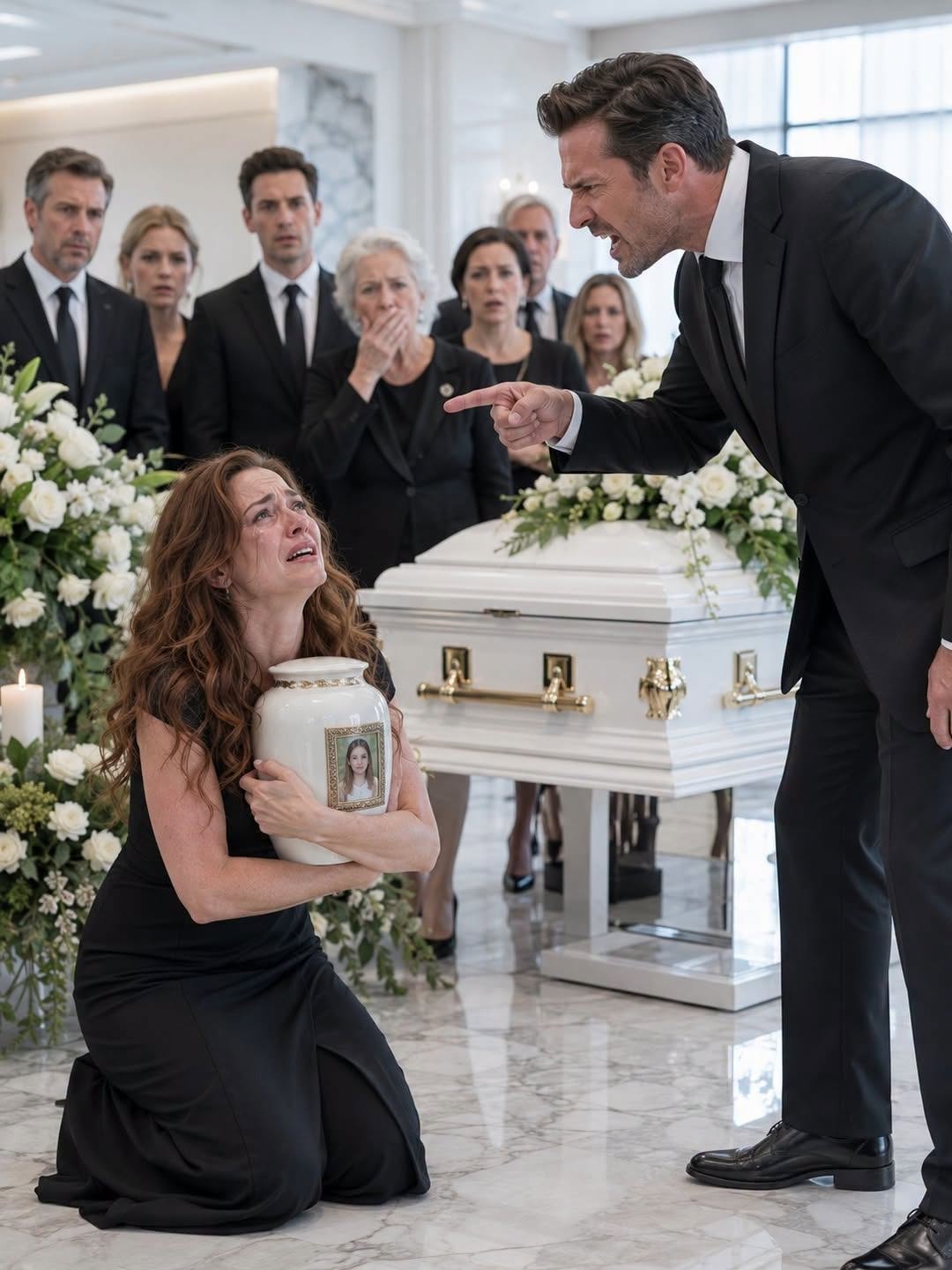
The morning air outside the Chicago Memorial Children’s Hospital was laced with late-autumn frost, biting at my raw cheeks as I stepped through the sliding glass doors. In my arms, wrapped in a thick cashmere blanket that still held the faint, sweet scent of baby lotion, was a polished white porcelain urn. It weighed almost nothing—less than three pounds—yet every step I took felt as though I were dragging the weight of an entire collapsed world across the concrete.
My phone vibrated in my coat pocket. It was the forty-second time I had called Brendan in the past seventy-two hours, but this time, the screen lit up with his name incoming. He was actually calling back.
I pressed the device to my ear, my chest tightening with a faint, foolish flicker of hope that had no business existing after everything that had happened.
"Brendan—" I started, my voice paper-thin and rasping from days of dry crying.
"Stop causing a scene and bring the child home," Brendan cut in before I could finish. His voice was cool, impatient, and clipped—the tone he reserved for underperforming vendors or tedious board meetings. "I already authorized the money for her treatment. The hospital finance department just sent the receipt confirmation to Ximena. The bill has been taken care of. Stop bothering me."
I froze on the sidewalk, the ambient roar of city traffic washing over me like ice water.
In the background of the call, beneath the smooth baritone of my husband’s voice, I heard the faint jazz syncopation of a saxophone, the chime of crystal glasses clinking, and a woman’s melodic, bell-like laugh—a laugh I would recognize anywhere. It belonged to Samantha Hayes, the senior vice president of public relations at Fairchild Enterprises, and Brendan’s constant shadow for the past eighteen months.
"The bill is paid, Nora," Brendan added, his sigh heavy with annoyance. "So bring her back to the estate. We have the quarterly donor dinner with the board tonight, and I need you at the house to manage the caterers. Don't be late."
For several seconds, my tongue felt leaden, glued to the roof of my mouth.
Our three-year-old daughter, Chloe, had died three days ago in an isolation room on the cardiac ICU floor. She had spent two-thirds of her brief life hooked to monitors, her tiny body battling a complex congenital heart defect known as Ebstein’s anomaly. Her own father didn't even know she was gone because he hadn't answered a single one of my calls, text messages, or urgent voicemails since Tuesday morning.
He thought she was still breathing. He thought he had just saved the day with a delayed wire transfer.
"Fine," I whispered.
The connection severed instantly. The line went dead with a soft click.
I lowered the phone, staring blankly at the dark screen before slipping it back into my pocket. Carefully, adjusting the cashmere blanket to shield the porcelain urn from the wind, I walked toward the curb where a modest rideshare was waiting. I didn't take the black Mercedes sedan the Fairchild family driver usually operated; I hadn't seen that car in months, not since Brendan reallocated the family motor pool to prioritize executive transit for Samantha’s department.
The drive to Lake Forest took forty-five minutes. Through the tinted window of the sedan, I watched the Chicago skyline recede, replaced by the sprawling, iron-gated mansions of the North Shore. The Fairchild estate was an imposing Tudor-style structure built in the 1920s, set on twelve acres of manicured lawn and ancient oaks. To the outside world, it was a monument to generational wealth and Midwestern nobility. To me, it had become a gilded vault.
When the car pulled up the winding cobblestone driveway, I paid the driver with the last twenty-dollar bill in my wallet and stepped out into the chill.
Standing near the grand double doors of the main entrance was Victoria Fairchild, Brendan’s younger sister. She was draped in a tailored beige trench coat, holding a steaming cup of artisan coffee, her phone tucked tightly between her shoulder and ear. When she saw me approaching, she ended her call and stepped down the flagstone stairs, her eyes narrowing as she surveyed my wrinkled coat, dark eye circles, and the blanketed bundle in my arms.
"Where on earth have you been, Nora?" Victoria demanded, her tone dripping with exasperation. "Brendan’s caterers arrived an hour ago, and nobody knows where the silver service is kept. And what is that? Why did you bring her back in a blanket instead of her carrier? You know the housekeepers just disinfected the nursery."
I stopped at the base of the steps, looking up at her fine, pristine features.
"What are you carrying?" she asked again, her brow furrowing in disgust as she noticed I wasn't holding a car seat.
"Your niece," I said flatly.
Victoria let out a short, mocking laugh, taking a sip of her coffee. "Don't be ridiculous. Is she asleep? Put her in her room. The noise from the party setup is going to wake her up, and I don't want to hear her crying all evening."
"It's Chloe's ashes, Victoria," I said. My voice was entirely devoid of emotion, a flat line of static. "She passed away on Tuesday at three in the afternoon."
Victoria’s hand trembled slightly, a few drops of dark espresso spilling over the rim of her ceramic cup onto her designer coat. Her expression went utterly blank, the colour draining from her face as her mouth opened slightly, then snapped shut. She stared at the small white urn wrapped in cashmere, but she didn't step forward. She didn't reach out. She didn't say a single word of condolence.
"You... you're lying," she muttered, taking a involuntary step back toward the open doorway. "Brendan said—"
I didn't wait to hear what Brendan had said. I pushed past her, stepping into the cavernous foyer with its marble floors and soaring chandelier. The air inside smelled of beeswax polish, fresh-cut lilies, and roasted meats from the kitchen staff preparing for tonight's corporate gala.
I walked down the long, carpeted hallway toward the far west wing of the ground floor.
When Chloe’s condition had deteriorated six months ago, requiring a humidifier, IV stands, and a bulky oxygen concentrator, Brendan had decided that the noise of her medical machinery was "disruptive to the household's rest." He had ordered the master nursery upstairs cleared out and instructed the staff to move Chloe to a small, dark corner room near the laundry facilities at the end of the corridor. It was a room originally designed for linen storage, cold, drafty, and isolated.
I opened the door. The room was empty save for the white wooden crib standing against the far wall, its mattress bare.
I walked over, unfolded the cashmere blanket, and gently set the white porcelain urn right in the center of the mattress. It sat there, tiny and pristine, framed by the cold wooden slats that would never again hold my daughter's warm, fragile body.
I pulled up a folding chair that the home nurses used to sit on, placed it right next to the crib, and sat down. I rested my hand on the smooth, cold porcelain, closing my eyes.