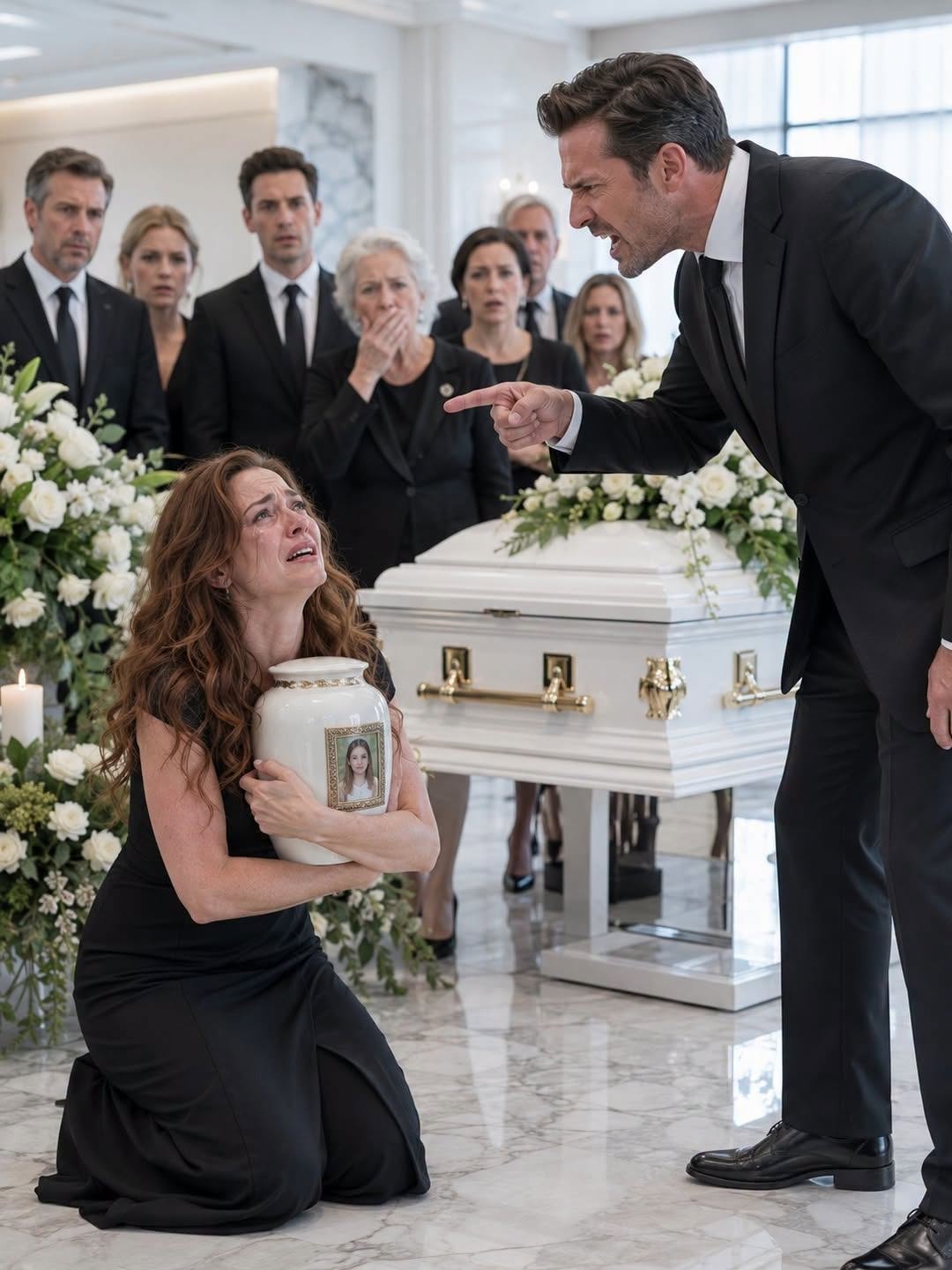
For three years, I had allowed Brendan Fairchild and his family to strip away every layer of who I was.
Before I married Brendan, I wasn't a helpless, meek dependent. I held a Master of Science in Actuarial Mathematics from the University of Chicago and had spent six years building a formidable career as a senior risk analyst at Vanguard Capital. I spent my days constructing complex financial algorithms, evaluating corporate liability, and predicting structural defaults for multi-billion-dollar firms. I understood capital structures, debt instruments, and legal loopholes better than most corporate attorneys.
Then I met Brendan at a charity gala. He was charming, ambitious, and seemingly devoted. When he proposed, he swept me into a whirlwind romance that felt like a fairytale. Shortly after our wedding, when my pregnancy with Chloe proved high-risk, Brendan convinced me to step down from my position.
"Let me take care of you, Nora," he had said, stroking my hair as I lay nauseous in bed. "Fairchild Enterprises generates more than enough to support our family. Focus on our daughter. I’ll handle the financial heavy lifting."
It had felt like love. It had felt like protection.
It was a trap.
Piece by piece, Brendan dismantled my independence. He closed my personal checking accounts, transferring all household funds into a centralized Fairchild family trust account. He gave me a supplementary credit card with a strict monthly cap. When Chloe was born with her heart defect and required specialized, around-the-clock care, Brendan restructured the family's financial governance.
Every single expense had to be submitted through an internal corporate portal managed by Fairchild Enterprises.
Formula.
Specialist consultations.
Custom compression garments.
Pediatric cardiology medications.
Home-care nursing shifts.
Every single line item was subjected to audit by Brendan’s personal executive assistant, Ximena Torres. Ximena was a cold, hyper-efficient bureaucrat whose sole mandate from Brendan was to minimize "non-essential personal drawdowns" on the family account to keep the firm's liquidity ratios looking pristine for institutional investors.
Two weeks ago, Chloe’s primary cardiologist, Dr. Aris Thorne, realized her pulmonary arterial hypertension was spiking to dangerous levels. He prescribed Treprostinil, an advanced subcutaneous infusion therapy that required immediate authorization from our insurer and a five-thousand-dollar out-of-pocket deposit for the specialty pharmacy to release the initial supply.
I uploaded the prescription, the medical necessity letter, and Dr. Thorne's clinical notes to the portal that same afternoon.
Six hours later, I received an automated rejection notification signed by Ximena.
Reason for Rejection: Requested expenditure exceeds the allowable quarterly medical stipend allocated for secondary dependents under the Fairchild Family Trust charter. Resubmit during Q4.
Q4 was two months away.
I had panicked. I called Brendan seventeen times in three hours. He never picked up. I drove to the Fairchild corporate headquarters downtown, holding a crying, blue-lipped Chloe in her car seat, and waited in the marble lobby for five hours. When Brendan finally descended the elevator, flanked by Samantha Hayes and two senior partners, his face had twisted in disgust.
He took me by the arm, dragging me into a private alcove away from his colleagues.
"What are you doing here, Nora? You look like a mess," he hissed under his breath. "Samantha and I are walking into a critical dinner with our lead underwriters. Don't embarrass me at work again."
"Brendan, please," I had begged, tears streaming down my face as I held up the paper prescription. "The pharmacy won't release Chloe's medication. Ximena rejected it. She needs this infusion today, or her heart—"
"If you have financial disputes, deal with Ximena through the proper administrative channels," he interrupted coldly, pulling his sleeve back from my grip. "I don't micromanage administrative policies. Stop acting so dramatic. She has a cold."
He walked away, stepping into a waiting black limousine alongside Samantha, who had cast a pitiful, triumphant look back at me through the tinted glass.
Dr. Thorne had paid out of his own personal fund for a single emergency forty-eight-hour dose of the drug, buying us two precious days while I resubmitted an emergency override request to Ximena.
That override request remained marked Status: Under Review for seven straight days.
On the seventh day, at three o'clock in the afternoon, Chloe’s overworked heart simply stopped beating.
Sitting in the dim, drafty room beside the crib, my hand resting on the white porcelain urn, I listened to the house slowly come alive. Footsteps echoed overhead. The distant sounds of laughter, the muffled clinking of champagne flutes, and the aromatic scent of expensive catering began to fill the mansion. The quarterly donor party had begun.
Around eight in the evening, I heard heavy, confident footsteps coming down the hall toward Chloe's room.
The door swung open, and Brendan stepped inside. He was wearing a bespoke charcoal tuxedo, his hair slicked back, looking every bit the dashing young CEO of Fairchild Enterprises. His face was slightly flushed from wine.
Behind him stood Victoria, her face still pale and uneasy.
Brendan didn't look at the crib initially. He stood in the doorway, loosening his bow tie with an impatient tug.
"Nora, what is wrong with you?" Brendan demanded, his voice thick with authority. "Victoria told me some completely insane story downstairs. Why aren't you upstairs hosting? Senator Vance asked where my wife was, and I had to make up an excuse about you feeling under the weather."
He took two steps into the room, his polished leather shoes clicking loudly on the hardwood floor. Then, his eyes fell upon the white porcelain urn sitting alone in the middle of the empty mattress.
He stopped.
"What is that?" Brendan asked, his eyebrows knitting together. "Where is Chloe?"
I didn't move. I didn't look up at him. I kept my palm rested firmly against the porcelain.
"She’s right here, Brendan," I said quietly.
"Stop playing mind games, Nora," he snapped, though a nervous tremor rippled through his voice. "Is she with the night nurse? Did you take her to your mother's house? What is that container?"
"It’s an urn," I replied, turning my head slowly to look him dead in the eye. "It holds the ashes of your daughter. She died three days ago while you were in New York with Samantha."
Brendan blinked, taking a step back as if I had struck him. "That's... that's impossible. I authorized the payment for her treatment this morning! Ximena processed the wire!"
"You authorized the payment for her morgue storage and cremation fees, Brendan," I said, my voice eerily calm, devoid of a single tremble. "The hospital accounts department sent you the final settlement bill after her body was released to the funeral home."
Brendan’s face turned an ash-grey color. He stared at the small white urn, his mouth opening and closing soundlessly.
"She needed a five-thousand-dollar medication," I continued, standing up slowly from the folding chair. "Ximena rejected it to save your quarterly margin report. You ignored my calls. You let her die to protect your trust fund's administrative efficiency."
From the doorway, Victoria gasped, covering her mouth with her hands.
Brendan swallowed hard, his posture stiffening as his survival instincts as a corporate executive kicked in. The initial shock on his face quickly hardened into a defensive, combative mask.