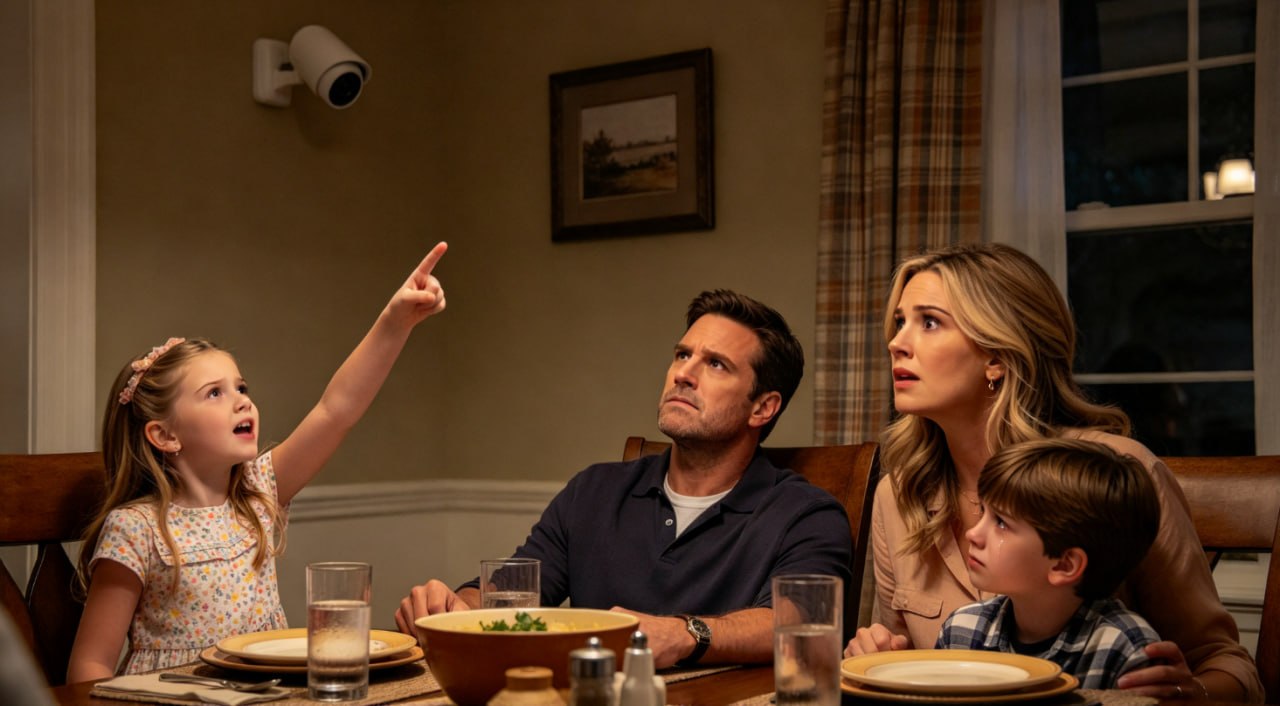
He assumed it was about Jonah.
It was not.
“You keep describing yourself as if you were an accomplice,” she said.
“I signed things.”
“Some things.”
“I ignored things.”
“You missed things.”
“That distinction feels convenient.”
“It isn’t.”
Adrian looked at the floor.
“If I forgive myself too easily, I might become careless again.”
Dr. Morris nodded.
“So guilt feels useful.”
“Yes.”
“Is it?”
He did not answer.
She continued.
“What happens when Jonah sees you punish yourself?”
“I don’t know.”
“He may conclude that his pain destroyed you.”
Adrian looked up.
“That’s not what I want.”
“Then accountability has to produce changed behavior, not permanent self-hatred.”
The sentence stayed with him.
That night Jonah asked Adrian to help with a school presentation.
Topic:
Someone Who Spoke Up.
Adrian expected Jonah to choose Poppy.
Instead he chose himself.
“You?”
Jonah nodded.
“I told Mrs. Alvarez.”
Adrian smiled.
“You did.”
“And I told you.”
“Yes.”
“And I told the interview lady.”
“Yes.”
Jonah looked at his slide.
“Poppy started it.”
“She helped.”
“But I kept talking.”
Adrian felt something loosen inside him.
For months the story in his mind had been:
Poppy saved Jonah because Adrian failed.
Jonah saw it differently.
Poppy opened the door.
Jonah walked through it.
At the school presentation, Jonah stood beside a poster.
His voice shook at first.
Then strengthened.
He did not discuss Celeste.
He did not discuss fraud.
He spoke about telling adults when something feels wrong.
“If one person doesn’t understand,” he said, “tell another safe person.”
Mrs. Alvarez sat in the back.
Claire cried.
Adrian did too, discreetly.
Poppy whispered loudly, “Dad’s crying.”
Everyone nearby heard.
Adrian laughed.
Afterward Jonah received a small certificate.
Poppy demanded one too.
Mrs. Alvarez drew a star on a sticky note and presented it ceremoniously.
Poppy accepted.
At home they ordered takeout.
Jonah’s container held too much rice.
He pushed some toward Poppy.
Then stopped.
“Want it?”
Poppy nodded.
“Okay.”
He spooned it onto her plate.
Adrian watched.
Jonah noticed.
“What?”
“Nothing.”
“You’re doing the face.”
“What face?”
“The emotional dad face.”
Poppy copied an exaggerated sad expression.
Jonah laughed so hard he nearly dropped the spoon.
Adrian laughed too.
Later, after the children slept, he went into the garage.
The camera sat on a shelf.
He picked it up.
For months he had treated it as the symbol of the night everything changed.
Now he saw something else.
The camera had failed.
It had not captured the dinner.
It did not save Jonah.
People did.
A toddler.
A counselor.
A sister.
A therapist.
An attorney.
A trustee willing to admit weak controls.
And eventually Adrian himself.
He placed the camera back.
Not as a guardian.
As an artifact.
The divorce decree was finalized two weeks later.
The marriage ended legally.
The property issues ended.
The major financial accounts were secured.
The criminal cases had largely resolved.
For the first time, no immediate legal crisis waited.
Naomi shook Adrian’s hand outside court.
“What now?”
“I go home.”
“That sounds good.”
He smiled.
“It does.”
But one final issue remained.
Celeste had written Jonah a letter from custody.
The letter was sealed.
Adrian had not opened it.
He had told Jonah it existed.
“It’s your choice.”
Jonah stared at the envelope.
“Do you know what it says?”
“No.”
“You didn’t read it?”
“No.”
“Why?”
“Because it’s addressed to you.”
Jonah held it.
The old Adrian might have opened it to protect him.
The old Celeste would have opened it to control him.
Now Adrian waited.
Jonah finally said, “I want Dr. Morris there.”
“Okay.”
He put the unopened letter into his backpack.
And for the first time, Adrian understood that protecting Jonah sometimes meant standing close enough to help—but far enough away to let Jonah decide.