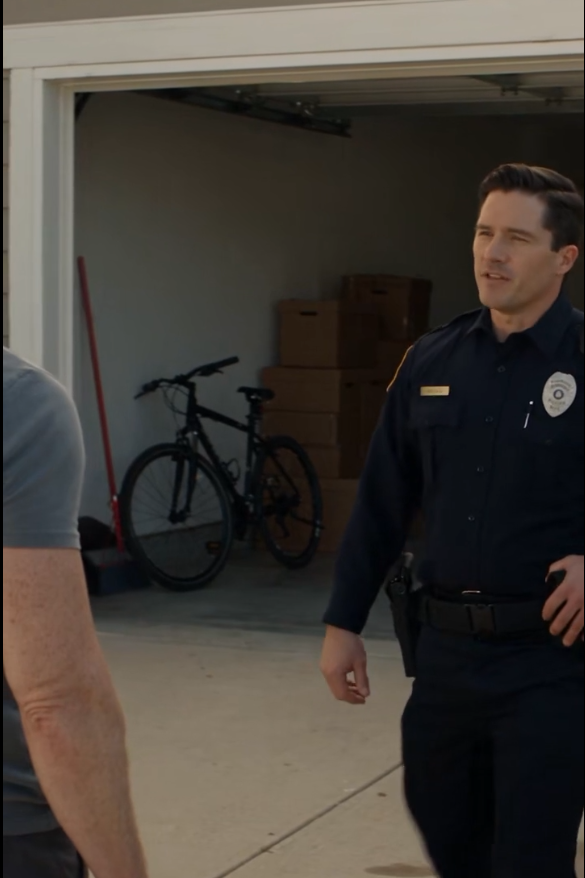
SUBJECT: NOTICE OF ESCALATED COMPLIANCE ACTION.
He opened it.
Three paragraphs in, he stopped drinking his coffee.
The notice claimed that during a lawful HOA compliance visit the previous afternoon, Daniel had become “hostile and obstructive,” refused to cooperate with an authorized representative, and “created an unsafe atmosphere requiring outside intervention.”
The outstanding balance had increased by $500.
Total due: $1,750.
Daniel read the notice twice.
Emily came into the kitchen carrying her backpack.
“What?”
He turned the phone facedown.
“Nothing.”
She stared at him.
“You do the exact same face every time something is definitely not nothing.”
“I have a face?”
“You have several.”
She reached for the cereal box.
Daniel turned the phone back over.
“The HOA sent another notice.”
Emily stopped.
“For yesterday?”
“Yes.”
“What does it say?”
“That I was hostile.”
Her mouth opened.
Daniel raised a hand.
“I know.”
“They came to our house.”
“I know.”
“He threatened you.”
“I know.”
“And you were hostile?”
“Apparently.”
Emily put the cereal down.
“I have the video.”
“We do.”
The distinction mattered.
Not because he doubted her, but because he did not want the recording becoming something she felt personally responsible for carrying.
Daniel forwarded the notice to a separate folder he had created the previous night.
Then he opened a blank email.
To: Willow Creek Estates HOA Board.
He did not write angrily.
Anger was useful information, but poor documentation.
He requested five things.
The identity and contractual status of the security company.
The board authorization for the compliance visit.
All records relating to the $1,250 fine.
The minutes of any meeting in which his shed approval had been invalidated.
And immediate preservation of all electronic and paper records concerning his property, the enforcement visit, and related communications.
At the bottom he wrote:
Because law enforcement is reviewing the incident of yesterday, please preserve emails, text messages, internal memoranda, invoices, digital files, meeting records, and device data related to this matter.
Emily leaned over the counter.
“That sounds like you’re suing them.”
“I’m asking them not to delete anything.”
“That sounds more threatening.”
“It’s not supposed to.”
“It does.”
Daniel almost smiled.
She zipped her backpack.
At the door she stopped.
“Dad?”
“Yeah?”
“Did you know yesterday?”
“Know what?”
“That he wasn’t real.”
Daniel thought about it.
“No.”
“But you suspected.”
“Yes.”
“What if you were wrong?”
There was no casual answer to that.
He came around the counter.
“Then asking who he was still would’ve been the right thing.”
“What if he actually tried to cuff you?”
Daniel paused.
“I would have done my best not to make the situation worse.”
Emily looked unconvinced.
He added, “Being calm doesn’t mean you know what’s going to happen. It just gives you a better chance of seeing what’s happening.”
She absorbed that.
Then she nodded.
“Okay.”
Daniel watched her leave for school.
Only after the door closed did he look again at the escalated fine.
The notice bothered him for a reason beyond the lies.
It was polished.
Too polished.
The incident had ended late in the afternoon. Police had remained in the neighborhood for nearly an hour. Patricia had been giving statements.
Yet by 7:12 the next morning, the association had produced a formal compliance notice with detailed language, a new fine amount, and references to provisions Daniel had never seen.
Patricia either worked very late.
Or some version of the notice had already existed.
He saved a copy.
At 8:04, Rachel knocked on the front door.
She held a mug in one hand and her phone in the other.
“I got an email too.”
Daniel let her in.
“What kind?”
“Neighborhood conduct reminder.”
He frowned.
She showed him.
The HOA had sent a community-wide message reminding residents that association employees and contractors must be treated respectfully and that “recent events demonstrate the importance of civil cooperation during compliance activities.”
No names were used.
No address.
None were needed.
Rachel looked toward him.
“They’re getting ahead of it.”
Daniel read the message.
“Or trying to.”
She lowered her voice.
“Patricia came to my house Monday.”
Daniel looked up.
“Monday?”
“The day before your driveway thing.”
“What did she want?”
“She asked whether you’d been acting aggressive lately.”
Daniel stared at her.
Rachel nodded slowly.
“That was my reaction too.”
“What exactly did she say?”
“She asked if I had noticed ‘concerning behavior’ from you over the shed dispute. I told her no. Then she asked whether you had ever yelled at board members or threatened anyone.”
“I haven’t.”
“I know.”
“Why didn’t you tell me yesterday?”
“Because until a fake police officer showed up at your house, it sounded like Patricia being Patricia.”
Daniel walked to the kitchen table and sat.
Rachel remained standing.
“She was building a record,” he said.
“That’s what I thought this morning.”
Daniel looked at the neighborhood email again.
Then at the new violation notice.
The shape of the problem was changing.
The shed was no longer really the issue.
Patricia had begun documenting him as dangerous before sending a uniformed man to his house.
Why?
To justify the visit afterward?
Or because she already knew what the visit was supposed to become?
Daniel opened his laptop.
His original shed approval was stored in a folder labeled HOUSE.
He had scanned everything when he moved in—insurance, title documents, appliance receipts, architectural approvals. It was an old habit. In the Army, undocumented work had a way of becoming work no one admitted existed.
The shed approval consisted of two pages.
Page one: his original application.
Page two: approval from the architectural committee, dated two years earlier.
He zoomed in.
Approved.
No conditions.
No expiration.
Daniel opened the old email containing the attachment.
It had come from the HOA’s official architectural-review address.
He read the original message.
Your request has been approved as submitted. Please retain this approval for your records.
Patricia had claimed the document was invalid because the previous committee had not followed proper procedure.
Daniel searched his email history.
Three months earlier, when the first violation arrived, he had sent Patricia the approval.
Her response:
The current board does not recognize this document as valid.
He had asked:
What governing provision authorizes the current board to invalidate a prior written approval?
No direct answer.
Another email:
The matter has been reviewed.
By whom?
No names.
No meeting date.
No minutes.
Another:
The violation stands.
Daniel leaned back.
Rachel sat across from him.
“What are you thinking?”
“That I’ve been asking the wrong question.”
“What’s the right one?”
“Not whether my shed was approved.”
He tapped the screen.
“It was.”
Rachel waited.
Daniel looked at Patricia’s email.
“The question is why she needs everyone to believe it wasn’t.”
At noon, the HOA’s management portal responded to his records request.
Some documents were available immediately.
Others, the message said, would require review.
Daniel downloaded everything.
The governing declarations.
Current rules.
Fine schedule.
Architectural standards.
Board resolutions.
He spent nearly three hours reading.
Nowhere could he find a rule allowing the board to revoke an unconditional architectural approval because board membership changed.
More interesting was the fine schedule.