“No generated language.”
My supervisor stood behind me.
“So someone still has to make the initial claim.”
“Yes.”
“And after that the system writes it cleanly.”
“Yes.”
That explained consistency.
It did not explain motive.
It also did not explain the six words.
Passenger misunderstanding of crew procedure.
Those came from complaint closures, not incident reports.
We spent the next week comparing systems.
That was when Kevin Johnson's file became important again.
His complaint had started at a gate, just like the incident I had observed.
The original note from a customer-service employee said:
Customer presented valid first-class boarding pass. Additional fare confirmation requested after agent questioned cabin assignment.
Twenty-four hours later, the note had been replaced by:
Customer became dissatisfied when standard identity and fare verification procedures were applied.
Kevin's complaint was closed nine days after submission.
Final finding:
Insufficient evidence. Passenger misunderstanding of crew procedure.
We checked ten more files.
Then twenty.
The pattern held.
Original employee notes often contained neutral or even supportive observations.
Later summaries reframed the incident around passenger behavior.
Then closure language reduced the event to misunderstanding.
Someone was not merely reviewing complaints.
Someone was rewriting the lens through which they were seen.
But systems don't do that on their own.
People choose the boxes.
People approve the language.
People close the file.
We needed to know who.
Ashley Brown gave us the first answer.
She requested counsel before her federal interview.
That didn't surprise me.
What surprised me was how young she looked when she walked into the room.
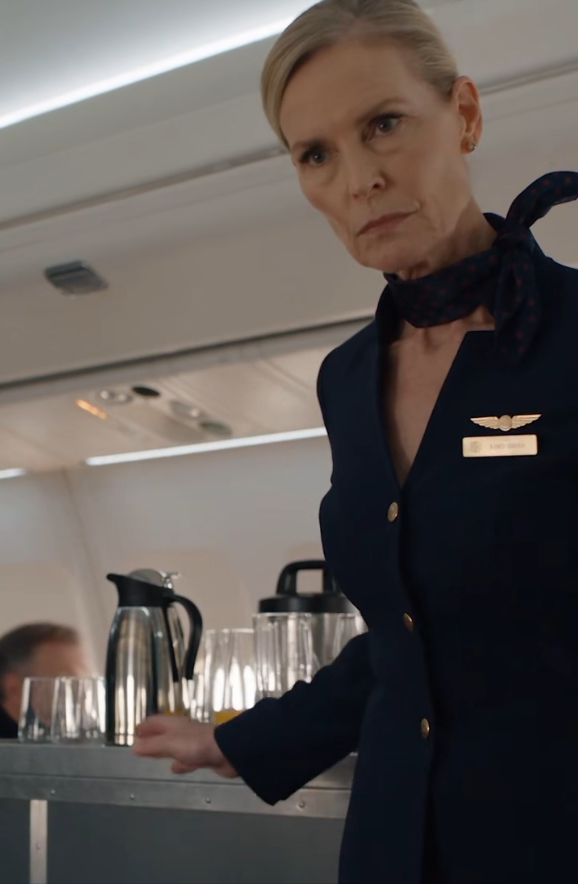
On the aircraft she had seemed like a professional in uniform.
In the interview room, without the navy jacket, she looked exhausted.
She sat across from me.
Then she recognized me.
Her face changed.
“You.”
“Yes.”
She looked toward her attorney.
“You're the passenger.”
“Yes.”
“What are you doing here?”
I slid my credentials onto the table.
Ashley stared at them.
Then at me.
She leaned back slowly.
“Oh.”
Nobody rushed her.
After a few seconds she whispered, “That's why you were so calm.”
“No.”
She looked up.
“I was calm because getting angry would not have helped me.”
The answer landed harder than I intended.
She looked down at her hands.
Her attorney touched her sleeve.
Ashley drew in a breath.
“What do you want to know?”
I opened a folder.
“Start with the coffee.”
She told the truth.
Her hand slipped.
The man in 4A bumped the cart.
I never touched it.
Brittany arrived.
Brittany assumed I had caused the movement.
Ashley said she tried to correct her.
“Why didn't you correct her in front of me?”
Ashley swallowed.
“Because she'd already decided what happened.”
“That isn't an answer.”
“No.”
She rubbed her thumb along the edge of her fingernail.
“She was lead that day. She had written me up twice before.”
“For what?”
“Once for disagreeing with her in front of a passenger. Once for not supporting a crew account after a customer complaint.”
“Supporting?”
Ashley's attorney shifted, but she kept going.
“They call it crew consistency.”
I said nothing.
“If there is an incident,” she continued, “we're told conflicting employee statements create liability. So the lead writes the event summary, and everyone is supposed to make sure their reports are consistent.”
“Consistent with facts?”
Ashley looked at me.
She did not answer immediately.
“Consistent with the lead.”
That was the sentence we needed.
But it was not enough by itself.
“Who told you that?”
“Training. Supervisors. Everybody.”
“Everybody is not a name.”
Her attorney leaned forward.
“She is not here to speculate.”
“I'm not asking her to.”
Ashley nodded faintly.
“There are emails.”
“Where?”
“Company account.”
“Have they been preserved?”
“I don't know.”
“They have.”
Her shoulders lowered slightly.
I slid a printed copy of her first draft across the table.
“Did you write this?”
She read it.
“Yes.”
I slid the second version over.
“Did you write this?”
“Yes.”
Then the final.
“Did you write this?”
She stared.
“No.”
“Whose login completed it?”
She already knew.
“Brittany's.”
“Did she tell you?”
“She said she cleaned it up.”
“What does that mean?”
Ashley looked directly at me for the first time since the interview began.
“It means she made it match hers.”
The room stayed quiet.
I asked, “Did you object?”
“Yes.”
“What did she say?”
Ashley closed her eyes for a second.
“She said, ‘Do you want this coming back on us, or do you want it going where it belongs?’”
“Where did it belong?”
“She meant you.”
There are moments in an investigation when the evidence stops feeling abstract.
For six weeks I had studied numbers.
Eighty-six complaints.
Seventy-one Black passengers.
Percentages.
Categories.
Timelines.
Now a woman sat six feet from me explaining, almost mechanically, how a false story was transferred from an employee to a passenger because that was safer for the employees involved.
I asked the next question.
“Had you seen that happen before?”
Ashley looked at her attorney.
Then she looked back at me.
“Yes.”
“How many times?”
“I don't know.”
“More than five?”
“Yes.”
“More than ten?”
Her eyes dropped.
“Yes.”
My supervisor shifted behind me.
“Did race affect who was described as aggressive?”
Ashley's lawyer immediately said, “Careful.”
Ashley did not answer for almost twenty seconds.
When she finally spoke, her voice was quieter.
“I can't tell you what was in everybody's head.”
“That isn't what I asked.”
She nodded.
“I noticed who got watched.”
“Who?”
“Black passengers. Younger men mostly. Sometimes Black women if they complained about seats or service.”
“How did you know to watch them?”
“Sometimes the lead would say something before boarding.”
“Like what?”
Ashley looked at me.
“Watch 4B.”
The words sat between us.
Exactly what Brittany had said before I took my seat.
Part IV — The Six Words
Meridian answered my complaint on day nine.
Exactly nine days after I filed it.
The same number of days it had taken to close Kevin Johnson's.
The email arrived at 10:06 in the morning.
Dear Mr. Davis,
We have completed our review of your concerns regarding Flight 2208. Our review included crew statements and available operational records. We found insufficient evidence to conclude that our employees acted outside established procedure. Our records indicate that the onboard interaction resulted from a misunderstanding regarding crew safety responsibilities and passenger conduct expectations.
They had softened the wording.
But the conclusion was the same.
Insufficient evidence.
Passenger misunderstanding of crew procedure.
I read the email twice.
Then I forwarded it to the team.
My supervisor called almost immediately.
“Well?”
“They did it.”
“You sound disappointed.”
“I hoped they wouldn't.”
That surprised him.
“Why?”
“Because if one honest reviewer had looked at this, they would have seen the inconsistencies.”
“You gave them nine days.”
“I know.”
“You gave them a witness.”
“I know.”
“You gave them a police report showing no charge.”
“I know.”
“And they closed it anyway.”
“Yes.”
“Then stop wishing they were better at this than they are.”
He was right.
But investigation creates a strange relationship with the people you're investigating.
You spend so much time reconstructing their decisions that part of you begins hoping the next decision will break the pattern.
Not because it helps the case.
Because it means the pattern isn't as deep as it looks.