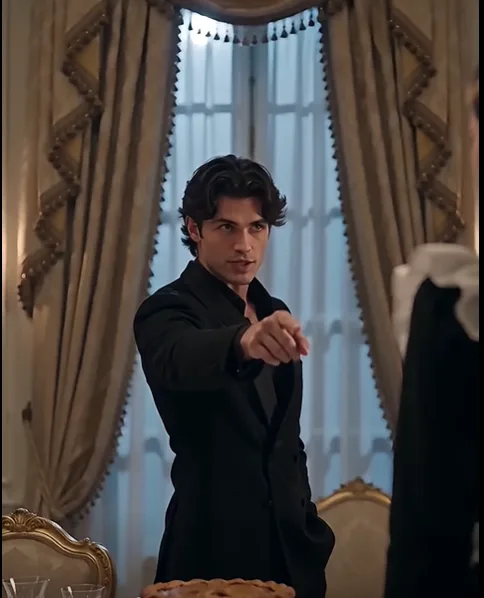
For three years, Nell Brisco had moved through the Orsini mansion like a shadow with a pulse.
She knew which floorboards complained beneath a man's weight, which windows rattled before a storm, which silver drawer stuck in humid weather, and which guests left cigarette ash in places they would later accuse someone else of neglecting. She knew when Carmine Orsini came home angry because the front door closed half an inch harder than usual. She knew when he was tired because he loosened his tie before crossing the foyer. She knew when he was grieving because he stopped looking at the portraits on the staircase.
What she did not know was why, after three years of being invisible, he had suddenly decided to look at her.
The answer came Saturday afternoon.
Carmine found her in the kitchen.
Sunlight fell through the tall windows in pale gold rectangles, catching flour dust suspended in the air. Nell stood at the marble counter with her sleeves rolled neatly to her elbows, measuring brown sugar into a bowl. She heard him enter but did not turn immediately.
“Mr. Orsini.”
“Benny tells me your father is still alive.”
The measuring spoon stopped.
For a moment, the kitchen seemed to lose its warmth.
Nell slowly set the spoon down.
“Yes.”
“Why didn't you put him on your personnel file?”
“Because the form asked for emergency contacts.”
“And?”
“And I didn't want anyone from this house contacting him.”
Carmine studied her.
“Why?”
Nell wiped her fingers against a towel.
“My father doesn't like people asking questions.”
“Neither do I.”
“I noticed.”
Something almost resembling a smile touched his mouth.
It disappeared quickly.
“I read the report about the bakery.”
Nell's expression closed.
“Then you know everything.”
“No. I know what somebody wanted written down.”
Her eyes lifted.
That was the first time Carmine saw fear in them.
Not fear of him.
Fear of a memory.
“Your father didn't leave the oven on,” he said.
Nell said nothing.
“The rear door was jammed.”
Still nothing.
“Someone forced it shut from the outside.”
Her hand tightened around the towel.
“Who told you that?”
“No one.”
“Then why are you asking me?”
“Because I don't believe in coincidences.”
Nell gave a quiet, humorless laugh.
“That's convenient for a man whose entire business depends on them.”
Carmine stepped closer.
“Tell me what happened.”
She looked toward the windows.
Three years earlier, before the Orsini mansion, before the gray uniform and white gloves, there had been another life.
A bakery on Magazine Street.
Her father's hands covered in flour.
The smell of butter, cinnamon, coffee, and warm bread drifting through an open door every morning.
She had learned everything from him.
Not because he was patient.
Because he wasn't.
Emmett Fontaine believed recipes were for people who didn't understand food.
“Watch the dough,” he used to tell her. “Not the clock.”
But Nell had always watched the clock.
She had been twenty-four when the bakery burned.
She remembered waking to smoke.
She remembered the alarm screaming.
She remembered running downstairs barefoot.
She remembered finding her father near the back of the bakery, struggling to breathe.
And she remembered the rear exit.
Locked.
Not merely stuck.
Locked.
Someone had chained it from the outside.
Nell had screamed until her throat tore.
Then someone had dragged her away from the building.
The fire department came.
The police came.
The insurance company came.
Everyone came except the truth.
The official explanation was negligence.
The bank called the loan.
The insurance company refused payment.
A lawyer explained that if she wanted to challenge the ruling, she would need money.
Money she didn't have.
Her father survived, but the smoke had taken pieces of him that never returned. Some mornings he remembered the bakery. Some mornings he forgot Nell's name.
Three years later, she still woke smelling smoke.
Carmine listened without interrupting.
When she finished, the kitchen clock ticked loudly between them.
“You knew,” he said.
“I suspected.”
“Why didn't you tell anyone?”
“Who would have believed me?”
“I might have.”
Nell looked at him.
“No.”
It was not defiance.
It was exhaustion.
“You didn't even know my name.”
The words landed harder than he expected.
Carmine glanced down.
“No,” he admitted.
She turned back toward the counter.
“That was the point.”
Before he could answer, the kitchen door opened.
Odette stood there.
Her face had gone pale.
“Mr. Orsini.”
Carmine turned.
“What?”
“There are two men at the front gate.”
“Names?”
“They refused to give them.”
Benny's voice came through the hallway.
“Boss.”
One word.
Urgent.
Carmine moved.
Nell caught his sleeve.
He stopped.
It was such a small gesture that either of them could have pretended it never happened.
“Don't go outside,” she whispered.
His eyes narrowed.
“Why?”
“Because if someone is finally asking questions about the bakery, they may not want answers.”
Carmine held her gaze for one silent second.
Then he nodded to Benny.
“Bring them inside.”
The men were not brought into the dining room.
Carmine had them searched in the marble foyer beneath the enormous chandelier. One was broad-shouldered, the other thin and nervous. Neither carried a gun.
That bothered Carmine more than if they had.
The broad man handed Benny an envelope.
“It's for Orsini.”
Benny gave it to Carmine.
Inside was a single photograph.
An old photograph.
The Fontaine Bakery.
Taken the night before the fire.
Nell saw it from across the foyer and stopped breathing.
There was a black sedan parked beside the alley.
Its license plate was visible.
And standing beside the car was a man she recognized.
Not from the bakery.
From the Orsini estate.
Odette.
The housekeeper saw the photograph.
Her face changed.
Carmine noticed.
“So,” he said quietly. “You know him.”
Odette's lips parted.
“No.”
Carmine waited.
The silence became unbearable.
Finally she whispered, “His name was Victor Hale.”
Nell stepped forward.
“Who is he?”
Odette looked at her.
“He worked for your father.”
“My father never had an employee named Victor.”
“Not inside the bakery.”
Carmine's voice hardened.
“Then where?”
Odette swallowed.
“For your father.”
The room went still.
Carmine looked at her.
“Explain.”
Odette lowered her eyes.
“Your father had been investigating someone before the fire.”
Nell stared.
“My father?”
“Yes.”
“What was he investigating?”
Odette hesitated.
“Payments.”
Carmine's expression changed.
“Payments to whom?”
“People who owned the building.”
The pieces shifted.
Carmine understood before Nell did.
Her father's bakery had been sitting on valuable property. Someone wanted the building empty. Someone had arranged for the insurance to fail. Someone had made sure the rear door could not open.
But why?
Benny stepped closer.
“Boss, I know that name.”
Carmine looked at him.
“Victor Hale?”
Benny nodded.
“He used to handle collections for your father.”
“My father?”
“Before you took over.”
Carmine's jaw tightened.
His father's empire had always contained rooms he had never entered, accounts he had never opened, names he had never asked about.
He had spent four years cleaning up after his father's death.
Perhaps he had been cleaning around something much worse.
“Where is Hale now?” Carmine asked.
The thin man smiled.
“You're asking the wrong question.”
Carmine looked at him.
The man's smile disappeared.
“The right question is what he has.”