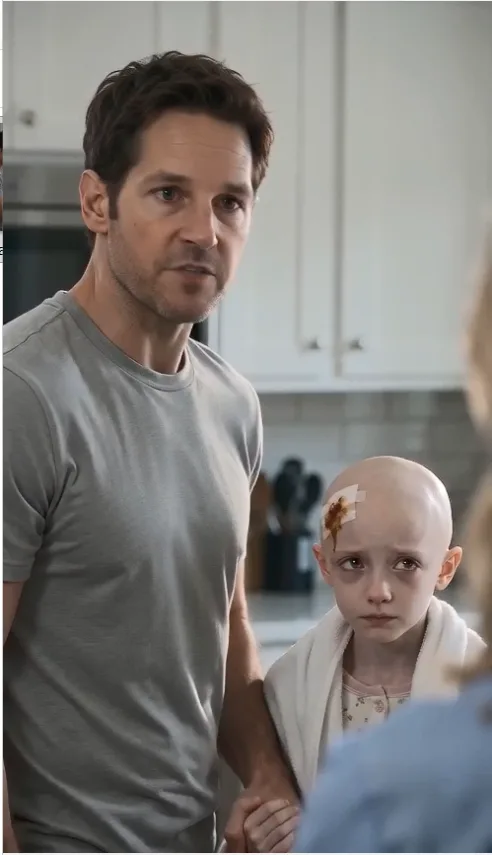
By nine that morning, Lily had a fever.
It was only 100.7.
For most children, that would mean rest, fluids, and monitoring.
For Lily, it meant we were in the car within minutes.
Rachel drove.
I sat in the back with my daughter.
Lily leaned against the window with a blanket wrapped around her shoulders.
The replacement dressing on her scalp remained clean.
But Rebecca had warned me that bacteria near the surgical area could be dangerous.
When we reached the pediatric oncology unit, they were already expecting us.
Dr. Hannah Patel met us outside the room.
She had treated Lily from the beginning.
Dr. Patel was small, direct, and impossible to intimidate.
She examined the dressing.
Then she examined Lily.
Then she looked at me.
“What exactly touched the bandage?”
I answered.
“Food scraps.”
“What kind?”
“I saw old pasta.”
“Anything raw?”
“I don’t know.”
“Meat?”
“Possibly.”
“Coffee grounds?”
“Yes.”
Dr. Patel’s expression tightened.
“Take photographs.”
I stared at her.
“What?”
“Do you still have the original dressing?”
“Rebecca bagged it.”
“Good.”
She looked at the nurse beside her.
“Photograph the current scalp condition before we clean it again.”
Lily’s hand found mine.
“Why pictures?”
Dr. Patel turned to her.
“Because I want to remember what your head looked like today so we know if anything changes.”
Lily nodded.
Dr. Patel never lied to children.
But she knew how to tell the truth without frightening them.
After Lily was taken for bloodwork, Dr. Patel asked me to stay behind.
“Rebecca called me last night.”
“I know.”
“She told me what Lily reported.”
I nodded.
“Daniel, I need to ask you some uncomfortable questions.”
“Ask.”
“Have you ever seen Vanessa strike Lily?”
“No.”
“Restrict food?”
“No.”
“Interfere with medication?”
“Not that I know of.”
“Prevent her from attending appointments?”
“No.”
“Discourage symptom reporting?”
I thought of the recordings.
“Yes.”
Dr. Patel went still.
I told her about the shoebox.
I told her about the voice recorder.
I told her about the list.
When I finished, she removed her glasses.
“How long have you had those recordings?”
“Since last night.”
“Do not delete them.”
“I won’t.”
“Do not edit them.”
“I won’t.”
“Back them up.”
“I already did.”
That morning, before leaving the house, I had copied every file onto my laptop and sent another copy to Rachel.
Dr. Patel nodded.
“Good.”
“What happens now?”
“The hospital social worker will speak to you.”
“And Lily?”
“Yes.”
“Without me?”
“Possibly.”
I hated the thought.
Dr. Patel seemed to read my face.
“She may tell us things she’s afraid will hurt you.”
That was exactly what Rebecca had said.
I looked through the window.
Lily was sitting in a hospital chair while a nurse prepared the blood draw.
She did not cry.
She rarely cried during needles anymore.
I wished she still did.
Children should get to complain when needles hurt.
They should get to say they are scared.
They should not become experts at endurance.
“Do you think I should have noticed?” I asked.
Dr. Patel did not give me the comforting answer.
“You noticed when you had evidence you could recognize.”
“That’s not what I asked.”
“No.”
She sighed.
“Parents miss things.”
“That’s not an excuse.”
“No.”
She looked directly at me.
“But guilt is only useful if it changes what you do next.”
The social worker arrived twenty minutes later.
Her name was Monica Alvarez.
She asked Lily whether she wanted me in the room.
Lily looked at me.
Then she said, “Can Dad wait outside?”
The words hurt.
I smiled anyway.
“Of course.”
I stepped into the hallway.
The door closed.
Rachel stood beside me.
Neither of us spoke.
Thirty-eight minutes passed.
Then Monica came out.
Her expression told me everything before she said a word.
“We need to talk.”
My stomach dropped.
“What did she say?”
Monica looked back toward Lily’s room.
“She said last night was not the first time Vanessa waited until other adults left.”