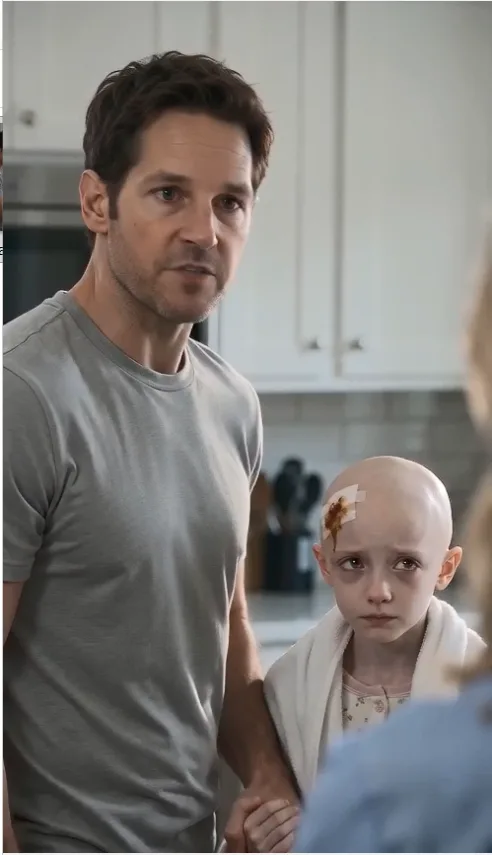
Monica took me into a consultation room.
Rachel came with me.
Dr. Patel joined us five minutes later.
I sat down.
Nobody else did.
Monica opened a notebook.
“I’m going to tell you what Lily disclosed.”
I nodded.
“She said Vanessa has been punishing her when you are not home.”
My mouth went dry.
“What kind of punishment?”
“For vomiting.”
I closed my eyes.
“For needing help getting dressed.”
“For crying during headaches.”
“For calling you during work hours.”
I looked at the wall.
Monica continued.
“She said Vanessa sometimes made her sit on the laundry room floor because she didn’t want her throwing up on furniture.”
Rachel made a sound beside me.
I turned.
She had covered her mouth.
“How long?”
“We don’t know.”
“Ask her.”
“We did.”
“And?”
“Lily has difficulty placing the events on a timeline.”
Her treatment affected concentration and memory.
We all knew that.
Vanessa knew it too.
“What else?”
Monica hesitated.
That hesitation terrified me.
“She said there were occasions when Vanessa delayed giving her anti-nausea medication.”
I stood.
Dr. Patel moved toward me.
“Daniel.”
“She did what?”
Monica spoke carefully.
“Lily said Vanessa told her she needed to learn what happened when she complained too much.”
My vision narrowed.
“What medication?”
“We’re still clarifying.”
I looked at Dr. Patel.
“Could that have hurt her?”
“Potentially.”
“What does potentially mean?”
“It depends on the medication, the delay, her symptoms, hydration, several factors.”
“I need an answer.”
“And I need accurate information.”
Her voice sharpened.
It stopped me.
Dr. Patel pointed to the chair.
“Sit down.”
I did.
I hated every second of it.
Monica continued.
“There’s more.”
Of course there was.
Lily said Vanessa locked her phone in a kitchen drawer on days when I was gone.
Lily said Vanessa told her not to call Rebecca unless she had permission.
Lily said Vanessa once removed a basin from beside the couch even though she was nauseous.
When Lily threw up on the rug, Vanessa made her scrub it.
On her knees.
During treatment week.
I pressed my palms against my eyes.
Rachel was crying openly now.
“I left her there.”
Nobody answered.
“I left her there.”
Monica leaned forward.
“You were working.”
“I left my daughter with her.”
“You believed she was a safe caregiver.”
“And I was wrong.”
“Yes.”
Again, nobody gave me the comforting lie.
In a strange way, I appreciated it.
Monica closed her notebook.
“We have made a formal child-protection report.”
“Good.”
“We also recommend that Vanessa have no unsupervised contact with Lily while this is investigated.”
“She’ll have no contact.”
“That may require a court order if Vanessa asserts parental rights.”
“She’s her stepmother.”
“Depending on your state and circumstances, she may still attempt to seek access or challenge your decisions.”
“She has no biological rights.”
“I’m telling you what she may attempt, not what she will win.”
My phone buzzed.
A text from Vanessa.
WE NEED TO TALK BEFORE YOU DESTROY THIS FAMILY.
I turned the screen toward Monica.
She read it.
“Do not respond emotionally.”
“I’m not responding at all.”
“Save it.”
I took a screenshot.
Another message appeared.
LILY IS CONFUSED BECAUSE OF THE MEDICATION.
Rachel leaned over my shoulder.
“She’s already starting.”
Another message.
YOU KNOW HER MEMORY HAS BEEN BAD SINCE SURGERY.
Dr. Patel’s eyes hardened.
Then came the message that removed any remaining doubt about what Vanessa intended to do.
IF SHE TELLS PEOPLE CRAZY STORIES, YOU NEED TO REMEMBER WHO THE ADULT IS.
I felt something settle inside me.
For years, I had believed anger looked like raised voices.
Slamming doors.
Broken dishes.
That morning, anger felt completely different.
It felt like clarity.
I looked at Monica.
“What do I do first?”
“Protect Lily.”
“Then?”
“Document everything.”
“Then?”
“Get legal advice.”
I nodded.
“And after that?”
Monica studied me.
“After that, you let the truth become more organized than the lies.”