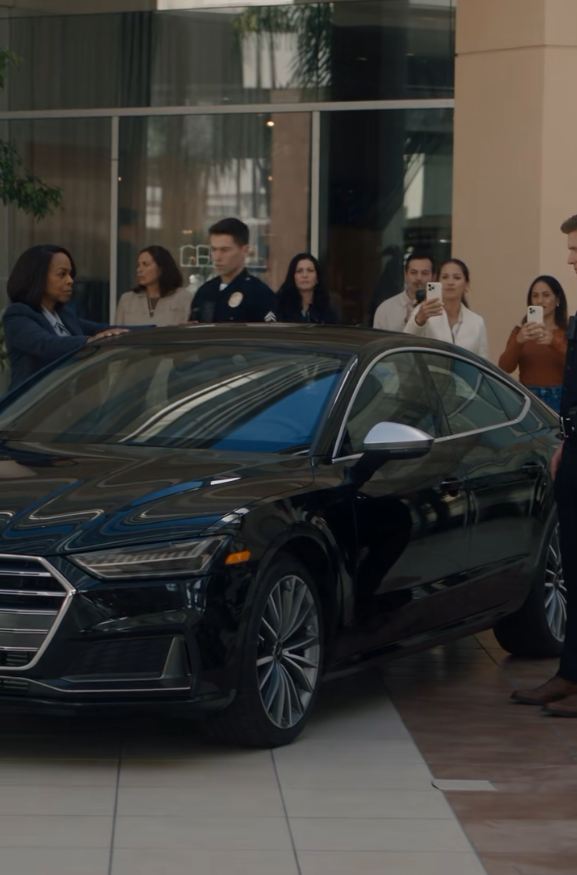
The attorney exhaled slowly.
“You understand the city may prefer litigation.”
“Then we litigate.”
“You’ve spent your career telling people settlements are often wiser than trials.”
“They are.”
“And now?”
“I’m offering one.”
He said nothing.
Valerie’s voice remained calm.
“Just not the one you expected.”
The city did not agree immediately.
For three weeks, negotiations stalled.
Valerie retained outside counsel to avoid even the appearance that she was using judicial resources.
She refused to discuss the case publicly.
Reporters speculated.
Mitchell disappeared from the news.
Then an unexpected request arrived.
He wanted to meet.
Not privately.
Not off the record.
Through counsel, in a conference room, with attorneys present.
Valerie’s lawyer advised against it.
“You gain nothing.”
“Maybe.”
“He admitted what he did. He lost his job. Anything he says can complicate settlement.”
Valerie looked at the request.
“Why does he want the meeting?”
“He says there’s something he wants you to hear directly.”
“That sounds dramatic.”
“It sounds dangerous.”
Valerie smiled faintly.
“You’re a very comforting lawyer.”
“I’m paid for pessimism.”
She read the request again.
Then nodded.
“One meeting.”
Mitchell looked older than he had in the parking lot.
That was Valerie’s first thought when he entered the conference room.
No uniform.
No badge.
Gray jacket.
White shirt without a tie.
He paused when he saw her.
Valerie remained seated.
Their attorneys sat at opposite ends of the table.
Mitchell took the chair facing her.
For several seconds, nobody spoke.
Then he said, “Thank you for agreeing.”
Valerie gave a small nod.
“I’m listening.”
He placed both hands on the table.
“I wrote an apology.”
“I was told.”
“I didn’t send it.”
“Why?”
“Because it sounded like something a lawyer wrote.”
One of the attorneys shifted.
Mitchell noticed and almost smiled.
“Not you.”
The tension loosened by a fraction.
Then he looked at Valerie again.
“I’ve spent weeks trying to figure out when I became the guy in that video.”
Valerie did not respond.
“I wanted to tell myself it was one bad call. Then Reeves gave them the notes.”
His voice changed when he said the name.
Not anger anymore.
Something heavier.
“I hated him for that.”
“Do you still?”
Mitchell considered.
“No.”
Valerie waited.
“I think I hated that he had proof.”
He rubbed his thumb along the edge of the table.
“The department showed me footage from other stops. Nothing like yours. No viral clips. No judge. Mostly just me deciding what I thought happened before I asked enough questions.”
He looked directly at her.
“I don’t remember learning to do that.”
Valerie answered quietly.
“Most habits don’t announce when they become habits.”
Mitchell nodded.
“I know saying I’m sorry doesn’t fix it.”
“No.”
“I know losing my job doesn’t fix it either.”
“No.”
His jaw tightened, but he accepted the answer.
“I also know if you hadn’t been a judge, I might have written the report differently.”
That was the first thing he said that surprised her.
Valerie’s eyes narrowed slightly.
“What do you mean?”
“I mean once I saw your identification, I knew every word I wrote would be examined.”
He looked down.
“If you had been someone nobody believed, I don’t know if I would’ve been as careful.”
The attorneys stopped moving.
Mitchell lifted his eyes again.
“That’s the part I can’t get around.”
Valerie said nothing for several seconds.
There was no useful response.
He continued.
“You asked what suspicious behavior you were doing.”
“I remember.”
“I didn’t answer because there wasn’t any.”
“I know.”
“I knew then too.”
That landed harder.
Valerie leaned back.
“Then why continue?”
Mitchell swallowed.
“Because by then people were watching.”
The answer was ugly.
And entirely believable.
“I thought backing down would make me look weak.”
Valerie glanced toward the window.
“How did that work out?”
Mitchell gave a short, humorless breath that almost became a laugh.
“Not well.”
For the first time, Valerie saw the man separately from the uniformed officer beside her Mercedes.
Not innocent.
Not redeemed.
Just human enough to understand what he had done after the consequences had become impossible to avoid.
That did not erase responsibility.
If anything, it clarified it.
Mitchell folded his hands.
“I heard what you’re asking the city to change.”
Valerie looked at him.
“You’re not involved in those negotiations.”
“No.”
“Then why mention it?”
“Because they’re resisting.”
Her lawyer looked sharply at him.
Mitchell continued.
“They’re saying it makes officers hesitate.”
“And?”
“I think they’re wrong.”
Valerie studied him.
“You’re supporting the policy?”
“Yes.”
“Why?”
He looked at the table for a long moment.
Then said, “Because if I’d had to say out loud what I knew before I told you to get out of the car, I would’ve had nothing to say.”
The room became very still.
There it was.
The principle beneath everything.
Articulation before escalation.
Not paperwork after the fact.
Not justification after pride had taken over.
A pause.
A question.
What do I actually know?
Valerie looked at her attorney.
Then back at Mitchell.
“Would you say that publicly?”
His face tightened.
He had not expected that.
“Publicly?”
“At a policy hearing.”
His lawyer leaned toward him.
“You do not need to answer that today.”
Mitchell remained focused on Valerie.
She did not rescue him.
This was the harder choice.
Not admitting wrongdoing in a closed room.
Standing beside it publicly after the cameras were no longer flattering anyone.
Mitchell looked toward his attorney.
Then back at Valerie.
“What would that do to the settlement?”
“Nothing.”
“You’d still pursue it?”
“Yes.”
“So this isn’t a trade.”
“No.”
He nodded slowly.
Valerie added, “If you speak, it has to be because you believe it. Not because you think I will forgive you.”
His expression shifted.
“Will you?”
Her lawyer looked at her.
Valerie took her time.
“I don’t know.”
Mitchell absorbed that.
Then nodded once.
“Fair.”
He stood.
The meeting appeared finished.
At the door, he turned.
“I’ll testify.”
Valerie did not thank him.
She simply said, “Then tell the truth.”
The city council’s public-safety committee hearing took place six weeks later.
Valerie attended as a private citizen and complainant, not in her judicial capacity.
She wore a dark blue suit instead of a robe.
The room was full.
Not chaotic.
Interested.
The proposed policy changes were modest enough to sound almost boring.
That was their strength.
When circumstances allowed, officers investigating suspected stolen parked vehicles would verify plates before ordering occupants out.
Stops initiated without dispatch calls would require clear documentation of observable facts.
Supervisors would review repeated stops based on vague or conclusory language.
Training would emphasize verbal articulation before physical escalation.
Civil-rights advocates wanted more.
Police representatives wanted less.
The city preferred compromise.
Valerie testified for twelve minutes.
She did not describe herself as a victim.
She described the sequence.
No dispatch.
No plate check.
No observable offense.
Escalation.
Then she said, “The point of these safeguards is not to tell officers they can never be wrong. Human judgment will always be imperfect. The point is to create moments where judgment can be tested before authority turns an assumption into a consequence.”