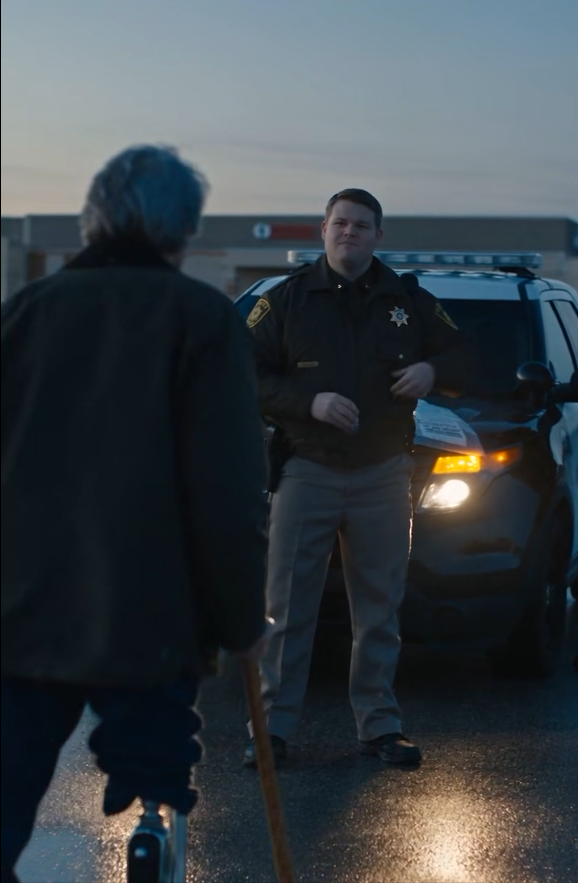
He looked back at me.
“I told them I’d seen him keep cash twice.”
There it was.
Quietly.
Almost shamefully.
“Twice?”
“I didn’t see him take it from the scene. Not exactly. I saw cash during searches. Later, the property sheet showed less.”
“You asked?”
“First time.”
“What did he say?”
“That the owner changed the amount.”
“And the second?”
“I didn’t ask.”
“Why?”
His eyes hardened—not at me, at himself.
“Because I wanted to survive probation.”
“You’re still on probation?”
“No. Not anymore.”
“So what’s the excuse now?”
He swallowed.
“Habit.”
That answer I believed.
He continued.
“He teaches people how to make things disappear without ever technically touching the paperwork. He says most property complaints come from people nobody believes.”
I thought about that.
People nobody believes.
Addicts.
Tenants.
People under arrest.
Old men with canes.
Anyone whose word could be discounted before they finished speaking.
“Why tell me?”
“Because he asked about you.”
“What?”
“Who you were. Who gave you that radio. Whether you were connected.”
“Did you answer?”
“I don’t know.”
“That’s not an answer.”
“I told him you were a veteran.”
My expression must have shifted.
Davis rushed on.
“That’s all I knew. Your report mentioned the prosthetic and military background. I didn’t give him your service details.”
“He has my address.”
“Yes.”
“He already had my address.”
Davis looked toward the damaged back door.
Something occurred to both of us at the same time.
“Miller wasn’t assigned to the burglary,” he said.
I went still.
“What?”
“He told me he was following up on property recovery. I assumed someone handed it over.”
“Who was assigned?”
“Different patrol unit.”
“And Miller?”
“He works the adjacent sector.”
The coffee on the table had gone cold.
“Why would he know about my watch?”
Davis shook his head.
“I don’t know.”
I picked up my phone.
“Who are you calling?”
“The people you should have called before coming here.”
His face fell.
“I can help.”
“Maybe.”
“I’m serious.”
“So am I.”
I looked directly at him.
“You don’t get credit for becoming honest when dishonesty becomes dangerous.”
He flinched.
“But you may still get a chance to be useful.”
I made the call.
The plainclothes woman answered on the second ring.
I told her Davis was in my kitchen.
There was silence.
Then:
“Don’t let him leave.”
Davis heard.
He sat down.
Part V — The Missing Link
The interview lasted three hours.
Not in my house.
They moved us separately.
I gave another statement.
Davis gave one longer than mine.
By noon, the picture had sharpened.
Not enough for certainty.
Enough for direction.
Miller had accessed my burglary report fourteen minutes after it entered the system.
There was no operational reason for him to do so.
He had accessed three other burglary reports over the previous six months outside his assignment area.
All involved compact high-value items: jewelry, watches, cash, small electronics.
In two cases, recovered property had later been listed as “unverified.”
In one, the complainant withdrew the complaint after being told the item could not be conclusively identified.
My watch was different.
I had the receipt.
The engraving.
The scratch.
The five-minute offset.
Too much identification.
So Miller had created a different explanation.
Filed serial numbers.
Civil asset forfeiture.
Broader investigation.
Words that sounded official enough if spoken confidently.
The plainclothes woman sat across from me in a small interview room.
No one had given me her name on purpose, and I had stopped asking.
That seemed to be our arrangement.
She placed several printed access logs on the table.
“Miller viewed your file before he contacted you.”
“I understand.”
“He also viewed the property attachment.”
“The photograph of the watch.”
“Yes.”
“So he knew exactly what it looked like.”
“Yes.”
“How did he get it?”
“That’s what we’re missing.”
I looked at the logs.
“You think there’s someone else.”
“I think property doesn’t move itself.”
“Inside the department?”
“Could be.”
I leaned back.
“Davis?”
“No evidence.”
“He knew enough.”
“Knowing someone is dirty and helping them are different things.”
“Morally?”
“Legally.”
I looked through the observation window.
Davis sat in another room with his head lowered.
“He’s going to spend a long time learning that distinction.”
“Probably.”
She slid another document toward me.
“This came in twenty minutes ago.”
It was a pawn intake record.
The watch had never been pawned.
Instead, one of the other items stolen from my house—the old camera—had appeared at a resale shop across town.
The seller had used identification.
A real name.
That was the first mistake in the chain.
Police already had him.
A repeat burglar.
No connection to Miller.
At least none they could prove.
But during questioning, the burglar admitted something that changed the shape of the case.
He had sold the watch to a man in a parking lot.
Cash.
No receipt.
The buyer wore plain clothes.
The burglar claimed he did not know he was a police officer.
But he described Miller’s truck.
I looked at the woman.
“So Miller found the thief before the assigned investigators did?”
“Apparently.”
“How?”
“He accessed the report. Then he accessed a field interview record involving the burglar.”
“And instead of arresting him…”
“He bought property from him.”
“My property.”
“Yes.”
“Then called me.”
“Yes.”
I sat very still.
It was worse than simple theft.
Miller had not stumbled onto temptation after recovering evidence.
He had gone looking.
He knew the item.
Knew the victim.
Knew enough about the burglar to locate him.
Then bought stolen property privately and tried to turn the owner away using his badge.
“How much?”
“What?”
“How much did he pay for my son’s watch?”
She hesitated.
“Two hundred dollars.”
I looked at the wall.
The watch had cost more than that.
That didn’t matter.
My son had once spent three months choosing it.
I remembered him calling me from three different stores, pretending he didn’t care what I thought.
Two hundred dollars.
That was the number that made the whole thing ugly in a human way.
Not because it was low.
Because it was ordinary.
Miller had priced memory.
The woman said quietly, “There’s more.”
“Of course there is.”
“The burglar says Miller told him to contact him directly whenever he had ‘clean pieces.’”
I looked at her.
“How long?”
“We don’t know.”
“But you believe him.”
“We believe the statement deserves investigation.”
“That’s investigator language.”
“Yes.”
“You can talk normally with me.”
Her mouth tightened.
“Then yes.”
She folded her hands.
“We think Miller may have used police access to identify theft victims and potentially valuable property, then used contacts with known offenders to intercept items before formal recovery.”
I said nothing.
“He could buy cheaply, keep what he wanted, move what he didn’t, and if an owner surfaced, he could claim identification problems.”
“The uniform made the story believable.”
“Yes.”
“And complaints?”
“Often died before reaching anyone who took them seriously.”
I stared down at the access logs.
A man did not build something like that alone in one night.