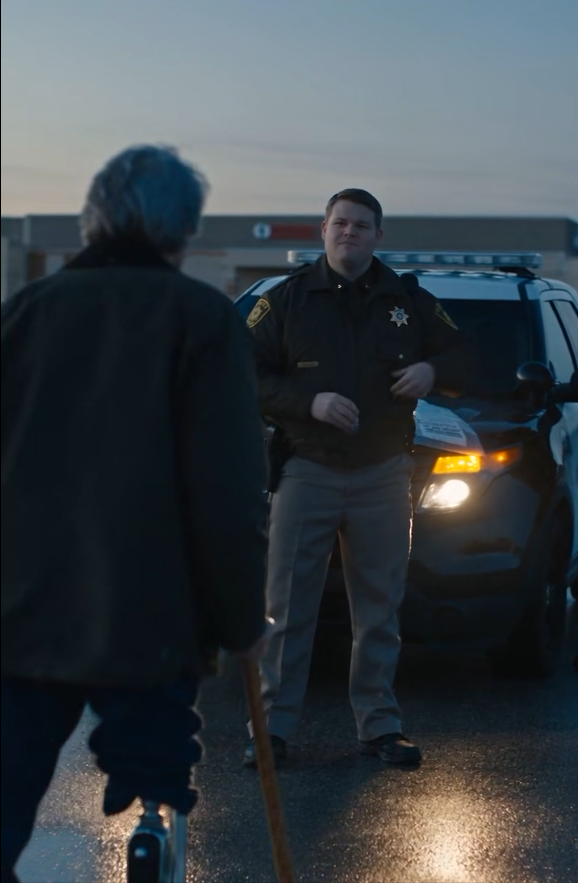
He built it one compromise at a time.
One nervous partner.
One dismissed complainant.
One report nobody checked.
One piece of property nobody fought hard enough to recover.
I thought of Davis laughing.
Not because he was cruel.
Because cruelty had become background noise.
That might have been worse.
“What do you need from me now?”
The woman studied me.
“We can proceed without you.”
“That’s not what I asked.”
“If this moves toward charges, you’ll be a witness.”
“I expected that.”
“Miller may challenge the monitored contact.”
“Fine.”
“He may claim entrapment.”
“He stole my property before I pressed the button.”
“Yes.”
“What else?”
She hesitated.
“We may ask you to identify him as the man who possessed the watch.”
“I can do that.”
“You may be cross-examined about your background, your connection to the investigative unit, the device, the setup.”
“My background is boring.”
She raised an eyebrow.
“I read it.”
“Then you know.”
“I know you don’t like being described as helpless.”
I leaned forward slightly.
“I am old. I am an amputee. Neither makes me helpless.”
“I agree.”
“No. You know the words. Agreement is what people do when it costs them something.”
She held my gaze.
Then nodded.
“Fair.”
She stood.
“One more thing.”
“What?”
“We found something inside Miller’s locker.”
My chest tightened before she finished.
“A plastic bag containing two medals.”
My medals.
The ones stolen from the study.
Not the watch.
Not a random piece of property.
My medals.
I stared at her.
“How?”
“We’re still establishing that.”
I heard my own voice become quieter.
“Were they in evidence packaging?”
“No.”
“Logged?”
“No.”
I stood too quickly.
Pain shot through my right leg.
I gripped the table.
She moved forward but stopped herself before touching me.
Good.
I steadied.
“That means he was involved sooner.”
“Yes.”
“He didn’t just buy the watch.”
“Possibly.”
“He knew what else was in my house.”
“We don’t know that.”
I looked at her.
“You have my medals in his locker.”
“Yes.”
“What harder proof do you need that my house wasn’t random?”
She didn’t answer.
Because she had already reached the same conclusion.
The burglary itself had just become part of the case.
Part VI — The Choice
By evening, they knew enough to frighten everyone.
Not enough to finish it.
The burglar changed his story twice.
First he claimed Miller had arranged the burglary.
Then he said Miller only bought what was brought to him.
Then he asked for a lawyer.
Miller denied everything.
He said the medals had been planted.
He said the watch had been turned over by a confidential source.
He said his missing body-camera footage resulted from a technical failure.
He said the parking-lot meeting had been manipulated.
He said I had provoked him.
That last one almost made me laugh.
There is something strangely revealing about a man with a gun, badge, partner, cruiser, and institutional authority claiming he was overpowered by the calm behavior of a seventy-one-year-old amputee with paperwork.
I went home after dark.
This time, someone checked the house before I entered.
I did not enjoy that.
Dependence makes me irritable.
But pride is not the same as independence.
I had learned that after the blast.
For six months after I lost my leg, I tried to refuse help from everyone.
Physical therapists.
Nurses.
Friends.
My son was the only one who ignored me.
He showed up with groceries, changed lightbulbs I could have changed myself, moved furniture without asking, and once took my crutches outside and locked them in his trunk because I had tried to climb basement stairs before I was ready.
“You can be stubborn,” he told me, “or you can be alive. Pick the useful one.”
He was twenty-four.
I was furious.
He was right.
That night, I stood in my kitchen and heard the sentence again.
Pick the useful one.
At 10:12, the plainclothes woman called.
“We have an issue.”
“What?”
“Miller wants to talk.”
“To you?”
“Yes.”
“No.”
“That was my recommendation.”
I looked at my son’s photograph.
“Why me?”
“He says he’ll explain how the medals got into his locker if he speaks to you directly.”
“That sounds like leverage.”
“It is.”
“You believe him?”
“I believe he wants something.”
“What?”
“We don’t know.”
I leaned against the counter.
“What are the risks?”
“He could manipulate you.”
“I’m seventy-one, not seven.”
“He could attempt to shape your testimony.”
“Everything he says would be monitored.”
“Yes.”
“Recorded?”
“Yes.”
“Then what’s the real risk?”
She was quiet.
“That you’re not trained for this.”
I smiled without humor.
“You’ve read my file.”
“That doesn’t make you trained for this.”
“No.”
I looked down at the prosthetic.
“But it means I know what happens when someone else’s bad decision puts you in a room you didn’t choose.”
She waited.
I said, “Set it up.”
The meeting happened the next afternoon.
Neutral interview room.
Table bolted to the floor.
Two chairs.
Camera in the corner.
Miller entered without uniform.
The difference was startling.
Not because he looked weaker.
Because he looked more ordinary.
Gray sweater. Dark pants. No badge. No radio. No ballistic vest widening his shoulders.
He sat across from me.
For several seconds, neither of us spoke.
Then he smiled.
“Quite a production.”
I said nothing.
“You enjoying this?”
“No.”
“Could’ve fooled me.”
“You asked for the meeting.”
His smile faded.
He leaned back.
“They told you about the medals?”
“Yes.”
“You think I broke into your house?”
“I think my medals ended up in your locker.”
“Not the same thing.”
“No.”
He studied me.
“You’ve done this before.”
“Sat in a room?”
“Let people underestimate you.”
I looked at him.
“That wasn’t something I arranged.”
His eyes flickered.
Then he changed direction.
“The guy who hit your house is garbage.”
“He has a name.”
“So does mold.”
I waited.
Miller rubbed his thumb against the edge of the table.
“He brought me the watch.”
“I know.”
“You know what he says.”
“I know what you did with it.”
“I was holding it.”
“In your pocket.”
“For safekeeping.”
“Beside empty evidence bags.”
His mouth tightened.
“You think you’re clever.”
“No.”
“That radio trick?”
“The radio didn’t make you steal.”
“I didn’t steal.”
“Then why are we here?”
He leaned forward.
“Because people already decided what they wanted to see.”
I thought of Davis.
Of the laughter.
Of the filed-off-serial-number story.
“You decided what I would believe before I arrived.”
“That’s police work.”
“No. That was salesmanship.”
His eyes hardened.
Finally, something honest.
Anger.
He lowered his voice.
“You want your medals back?”
“Yes.”
“You want to know how they got there?”
“Yes.”
“Then tell them the watch was in my pocket because I was transferring it.”
“No.”
His eyebrows lifted.
“You didn’t even think about it.”
“I thought about it yesterday.”
“You could get what you want.”
“I already know where the medals are.”
“You don’t know how they got there.”
“Then tell me.”
“You first.”
I almost pitied him.
He genuinely believed everyone had a price because everyone around him eventually had.