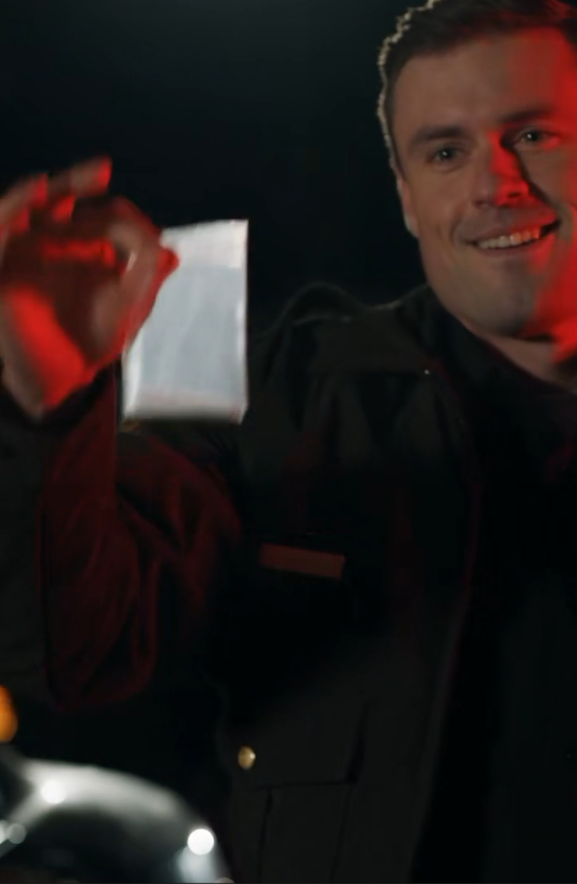
“Keller knows who I am now.”
“Yes.”
“He knows I’m carrying an active corruption file.”
The supervisor’s expression changed.
“You told him that?”
“Dispatch did enough.”
“Who else knows what’s in your bag?”
Claire ignored the question.
“Did Keller ask about it?”
The supervisor looked at her carefully.
“Why?”
“Because he looked at it before he ordered my vehicle searched.”
“That could mean anything.”
“It could.”
Claire stood.
The supervisor’s eyebrows rose.
“Where are you going?”
“I’m done answering questions until the footage is copied outside this building.”
“You can’t dictate evidence handling.”
“I can dictate whether I participate voluntarily.”
“You think someone here is going to erase it?”
Claire picked up her handbag.
“I think six months of my work says pretending something can’t happen is not a control measure.”
He stood too.
“That file in your bag—does it include Keller?”
Claire looked at him.
The question had come too quickly.
She said, “Why would you ask that?”
“Because if it does, tonight gets more complicated.”
“No. If it does, tonight gets simpler.”
“How?”
“It gives him motive.”
The supervisor was silent.
Claire moved toward the door.
He said, “You really think he knew who you were before the stop?”
Claire stopped.
That question had been waiting in the back of her mind since the roadside.
At first she had assumed Keller discovered her identity through dispatch.
But several things bothered her.
He had chosen her vehicle before running the identification.
He had asked to search quickly.
He had prepared the bag before the dispatcher confirmed her name.
And he had looked at her handbag after discovering who she was.
Maybe he had not known.
Maybe she was forcing patterns onto coincidence because she had spent too long inside the investigation.
Or maybe the worst possibility was the correct one.
Someone had told him.
Claire turned back.
“What time did he call in my plate?”
The supervisor frowned.
“Why?”
“Check.”
“You already know?”
“No.”
“Then what are you looking for?”
Claire thought of the case files.
Traffic stops initiated first.
Dispatch notification later.
A repeated gap.
Three minutes.
Four.
Sometimes six.
Time during which no official system reflected who had been stopped.
Time during which officers could decide what kind of stop they wanted it to become.
“Just check.”
The supervisor picked up the desk phone.
Claire waited while he called dispatch records.
He asked two questions.
Then a third.
His expression flattened.
He hung up.
“Well?”
He looked at her.
“Keller activated emergency equipment at 9:14.”
“And called the plate?”
“9:19.”
Five minutes.
Claire’s fingers tightened around the handbag handle.
One of the complaints in the dossier involved a five-minute gap.
Another, four minutes and forty-eight seconds.
Another, five minutes and eleven.
She had mapped them because patterns became visible when excuses were placed side by side.
Keller’s voice returned to her.
You should be thinking about the situation you’re in.
Claire sat down again.
The supervisor remained standing.
She said, “Get me a copy of the second officer’s footage.”
“I can’t release evidence to you tonight.”
“Then mirror it to the independent server.”
“That needs authorization.”
“Get it.”
“Claire—”
“Get it.”
For the first time, he did not argue.
The second officer entered the room twenty minutes later.
He looked younger under fluorescent light.
Not young exactly.
Just less protected by the uniform than he had seemed beside the cruiser.
The supervisor remained by the wall.
Claire sat across from the officer.
His body camera had been removed for evidence preservation.
A rectangular absence remained on his vest.
Claire said, “I’m not taking a statement.”
He nodded.
“I know.”
“You’re not obligated to speak to me without representation.”
“I know.”
“You can leave.”
He stayed seated.
Claire studied him.
“Why are you here?”
He looked at the table.
Then he said, “I saw the bag.”
The supervisor shifted.
Claire did not.
“Where?”
“In the cruiser.”
“Before Keller picked it up?”
The officer nodded.
“Use words.”
“Yes.”
Claire waited.
He swallowed.
“It was near the passenger seat.”
The room seemed smaller.
“Was it there before the stop?”
“I don’t know.”
“Did you see Keller put it there?”
“No.”
“Did you see it in Ms. Moreau’s car at any point?”
“No.”
Claire said, “Did Keller tell you he had already recovered it from my vehicle?”
The officer looked toward the supervisor.
Claire said, “You don’t have to answer.”
He returned his gaze to her.
“No.”
“Did he enter my vehicle before he held up the bag?”
“No.”
“Did you?”
“No.”
Claire leaned back.
That was it.
No dramatics.
No confession.
Just sequence.
And sequence was hard to argue with when recorded.
The officer rubbed his palms against his trousers.
Then he said, “He asked about you earlier.”
Claire stopped breathing for one beat.
“When?”
“Before the shift.”
The supervisor straightened.
“What exactly did he ask?”
The officer looked uncomfortable now.
“He showed me a photo.”
Claire’s face remained still.
“What photo?”
“You.”
The fluorescent light hummed overhead.
The officer continued.
“He asked if I’d seen you around.”
Claire heard her own voice from a distance.
“What did he say your reason was?”
“He said you might be connected to an internal review.”
The supervisor swore softly.
Claire looked at him.
Then back at the officer.
“When was this?”
“About seven.”
Two hours before the stop.
Claire’s mind reorganized the night.
Not a random traffic stop.
Not bad luck.
Not an officer improvising after realizing whom he had pulled over.
Keller had known.
He had been looking for her.
Claire glanced at her handbag.
The dossier inside suddenly felt heavier.
Only a limited number of people knew where she would be tonight.
Fewer knew she would be carrying the sealed copy.
She looked toward the door.
“Where is Keller?”
The supervisor said, “Separate room.”
“Under guard?”
He hesitated.
Claire stood.
“Under guard?”
“No.”
She was already moving.
Part III — Reversal
Keller was gone.
His locker remained closed.
His personal vehicle was gone from the employee lot.
His department phone sat on a desk in the operations room.
He had left it behind.
Claire stood beside the supervisor beneath the station’s harsh white lights while officers moved through hallways with the tense efficiency of people who had realized the night was no longer routine.
The supervisor spoke into his radio.
Claire heard Keller’s name transmitted.
Then vehicle information.
Then an instruction to locate but not approach alone.
She said, “He knows what’s in the case.”
The supervisor lowered the radio.
“You don’t know that.”
“He knew who I was before the stop.”
“That doesn’t mean he knows the contents.”
“He targeted me.”
“Yes.”
“With a prepared bag.”
“We don’t know when he got it.”
“Don’t do that.”
“Do what?”
“Retreat into uncertainty every time the obvious answer becomes uncomfortable.”
The supervisor looked at her.
Claire lowered her voice.
“I’ve spent six months watching that destroy cases.”
He did not respond.
Claire returned to the interview room and closed the door behind her.
For the first time that night, she opened her handbag.
Inside sat the sealed package.