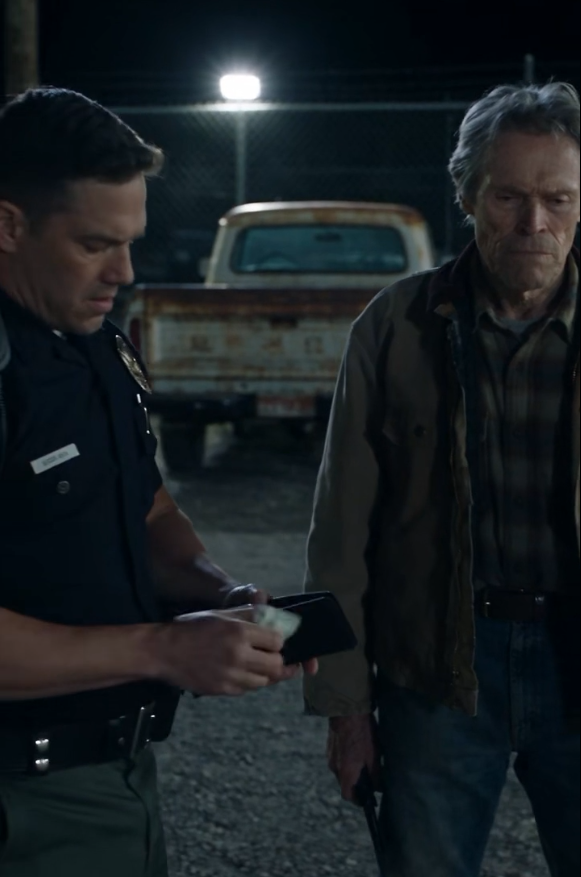
He was ordered to pay restitution.
His law-enforcement certification was revoked.
Miller was never charged with taking money because there was no evidence he had.
But the department upheld his termination for failing to report and intervene promptly, making misleading assurances to motorists, and withholding material facts during the early investigation.
He appealed.
Then withdrew the appeal.
I learned that from Mercer.
The city reviewed every impound cash transaction from the previous two years.
Some were legitimate.
Some could not be reconstructed.
Several resulted in refunds.
The after-hours release process changed.
Cash payments at the gate were prohibited entirely.
Every additional fee had to appear in the central system before a vehicle could be held.
A printed receipt was no longer merely paper someone could crumple and throw away.
It had to match the computer record.
Mercer called me when the review ended.
"Thirty-two refunds," she said.
"Ryder?"
"Not all connected to him. Some were administrative errors."
"How many connected?"
"Enough."
I sat at my kitchen table, looking out at spring rain.
"That's a lawyer's number."
"I'm not a lawyer."
"You've been around them too long."
She laughed.
It was the first time I heard her do that.
"Your original five hundred is included in the audit report."
"I already got it back."
"The report still lists it."
"Good."
"I thought you'd say that."
We were quiet.
Then she said, "There's something I never told you."
"What?"
"The radio playback."
"I know you did it."
"Yes. But the exact reason it happened when it did."
I waited.
"The team approaching the lot had not yet decided to intervene. Ryder was walking toward his cruiser. We had the audio. Technically, we could have let him leave and stopped him down the road."
"But?"
"Miller keyed his radio."
I straightened.
"What?"
"He pressed the emergency signal."
"He told me his transmission light was dark."
"It was after the signal."
"Why didn't I hear him call anybody?"
"He didn't speak."
The night returned in fragments.
Miller leaning against the cruiser.
Looking down the access road.
Checking his watch.
"Let's roll, Ryder. Shift change at nine."
Then me raising the phone.
Ryder turning.
Miller stepping away from the car.
"What did the emergency signal mean?"
"Officer needs immediate assistance."
I looked out at the rain.
"He sent it?"
"Yes."
"When?"
"When Ryder stepped toward you and said, 'Give me that.'"
The memory sharpened.
Miller had moved between us.
Leave the phone.
I had remembered that.
I had not known about the button.
"So you played the recording."
"To freeze the situation until we arrived."
"Why didn't Miller tell me?"
"I don't know."
I did.
At least I thought I did.
Because it would have made him sound better.
By the time he finally decided to tell the complete truth, he had stopped selecting only the parts that helped him.
Maybe the emergency signal belonged in the record.
Maybe he did not want it to become a defense against everything else.
"Does it change your view of him?" Mercer asked.
I thought for a long time.
"No."
She sounded surprised.
"Not at all?"
"It adds something."
"What?"
"He failed people."
"Yes."
"And when it was my turn, he finally moved."
"Yes."
"Both are true."
Mercer was quiet.
"You're difficult, Mr. Hale."
"So I've heard."
She laughed again.
We ended the call.
That afternoon I drove my pickup to the hardware store.
The bent fender was still bent.
I had considered replacing it.
Then decided there were better uses for the money.
My brother's oak toolbox sat on the passenger-side floor.
I had spent the winter repairing the loose hinge.
At the store, I bought a box of brass screws and a new level even though I did not need one.
On the way home, I passed the turn toward the impound yard.
For a moment, I considered driving by.
I didn't.
Some places deserved less space in your life once they had taken enough.
At home, I carried the toolbox into the garage.
The original yellow release slip had been returned after the case.
The paper was wrinkled, stained at one corner, and flattened inside a clear evidence sleeve.
I had nearly thrown it away.
Instead, I pinned it above my workbench.
Not as a trophy.
Not even as a reminder of Ryder.
Under the bright garage light, the words at the bottom remained easy to read.
PAID IN FULL.
My brother's old level rested on the bench beneath it.
I placed the new one beside it, checked the bubble, and adjusted a shelf until it sat square.
Outside, rain tapped steadily against the garage door.
Inside, the old yellow paper shifted slightly in the draft from the heater.
It weighed almost nothing.
But I had learned something about paper, money, uniforms, and silence.
A badge could make a man look powerful.
A frightened partner could make wrongdoing look ordinary.
A resignation could make a record look unfinished.
And a crumpled receipt on the ground could carry more truth than every polished explanation that came after it.
I turned off the workbench light and started toward the house.
Then I looked back once at the yellow slip above the tools.
Ryder had thrown it into the gravel because he thought paper was weak.
He had been wrong.