"What issue is it?"
"Whether the case can establish a pattern or only one disputed encounter."
I thought of Miller's list.
Nineteen vehicles.
"You need the others."
"Yes."
"Then find them."
"We're trying."
"And if they won't talk?"
Mercer's silence answered.
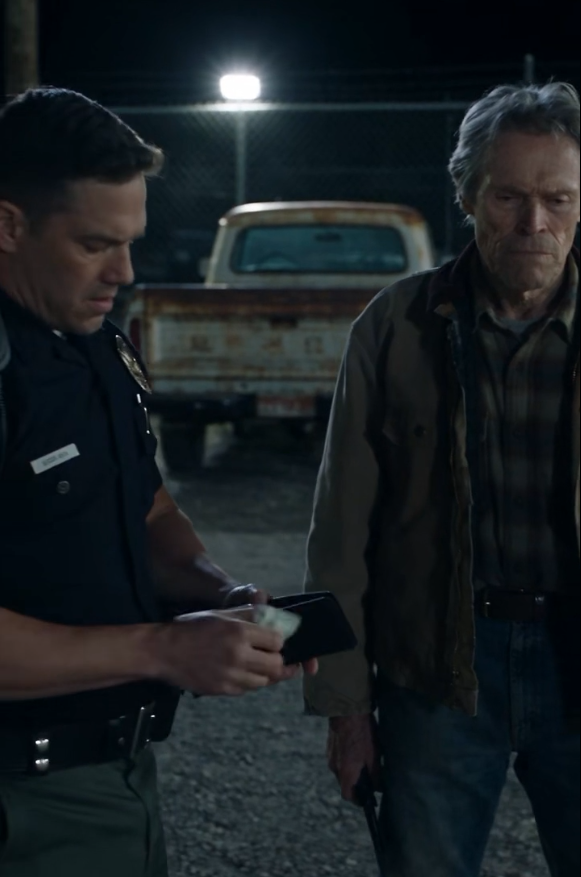
I picked up my wallet.
At the door, she said, "Ryder has offered to resign."
I turned.
"In exchange for what?"
"No criminal referral on the cash incident. Administrative closure. Permanent separation from the department."
"And my five hundred becomes what?"
"Returned property."
"What about the others?"
"Still under investigation."
"Would he keep his pension?"
"Some benefits are governed separately."
"So he walks away."
"He leaves law enforcement."
"That's not what I said."
Mercer's face remained composed.
"The decision is not mine."
"Whose?"
"Several people's."
"You want my opinion?"
"I want to know whether you're willing to testify if this proceeds."
I looked through the glass wall at people moving through the hallway.
Badges.
Folders.
Coffee cups.
Ordinary people carrying serious things.
"Yes," I said.
Mercer nodded.
Then I added, "But I'm not testifying to the version that makes everybody else comfortable."
She looked at me for a long moment.
"Understood."
Part IV — The Cost of a Clean Story
Three days later, I bought heating oil.
The driver ran the hose along the side of the house while I stood on the porch with my hands in my pockets.
The gauge rose.
So did my sense that I had nearly traded something essential for something that should never have been demanded in the first place.
That weekend, I cleaned my brother's tools.
I did it every few months whether they needed it or not.
The plane irons got a light coat of oil. I brushed sawdust out of the circular saw vents and tightened the loose latch on the oak toolbox.
My brother had built cabinets for forty-one years.
He believed in measurements.
A door either fit or it did not.
A corner was square or it wasn't.
He had little patience for explanations that asked wood to behave differently because someone important had made the cut.
I found myself thinking about Miller.
Four months.
Nineteen plates.
Fourteen seconds.
Numbers had a way of stripping excuses down.
Mercer called Monday.
"We found six vehicle owners from Miller's list willing to speak with us."
"Six."
"Yes."
"Out of nineteen."
"Some vehicles changed owners. One plate was recorded incorrectly. Several people haven't returned calls."
"What do the six say?"
"Similar things."
"Cash?"
"Yes."
"At the gate?"
"Mostly."
"Ryder?"
A pause.
"Mostly."
That word bothered me.
"Who else?"
"I can't discuss names."
"Miller?"
"No allegation that he took money."
"But he was there."
"Sometimes."
I rubbed my forehead.
"What happens now?"
"We've scheduled a formal evidentiary interview for you next Thursday."
"With Ryder?"
"No. His attorney may observe part of the proceeding later, depending on the review process."
"That sounds like you need three sentences to say I have to tell the story again."
"That's fair."
"Then say that."
"I need you to tell the story again."
"Fine."
Before we hung up, Mercer said, "There's something else."
"What?"
"The call to your house."
"You found it?"
"We traced the number."
I waited.
"It came from a prepaid phone."
"Of course it did."
"But the phone connected through a tower close to the impound facility about forty minutes after the incident."
"So?"
"So it's relevant."
"Relevant isn't a person."
"No."
"Do you think Ryder made the call?"
"We have no evidence of that."
"Do you think Miller did?"
"No evidence of that either."
"What do you have evidence of?"
"Someone who knew what happened called you before the incident became public."
That landed differently.
"How many people knew?"
"Too many."
The clerk.
The investigators.
Ryder.
Miller.
Anyone Ryder spoke with after being separated.
Anyone inside the chain of command informed that night.
"What did the caller want?" Mercer asked.
"You heard the words."
"I want your interpretation."
"To remind me I could still choose to shut up."
"Did it work?"
"No."
"Good."
I disliked the satisfaction in her voice.
Not because it was wrong.
Because it was easy to admire courage when someone else carried the consequences.
The evidentiary interview took three hours.
They asked about everything.
The tow.
The bent fender.
The clerk.
The cash.
My position relative to Ryder.
His hands.
My wallet.
The wording.
The radio playback.
They played my phone recording twice.
The second time, I noticed something I had missed.
Right before Ryder said, "Five hundred more," there was a soft sound.
Miller's voice.
Low.
"Ryder."
Just the name.
A warning.
Then Ryder ignored him and took the money.
The interviewer replayed it.
"Do you remember that?"
"No."
"Does it change your understanding?"
"Of what?"
"Officer Miller's conduct."
I looked at the speaker on the table.
"No."
The interviewer seemed surprised.
"He warned him."
"He said his name."
"You don't consider that intervention?"
"I consider it saying his name."
I sat back.
"If a man is about to step in front of a bus and you say his name, maybe that's enough. If another man has his hand in my coat, I'd prefer a complete sentence."
No one argued.
A week passed.
Then another.
The six complainants became nine.
The details varied.
Two hundred dollars to open a gate after hours.
Three hundred for a supposed paperwork correction.
Four hundred because a vehicle had been held over a weekend.
Five hundred to avoid what Ryder described as a "secondary inspection."
Not everyone had receipts.
Not everyone remembered exact dates.
One man had withdrawn cash from an ATM near the impound lot twenty minutes before paying.
A woman had texted her sister from the parking lot: They want 300 more or won't release car.
Another person had complained at the time, then stopped answering investigators after Ryder allegedly contacted him about an unrelated traffic matter.
The pattern was not clean.
Real life rarely was.
But it existed.
Then the city offered Ryder a formal separation agreement.
Mercer asked me to meet.
We sat in a conference room with no windows.
"This would end his employment immediately," she said.
"And?"
"He waives any grievance challenging termination."
"And?"
"His law-enforcement certification would be flagged pending state review."
"And criminal charges?"
"The prosecutor has not committed to filing on the extortion allegations."
"Why?"
"Because Ryder's counsel is challenging the audio collection, Miller's credibility, and the identification of the other payments."
"Did he take my money?"
"Yes."
It was the first time Mercer had said it that plainly.
"Did I owe him the money?"
"No."
"Did he have authority to take it?"
"No."
"Then what's complicated?"
"Proving criminal intent beyond a reasonable doubt across multiple incidents."
"He called it a gate fee."
"Yes."
"There was no gate fee."
"Correct."
"He put it in his pocket."
"Correct."
I spread my hands.
Mercer looked tired.
"Law is not woodworking, Mr. Hale."
The phrase caught me.
"Who told you about my brother?"
"You did. In your second interview."
I did not remember doing it.
She continued.
"A bad joint can be measured. Intent gets argued."
"Then argue it."
"That's what I'm doing."
She slid a paper toward me.
The separation agreement summary.
I did not touch it.