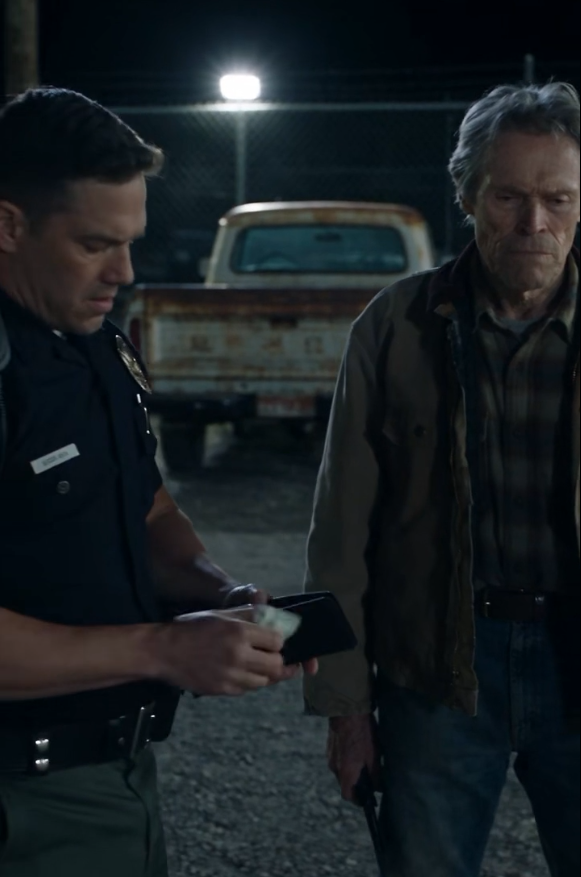
"Why am I here?"
"Because the prosecutor wants to know whether the primary complainant supports resolving the employment matter while the criminal review continues."
"Primary complainant."
"You."
"No. Ask me in English."
Mercer looked directly at me.
"Would you object if Ryder were removed from the department now, even if that makes a later criminal case harder?"
There it was.
A real question.
I read the first page.
Immediate resignation.
No admission of wrongdoing.
No return to the department.
Benefits subject to ordinary rules.
Cooperation with ongoing investigations.
Confidentiality provisions limited by subpoena.
No admission.
That phrase did a lot of work.
"What happens to Miller?"
"Separate review."
"He told me public integrity might make him look cleaner than he was."
Mercer did not react.
"Did he?"
"He came to your house in violation of instructions."
"That's not what I asked."
She glanced toward the closed door.
"Miller's cooperation was important."
"Again."
"He reported Ryder."
"Again."
"He also failed to intervene in conduct he believed was improper."
There.
I nodded.
"What happens to him?"
"No final decision."
"Does his cooperation buy him protection?"
"It is considered."
"So yes."
"It is considered because without him we might not have identified the pattern."
"And without the people Ryder took cash from?"
"Also true."
I looked at the separation summary.
"You're asking me to approve a clean ending."
"I'm asking your view on one part of an ongoing case."
"Does Ryder know about the nine people?"
"His counsel knows there are additional allegations."
"Does he know Miller kept a list?"
"Discovery obligations will determine what is disclosed and when."
I smiled faintly.
"That's a long way to say not yet."
Mercer did not smile back.
I pushed the paper away.
"I don't object to taking his badge."
"Okay."
"But if anybody writes that I support ending this with a resignation, that's false."
She made a note.
"And Miller?"
"My statement stays the same."
"Meaning?"
"He helped."
"Yes."
"He waited."
"Yes."
"Both go in."
Mercer nodded.
"Both go in."
As I left, she called after me.
"Mr. Hale."
I turned.
"Why does that matter so much to you?"
"What?"
"Miller's fourteen seconds."
I thought about the question.
Then I said, "Because everybody wants the story to have one bad man."
Mercer waited.
"And?"
"It would be easier."
I opened the door.
"Easy stories are how men like Ryder get four months."
Part V — The Hearing
The hearing was held six weeks after the night at the impound lot.
By then, the leaves were gone.
December had sharpened everything.
The sky.
The air.
The sound of tires over frozen pavement.
Ryder had rejected the separation agreement.
His attorney publicly described the investigation as a "manufactured disciplinary exercise based on an elderly complainant's misunderstanding of impound procedures."
I read that sentence twice in the newspaper.
Not because "elderly" bothered me.
I had mirrors.
"Misunderstanding" bothered me.
You could bury a great deal beneath a polite word.
The hearing was administrative, not criminal.
That distinction had been explained to me repeatedly.
Different burden.
Different procedure.
Different consequences.
But there was a court reporter, lawyers, exhibits, a hearing officer, and enough formality to make a person sit straighter than usual.
Ryder wore a suit.
I had never seen him without a uniform.
The effect surprised me.
He looked younger.
Less certain.
Miller sat behind his attorney on the opposite side.
He had been placed on administrative leave pending review of his own conduct.
Mercer sat near the department counsel.
When I entered, she gave me a small nod.
Ryder did not look at me.
Not until I took the witness chair.
The department attorney walked me through the night carefully.
My truck.
My brother's tools.
The lawful payment.
The release slip.
Ryder outside.
The cash.
The phone call.
Then the recording played.
The room filled with his voice.
"Five hundred more. Gate fee. County surcharge."
Ryder stared at the table.
His attorney objected to foundation.
The hearing officer overruled him.
The recording continued.
"Whatever helps you sleep tonight, old man."
My own voice came next.
"That's all the cash I have until the first."
Then Ryder.
"Then you should be grateful we're giving you the keys at all."
The audio stopped.
The department attorney looked at me.
"What did Officer Ryder do after saying that?"
"He threw my wallet at me."
"And where did your cash go?"
"Into his right trouser pocket."
"Did he provide a receipt?"
"No."
"Did you believe the five hundred dollars was a legitimate municipal charge?"
"No."
"Why not?"
"The clerk had just told me there were no other charges."
"Did you offer Officer Ryder money?"
"No."
"Did you ask him to overlook a violation?"
"No."
"Did you ask him for special treatment?"
"No."
The attorney sat down.
Ryder's lawyer stood.
He was polite.
That made him more effective.
"Mr. Hale, you were upset that your vehicle had been impounded, correct?"
"I wasn't happy."
"Your truck had visible damage?"
"A bent fender."
"So an officer might reasonably have safety concerns?"
"An officer might."
"You aren't a certified vehicle inspector."
"No."
"You aren't a lawyer."
"No."
"You don't work for the city."
"Not anymore."
The lawyer paused.
"You previously worked for the city?"
"Thirty-four years."
That fact had not come up in the excerpted incident, but it had come out during interviews.
"Doing what?"
"Facilities maintenance."
"So not police work."
"No."
"Not impound administration."
"No."
"Not enforcement."
"No."
He walked a few steps.
"You called an investigative hotline before Officer Ryder took the money."
"Yes."
"You intended to record him."
"I intended to find out whether the money he wanted was legitimate."
"That wasn't my question."
"No. I called to record what happened."
"So you were looking for misconduct."
"I was looking to keep five hundred dollars."
A few people shifted in their seats.
The lawyer continued.
"You told investigators, 'We have all the evidence.'"
"I told the person on the phone."
"Before Officer Ryder's radio played the recording."
"Yes."
"You wanted him to know he'd been recorded."
"I wanted the investigator to know she'd heard enough."
"You're not certain the five hundred dollars was intended as a personal payment, are you?"
I stared at him.
"He put it in his pants."
"Cash payments sometimes pass through individual employees temporarily."
"Not according to the clerk."
"Again, you're not an impound administrator."
"No."
"Officer Ryder may have been assessing an additional condition-related charge."
"He called it three different things in one sentence."
The lawyer stopped.
"Mr. Hale, please answer only the question asked."
"I did."
He looked toward the hearing officer.
Then back at me.
"Did Officer Ryder ever say, 'I am stealing your money'?"
"No."
"Did he say, 'This money is for me personally'?"
"No."
"Did he say he would never document it?"
"No."
"So your belief about his intent is an interpretation."
"My belief is he reached into my coat, took my wallet, removed five hundred dollars, put it in his pocket, and threw the empty wallet at me."
The lawyer waited.
I waited too.
Finally he said, "No further questions."
I stepped down.
Miller testified after lunch.
He looked worse than I remembered.
The department attorney asked him when he first became concerned about Ryder.