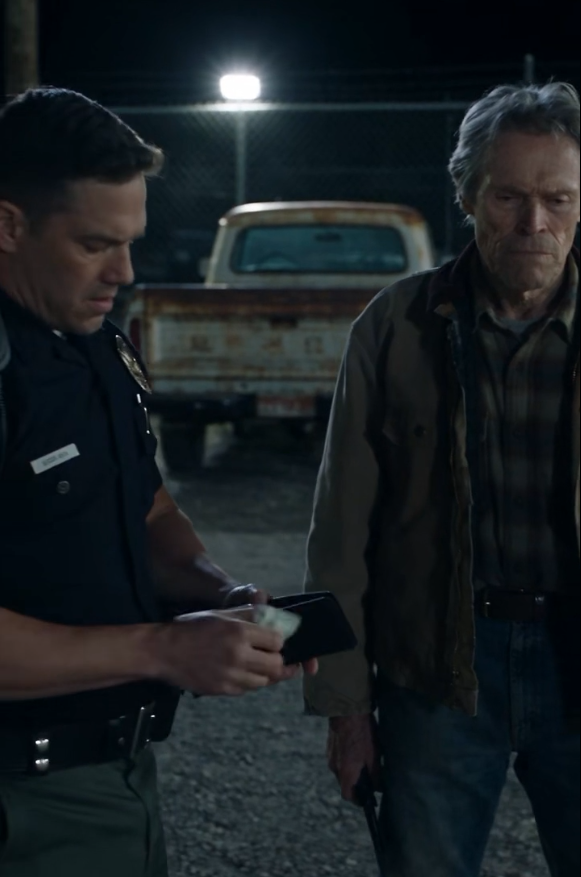
"Don't say anything else without me."
Miller did anyway.
"I told him Ryder was authorized."
Mercer stared at him.
"When?"
"August."
"Before or after your first complaint?"
Miller closed his eyes.
"After."
That was the reversal none of us had expected.
Not even Ryder.
Miller had done more than wait.
He had helped.
Maybe from fear.
Maybe from habit.
Maybe because once you wear the same uniform beside someone long enough, the boundary between loyalty and complicity becomes easy to move one inch at a time.
Mercer's voice was quiet.
"Why wasn't this in your disclosures?"
"I forgot."
Her expression hardened.
"No."
Miller opened his eyes.
"I didn't want to remember."
His attorney gripped his arm.
"We're done."
But Miller looked at me.
Not Mercer.
Not his lawyer.
Me.
"I told that man it was legitimate."
I said nothing.
"I knew I wasn't sure."
Still nothing.
"I told myself Ryder might have authority I didn't know about."
"Did you believe that?"
Miller's face collapsed by degrees, not dramatically.
"No."
His lawyer stood between us.
"Enough."
The hearing recessed for the day.
Outside, snow had begun to fall.
Fine, dry flakes that vanished when they touched the pavement.
Mercer walked beside me to the parking lot.
"This changes things."
"For Miller."
"Yes."
"For Ryder?"
"Potentially. It strengthens the pattern evidence."
"So Miller hurts himself and helps the case."
"Yes."
I unlocked my truck.
Mercer remained beside the door.
"The prosecutor may want another statement from you."
"About what?"
"Miller's visit to your house."
"I already told you."
"About what he said regarding his role."
I looked at her.
"He told me he waited too long."
"Did he mention telling motorists charges were legitimate?"
"No."
"Did he minimize his conduct?"
"He told me what he was ready to tell himself."
Mercer studied my face.
"That's not a legal answer."
"I'm not a lawyer."
"No," she said. "You've established that."
I opened the door.
Then she said, "Ryder's counsel has renewed the resignation offer."
"Now?"
"Yes."
"What changed?"
"They know the case is widening."
"What do they want?"
"Immediate resignation. Waiver of employment claims. In exchange, the department takes no position on criminal charging."
"That sounds different."
"It is."
"And Miller?"
"Likely termination."
I held the truck door but did not climb in.
"What do you want from me?"
"Nothing tonight."
"That's new."
She nodded.
Then she said, "But there may be a decision tomorrow that affects whether the department continues this hearing or accepts Ryder's resignation."
"Why should I care which?"
"Because if he resigns, the administrative case ends before all the evidence is presented publicly."
I understood.
The pattern.
The other people.
Miller's role.
The whole uncomfortable shape of it.
A resignation would remove Ryder.
A full hearing would make a record.
But a full hearing could also give Ryder room to attack witnesses, challenge recordings, discredit complainants, and perhaps win enough of the procedural argument to cloud the outcome.
No clean choices.
Miller had asked me the same thing.
What was the right move?
I had told him I did not know.
Now the question belonged to me.
Part VI — Reckoning
The department counsel called me at 7:10 the next morning.
They were prepared to accept Ryder's resignation.
The hearing would end.
He would surrender his badge and credentials.
The remaining allegations could still be referred separately.
But the administrative record would close.
"Do I get a vote?" I asked.
"No."
"Then why call me?"
"Because Investigator Mercer said you'd want to know before it happens."
She was right.
I sat at my kitchen table.
Outside, the first real snow of the year covered the yard in a thin white layer.
My brother's oak toolbox sat near the back door. I had brought it inside the night before because the truck bed tarp had started leaking.
I ran a thumb over one of the dovetail joints.
Forty-nine years old.
Still tight.
"What happens to the other complainants?" I asked.
"Their cases remain part of the criminal review."
"Do their statements become public?"
"Not automatically."
"And Miller?"
"His disciplinary process continues."
"What does Ryder admit?"
"Nothing."
"Does the resignation letter say why he's leaving?"
"No."
"So six months from now, somebody looking at the record sees he resigned."
"His certification file will reflect the pending investigation."
"Pending isn't the same as proven."
"No."
I looked at the toolbox.
My brother used to say that the easiest way to hide a bad joint was to put it where no one could see.
He also said the joint would still fail.
"Tell Mercer I want to speak before they close it."
"Mr. Hale, you're not scheduled to testify again."
"Then schedule me."
"I don't know that the hearing officer will allow it."
"Ask."
"What would you testify about?"
"Why I'm not asking you to save me from the inconvenience."
Silence.
The attorney sighed.
"I'll call you back."
Forty minutes later, Mercer called.
"You've made yourself popular this morning."
"I've survived worse."
"The hearing officer will allow a short victim-impact statement before ruling on whether to dismiss the proceeding as moot after resignation."
"Good."
"Ryder's lawyer will object."
"He's been practicing."
Mercer paused.
"Mr. Hale, understand something. Ryder can resign regardless. Your statement may not change that."
"I know."
"So what are you trying to change?"
"The record."
She was silent.
Then she said, "Be here by nine-thirty."
The room was more crowded than the day before.
Word had traveled.
Ryder sat in the same place, wearing another dark suit.
Miller was absent.
His attorney sat alone.
The hearing officer summarized the proposed resignation.
Then Ryder's lawyer confirmed his client intended to leave the department effective immediately.
"No admission of misconduct," he emphasized.
The hearing officer nodded.
Department counsel stood.
"Before the matter is concluded, the department requests that Mr. Hale be permitted a limited statement."
Ryder's attorney objected.
The hearing officer allowed it.
I walked to the front.
There was no oath this time.
No questioning.
Just me.
I had written nothing.
That worried Mercer.
I could tell by the way she watched my hands.
I looked at Ryder.
He looked back.
For the first time since the impound lot, there was no badge between us.
"I came to that yard because I wanted my truck," I said. "That's all."
Nobody moved.
"I had paid what the city said I owed. I had a paper in my hand proving it. Officer Ryder took that paper, threw it on the ground, took my wallet, and took five hundred dollars."
Ryder's lawyer shifted.
I kept going.
"I got the money back. I got the truck back. If this story were only about me, you could close the file right now and tell yourselves the problem was fixed."
The hearing officer watched carefully.
"But I saw a list."
Ryder's lawyer rose.
"Objection."
The hearing officer said, "Mr. Hale, avoid discussing materials not admitted."
"All right."
I nodded.
"I learned there were other people."
No objection.
"Some talked. Some didn't. I understand why."
I looked at Ryder.
"When a person in authority takes something from you and tells you there's no point arguing, sometimes you decide losing the money is cheaper than fighting the person."
Ryder's face remained still.