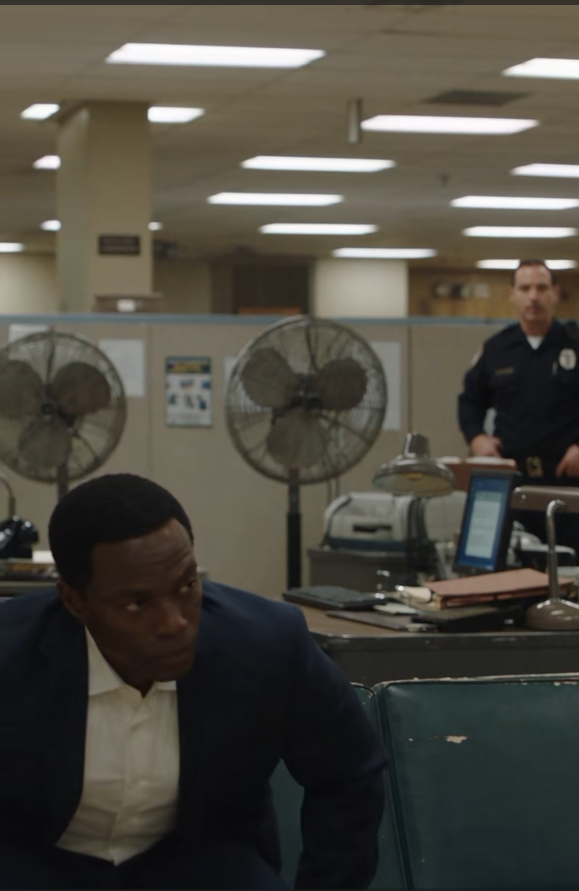
“O’Malley’s worried Rourke will talk.”
“About what?”
“If I knew, I’d be home.”
At 12:37 a.m., Travis Rourke asked for Kendrick.
The request came through the supervising agent.
Kendrick was standing over a cart of seized evidence when he heard.
“He asked for me specifically?”
“Yes.”
“With counsel?”
“He hasn’t called one.”
“He knows he can?”
“We’ve told him twice.”
Kendrick set down the inventory sheet.
“What does he want?”
“He says he’ll only explain to you.”
Kendrick laughed once under his breath.
“Of course he does.”
“You don’t have to go.”
“Yes, I do.”
“You’re too close to the asNextlt.”
“That’s why he wants me.”
The agent shook his head.
“That’s also why you shouldn’t.”
Kendrick considered it.
The warning was correct.
Any conversation could later be attacked as coercive.
Rourke had struck him.
Kendrick had every reason to resent him.
If Rourke was about to provide information, the process needed to be clean.
“Fine,” Kendrick said. “Recorded interview. Another agent asks questions. I sit in.”
“That works.”
“And read him rights if his status changes.”
“Already planned.”
Kendrick looked through the glass at the interview-room door.
“What changed?”
The agent shrugged.
“Maybe he finally realized O’Malley isn’t coming to save him.”
That possibility stayed with Kendrick all the way down the hall.
Rourke looked smaller in the interview room.
Not physically.
He was still broad through the shoulders, still in uniform, still carrying the habits of a man used to controlling space.
But his certainty was gone.
His duty belt had been removed.
His hands rested on the table.
Kendrick took the chair against the wall.
Another federal agent sat across from Rourke.
The recorder light came on.
Rourke looked only at Kendrick.
“I didn’t know who you were.”
Kendrick said nothing.
The interviewer said, “Officer Rourke, talk to me, not Agent Hayes.”
Rourke ignored him.
“I thought you were some lawyer.”
Kendrick’s expression did not change.
“That supposed to make it better?”
The interviewer looked at Kendrick.
Kendrick nodded once.
Fair point.
He should not be the one questioning.
Rourke finally looked at the interviewer.
“I want to tell you something.”
“Okay.”
“But I’m not saying I did anything.”
“Then tell us what you know.”
Rourke rubbed his palms together.
For the first time since Kendrick had met him, his voice lost its edge.
“There were lists.”
Kendrick’s focus sharpened.
“What lists?” the interviewer asked.
Rourke looked at Kendrick again.
“You found them, didn’t you?”
Nobody answered.
Rourke gave a humorless smile.
“Then you know.”
The interviewer said, “We need you to explain what you mean.”
“O’Malley kept track of who was with him.”
“With him in what?”
Rourke hesitated.
“That’s not how he said it.”
“How did he say it?”
“He called it trust.”
Kendrick felt the room narrow.
Rourke continued.
“You did what you were told, you got overtime. Better assignments. He took care of you.”
“And if you didn’t?”
“Night shift. Traffic. Complaints suddenly mattered.”
“You benefited?”
Rourke looked down.
“Yes.”
“Did you participate in criminal activity?”
Rourke’s jaw tightened.
“I’m telling you about the system.”
“That wasn’t my question.”
Silence.
The interviewer waited.
Rourke finally said, “Sometimes we were told not to bother certain businesses.”
“Why?”
“Because they were handled.”
“What does that mean?”
“It meant leave them alone.”
“Who told you?”
“O’Malley. Sometimes through sergeants.”
“Did you receive money?”
“No.”
“Ever?”
“No.”
Kendrick watched his face.
Rourke believed that answer mattered.
Maybe it was even true.
But corruption did not always pay everyone in cash.
Some people were paid in permission.
Permission to be aggressive.
Permission to ignore complaints.
Permission to think rules were for weaker officers.
The interviewer asked, “Did you know others received money?”
Rourke said nothing.
That was an answer.
“Officer Rourke?”
“I heard things.”
“What things?”
“That some businesses paid.”
“To whom?”
“I don’t know.”
“Did Captain O’Malley know?”
Rourke stared at the table.
“Yes.”
The word changed the room.
Kendrick did not move.
The interviewer leaned forward.
“How do you know?”
Rourke’s breathing became heavier.
“Because I heard him tell somebody to stop worrying about a restaurant owner. Said the guy was ‘current.’”
“Current with what?”
Rourke looked up.
“What do you think?”
“We’re asking what you understood.”
Rourke swallowed.
“Payments.”
“Did Captain O’Malley say that word?”
“No.”
“Then how did you know?”
“Everybody knew what current meant.”
Kendrick glanced toward the camera.
A coded term.
That matched language in previously intercepted calls investigators had not fully understood.
Current.
At the time it sounded administrative.
Now it had meaning.
The interviewer continued.
“What happened when someone wasn’t current?”
Rourke looked at Kendrick.
“You really want to know?”
Kendrick remained quiet.
The interviewer said, “Yes.”
“Stops. Inspections. Calls. Parking. Whatever hurt.”
“Were you assigned to do that?”
Rourke said nothing.
Kendrick knew before he spoke.
“Yes.”
The word came out almost inaudibly.
“How many times?”
“I don’t know.”
“Estimate.”
“Maybe six. Eight.”
“Businesses?”
“Mostly.”
“Did you know why?”
“Yes.”
“Did you ever use force during those contacts?”
Rourke’s face changed.
Not much.
Enough.
The interviewer saw it.
Kendrick saw it.
“Officer?”
Rourke leaned back.
“I want a lawyer.”
The interview ended.
But the case had just changed.
Part IV — Reckoning
By Wednesday morning, Oak Haven Police Headquarters no longer looked like a police station.
It looked like evidence.
Federal seals marked office doors.
Computers sat disconnected with chain-of-custody tags.
Cardboard evidence boxes filled a section of the lobby.
Agents moved quietly between rooms, carrying drives and paper files.
Outside, reporters had multiplied.
Inside, officers spoke softly.
Rourke had been placed on administrative leave pending charging decisions.
O’Malley had done the same voluntarily through his attorney before the city formally acted.
Kendrick had slept forty minutes in a chair.
His suit jacket was folded over the back.
His white shirt still carried a faint reddish stain beneath the collar.
At 7:15 a.m., the prosecutor called.
“We have enough to make initial arrests.”
“Who?”
“O’Malley. Two officers tied directly to extortion collections. Possibly Rourke depending on corroboration.”
Kendrick rubbed his forehead.
“Rourke’s useful.”
“That doesn’t make him immune.”
“I didn’t say it did.”
“You’re thinking leverage.”
“I’m thinking truth.”
“Same road sometimes.”
“And not always.”
The prosecutor was silent.
Kendrick continued.
“If you arrest him for the asNextlt and extortion-related conduct before he decides whether to cooperate, that’s fine. But don’t overcharge him just to scare him.”
“No one said we would.”
“I’m saying it now.”
“You protecting the man who hit you?”
“No.”
Kendrick looked toward the lobby wall.
“I’m protecting the case from looking personal.”
The prosecutor softened slightly.
“We’ll charge what the evidence supports.”
“Good.”
“And Kendrick?”
“Yes?”
“Go to a doctor.”
He hung up.
The hospital visit lasted less than an hour.
No fracture.
Mild facial contusion.
Small laceration.
No concussion.
Kendrick left with written instructions and an ice pack he did not use.
By the time he returned, agents had reconstructed part of the shredded material.
Complaint routing sheets.
Several involved Rourke.