The metal locker in our crawlspace was gray, dented, and cold to the touch.
It had survived three moves: the sale of the house on Elm Street after the burst pipe ruined the west hallway, the temporary rental in town, and finally the downsized two-bedroom cottage where Emily and I lived now. I was seventy-one. My knees ached whenever the weather turned damp, and my memory, though stubborn about grievance, had begun misplacing ordinary nouns.
Yet I still remembered the combination to that padlock: 11-47-03.
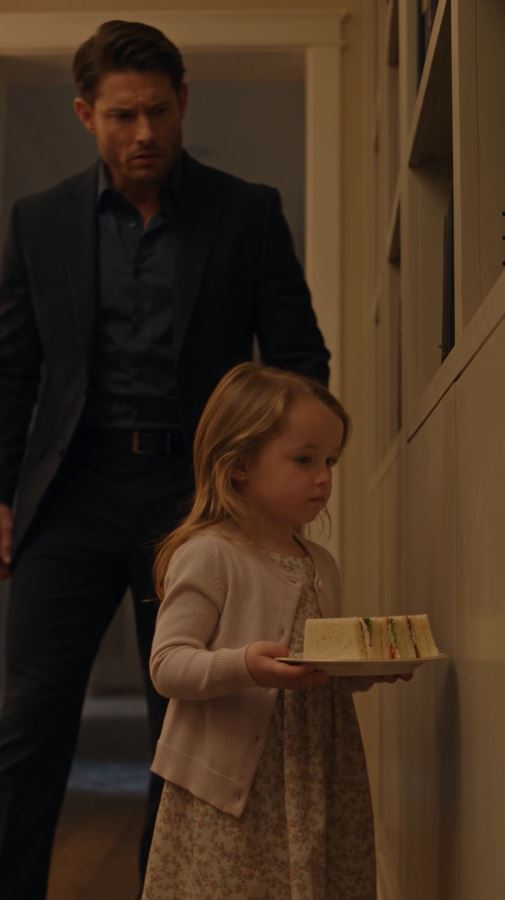
The time Lily had walked past my doorway with four sandwiches. The age of the child holding the plate.
Young Caroline—Sophie’s daughter—was eighteen now. She had finished high school in June and spent the late summer hauling cardboard boxes out of our attic to earn gas money before college started. She was tall, with the same deliberate line of jaw that Sophie had inherited from Emily, though she moved with the breezy, unburdened carelessness of someone whose childhood had contained zero police cordons, zero emergency room blood draws, and zero drywall cavities.
She found the padlock behind a stack of unused furnace filters.
"Grandpa," she called up from the hatch. "What’s in the green footlocker?"
"Papers," I answered, leaning over the wooden ladder. "Old business."
"Is it the business?"
She didn't say the case. She didn't say the clinic. Children in our family possessed an extraordinary vocabulary for circumventing proper nouns when they sensed adult grief hovering nearby.
"Some of it," I admitted.
Caroline climbed up the steps, her shirt dusted with cobwebs. She sat cross-legged on the linoleum floor of our utility porch. "Mom told me she threw away duplicate photos years ago. She said she kept only what was necessary."
"She did," I said. "Your mother took control of her own archives when she was twenty-seven. She shredded duplicate body-camera logs and clinical injury sheets because she didn't need her own suffering turned into an exhibition."
"Then what did you keep?"
I looked at the girl. Named after Caroline Mercer. Raised by Sophie. Born because an unauthorized embryo had produced a life that produced another life.
"I kept the bills," I told her.
"The money?"
"The receipts. The retainers. The municipal permits for sealing the trench between the foundations. The invoices from the contractor who poured thirty bags of concrete mix into the maintenance passage so no human being could ever crawl through it again."
Caroline touched her knees. "Why keep invoices?"
"Because when something impossible happens to your family, lawyers arrive with notebooks and clinicians arrive with assessments. Everyone speaks in passive voice. They say an administrative error occurred. They say a misallocation of genetic tissue took place. They speak as though the house caught fire by divine intervention. But invoices have names on them. Invoices show that human beings bought lumber, drove trucks, signed checks, and cleared debris."
"Can I look?" she asked.
I hesitated.
Years earlier, when Sophie was seventeen and asked to see Mara, my first word had been an automatic no. I had spent decades believing that fatherhood meant constructing barricades around the girls. It took a long time to learn that barricades eventually turn into cages if you refuse to open the gate when the child asks.
"You can look at what belongs to public record," I said. "The rest stays with your mother."
We knelt together on the utility floor. I spun the dial: eleven, forty-seven, three. The latch clicked open with a dry metallic screech.
Inside lay three thick legal binders, bound in black vinyl. No photographs on top. Just indexed tabs: Harbor Ridge / Asteron Audit Exhibits; Superior Court Parentage Findings; Municipal Code Compliance.
Caroline reached in and pulled out a single sheet from the front sleeve. It wasn't a court ruling. It was a letter from a contractor dated thirty-two years prior.
To: Ryan Carter.
Re: Void infill and permanent closure.
Labor and materials: 32 bags Portland cement, expanding structural foam, double-layer fire-rated drywall replacement. Work completed per municipal inspection code.
Caroline read it twice. "Forty-eight thousand dollars."
"That was the total structural remediation," I said. "Insurance covered a small fraction. The rest came from our savings before the clinic ever settled a dime."
She stared at the numbers. "You had to pay to fix the hole she was kept in?"
"Yes."
"That feels wrong."
"A lot of things felt wrong," I told her gently. "The legal system is not an emotional mirror. It doesn't reflect your dignity back to you. It measures square footage, property boundaries, and verifiable expenses. If you wait for the law to feel like justice, you will wait until your bones turn to chalk."
Caroline ran her thumb along the margin of the invoice. "Did Aunt Lily really carry four sandwiches?"
"Four," I said. "Peanut butter. On white bread. Stolen straight from the bottom crisper drawer."
"She told me two last Thanksgiving."
"Lily inflates her innocence and deflates her crimes," I said, and for the first time that morning, Caroline laughed.
It was an ordinary sound. It filled the utility room, bounced off the water heater, and drifted into the kitchen where Emily was quietly slicing apples. No ghosts stirred. The past was simply paper sitting in an open box.
---