Ryan Carter was sixty-eight when the pipe burst.
Not inside the repaired cavity.
Two rooms away.
Old plumbing.
Ordinary homeowner betrayal.
Water entered the west hallway.
Drywall damaged.
Flooring lifted.
Contractor arrived.
Looked at plans.
Then:
“This wall section is awkward.”
I knew.
Sophie was thirty-six.
Lily thirty-three.
Both had lives elsewhere.
Emily and I had been discussing downsizing.
The house was too large.
Five bedrooms for two people.
Sophie’s old room mostly empty.
Lily’s room technically storage despite her protests.
The contractor proposed removing part of the west hallway wall to redesign utility access properly.
Not reopen cavity.
The cavity had been permanently filled.
But the visible wall—
the one Sophie had once touched—
would disappear.
I called Sophie.
Why?
I did not know.
“Contractor wants to remove the wall.”
Silence.
Then:
“Okay.”
“That’s it?”
“What do you want me to say?”
“I don’t know.”
“Do you want to keep it?”
“No.”
“Part of drywall?”
“Dad.”
Right.
Ridiculous.
Then:
“Do you want to come see it first?”
Sophie thought.
“No.”
That surprised me.
Then she laughed.
“It’s drywall.”
Exactly.
Construction began.
No ceremony.
The wall came down in pieces.
Dust.
Studs.
Plumbing.
Insulation.
Nothing hidden.
No forgotten toy.
No letter from Caroline.
No secret compartment.
The original passage had been filled years ago.
The contractor corrected access.
Built cabinetry.
Widened hallway.
Painted.
Weeks later Sophie visited.
Her husband, Daniel Park—not related to any previous Daniel because life sometimes reused names carelessly—came too.
Their daughter Caroline was six.
Yes.
Caroline.
Sophie had asked Emily whether that felt weird.
Emily answered:
“No.”
Then cried for an hour.
Little Caroline ran through the remodeled hallway.
Stopped.
“Mom?”
“Yes?”
“Is this the wall?”
Sophie looked around.
“Kind of.”
“Where?”
“Right around here.”
The child stared.
“There’s cabinet.”
“Yes.”
“Were you inside cabinet?”
“No.”
Sophie laughed.
“There used to be space behind the wall.”
“Why?”
“Old construction.”
“And you lived there?”
“For a few days.”
“Why?”
Sophie sat on the floor.
Age-appropriate truth.
“When I was little, an adult who was taking care of me became scared that other adults would take me away.”
“She hid me somewhere unsafe.”
“Then Aunt Lily heard me.”
Little Caroline’s eyes widened.
“Aunt Lily saved you!”
From kitchen Lily shouted:
“I DID!”
Sophie yelled back:
“NO!”
Thirty years.
Same argument.
Everyone laughed.
Then Sophie told her daughter:
“Aunt Lily helped people find me.”
“Then Grandma Emily and Grandpa Ryan took care of you?”
“Yes.”
“What about your first mom?”
“Caroline Mercer.”
“That’s my name!”
“Yes.”
“Did she live wall?”
“No.”
“Good.”
Children asked terrible questions beautifully.
Then:
“Was Mara bad?”
Sophie thought.
“Mara did something unsafe and wrong.”
“She also took care of me for a while after Mom Caroline died.”
“Do you see her?”
“Sometimes.”
That was where the relationship had settled.
Not holidays automatically.
Not grandmother/aunt title.
One lunch most years.
Occasional call.
Mara never met Sophie’s daughter alone.
Never asked.
Sophie had allowed two family gatherings over decades.
No one called that complete reconciliation.
It was the relationship they had.
Specific.
Limited.
Real.
Little Caroline asked:
“Do you love Mara?”
Sophie smiled.
“I care about her.”
“That means yes?”
“Children are exhausting.”
The girl ran away.
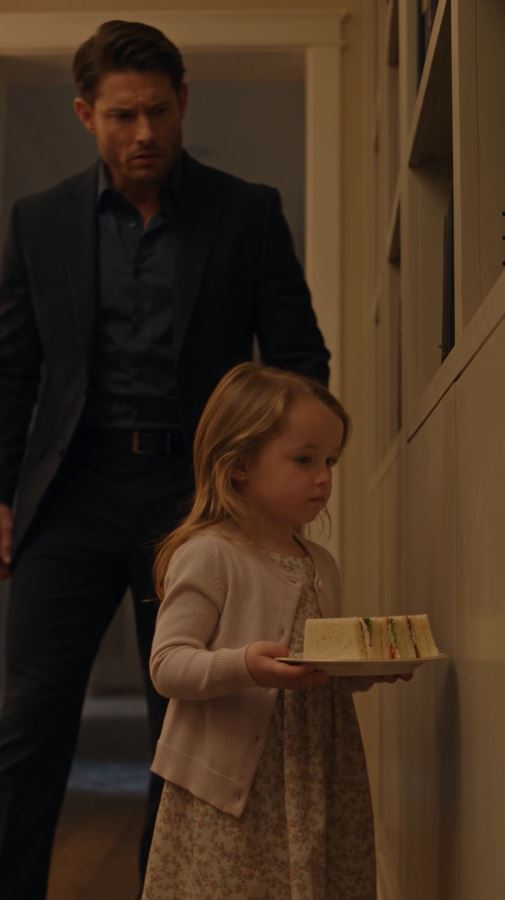
Then Lily entered carrying sandwiches.
Of course.
Two peanut-butter sandwiches.
I stared.
Lily saw.
“Oh, come on.”
“What?”
“I know that face.”
Sophie laughed.
Lily handed one sandwich to her niece.
One to Sophie.
“No plate through wall.”
“Growth.”
Then Emily walked in.
Hair gray.
Still making pancakes too often.
Sophie said:
“Mom, Dad is being weird.”
Emily answered:
“Which problem?”
“Wall.”
“Again?”
I was attacked by my entire family.
Good.
We sold the house the following year.
Not because trauma forced us out.
Because the stairs were annoying and property taxes insulting.
A family with three children bought it.
We told them about the prior structural repair because disclosures required what disclosures required.
No dramatic ghost story.
No request that they preserve the hallway.
They remodeled again two years later.
Fine.
Sophie’s settlement trust had gradually transitioned to her adult control.
She kept professional management for most investments.
Why?
She was a pediatric occupational therapist.
Not investment manager.
A career people assumed came from trauma.
It did not.
She had started in graphic design.
Hated clients.
Changed fields at twenty-eight.
Life was allowed to be inefficient.
Lily became a mechanical engineer and eventually worked on hospital equipment.
Also not because of Harbor Ridge.
Mostly because she liked taking things apart.
Mara died in her seventies.
Sophie attended the memorial.
Not because she owed it.
Because she wanted to.
She did not speak.
She kept the red-shoe photograph Mara had preserved.
Nothing else.
Denise Hall died years before that.
Sophie did not attend anything.
Different relationships.
Asteron eventually merged again.
The corrective-action program became industry policy at several successor facilities.
Sophie never became its spokesperson.
She once gave written consent for an anonymized case study emphasizing:
Consent verification.
Inventory control.
Family identity.
No photograph.
No title:
THE GIRL IN THE WALL.
Good.
Ryan and Emily eventually moved into a smaller house.
Two bedrooms.
Lily complained there was no room for her.
I said:
“You own a home.”
She said:
“Rude.”
Sophie still visited Caroline’s grave.
Not every year.
Sometimes with Emily.
Sometimes alone.
Sometimes she forgot the anniversary entirely.
No guilt.
Her daughter knew there had been another Caroline before her.
Not ghost competition.
Family history.
One spring day Sophie stood at the grave with seventeen-year-old Caroline Carter Park.
Teenager now.
Too old for simplified stories.
Caroline asked:
“Do you ever wish the clinic mistake didn’t happen?”
Sophie looked at her.
Impossible question.
“If it didn’t happen, I wouldn’t exist.”
“Exactly.”
“That does not make it right.”
“Do you hate them?”
“Who?”
“Clinic people.”
“I hated what they did.”
“Some people more than others.”
“Mostly I don’t think about them much.”
Teen Caroline frowned.
“Then how do you think about your life?”
Sophie looked at Caroline Mercer’s stone.
Then at her daughter.
“As mine.”
That was it.
The clinic had caused the biological circumstance.
Caroline had created Sophie’s first home.
Mara had cared for her and later harmed her.
Lily had heard her crying.
Ryan and Emily had become her parents.
Courts had written names.
Lawyers had divided money.
Scientists had eventually received the remaining embryos through actual consent.
Every adult process mattered.
None of them owned the meaning of Sophie’s life.
Back at our house—our new small one—Sophie made sandwiches.
I watched.
She stared at me.
“Don’t.”
“I said nothing.”
“Face.”
Family curse.
She carried a plate into the living room.
No tiptoeing.
Caroline followed.
Lily’s children were already there arguing over a game.
Emily shouted from kitchen:
“Who wants pancakes?”
Everyone yelled at once.
Sophie put the sandwiches down.
Then looked at me.
“Daddy Ryan?”
She had not called me that in years.
My throat tightened.
“Yes?”
She smiled.
“Come eat.”
I followed.
No hidden passage.
No sealed consent form.
No child waiting in darkness.
Just family members who knew exactly where everyone was—
and understood that knowing where someone came from was never the same thing as deciding who they were allowed to become.
The End
Thank you for reading, and please explore more unforgettable stories on our news site.