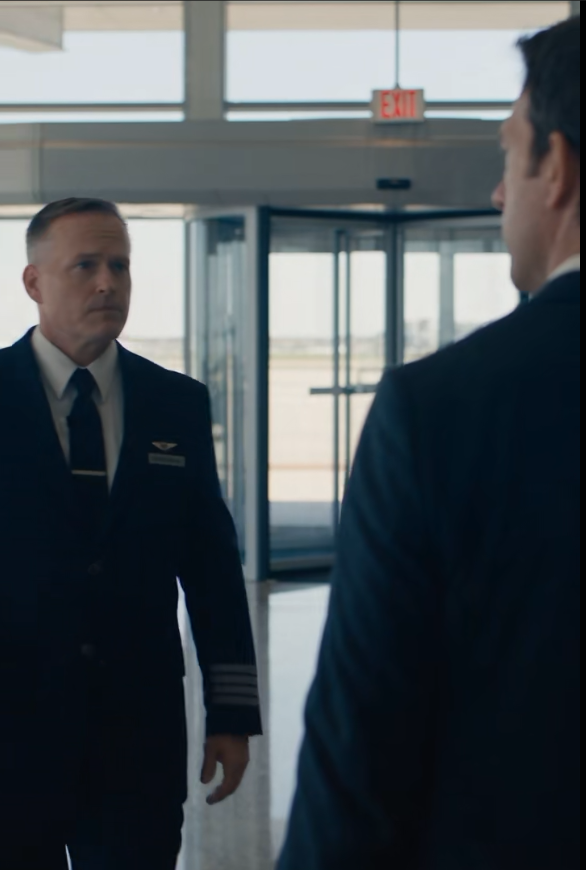
He had expected the answer.
He still did not like it.
The pattern appeared within forty-eight hours.
Not because Sarah found it.
Because investigators finally looked.
Oak Haven County had a population too small to hide numbers once someone asked the right questions.
Over three years, Boyd Cleary’s department had made an unusually high number of “failure to comply” arrests arising from minor traffic stops.
Several involved motorists traveling through the county.
A disproportionate share were Black drivers.
Most cases ended with charges reduced or dismissed after plea negotiations.
Few had reached trial.
One complaint file contained the phrase hostile demeanor.
Another: uncooperative attitude.
Another: refused to show proper respect.
Sarah read none of the individual files at first.
She asked only for aggregate data.
Reed found her in the secure office late that evening, staring at a chart on a laptop.
“You found it.”
She looked up.
“I didn’t.”
“Investigators did.”
“That’s what I mean.”
Reed walked behind her chair.
The graph did not require expertise.
“You were right.”
Sarah closed the laptop.
“About what?”
“That it wasn’t just you.”
She stood.
“I did not want to be right.”
“I know.”
“No, you don’t.”
Reed watched her.
Sarah moved toward the window.
Beyond the glass, the federal facility parking lot was empty.
“I wanted him to be one arrogant sheriff having one bad afternoon.”
“That would’ve been easier.”
“Yes.”
She folded her arms.
Reed said, “You’re thinking about the people in those files.”
Sarah did not answer.
“You cannot go backward.”
“I know.”
“You cannot fix every stop.”
“I know.”
“You keep saying that.”
“Because I know.”
Reed allowed the frustration to sit between them.
Then he said, “What happens next?”
“Investigators determine whether the pattern supports civil-rights review.”
“And Boyd?”
“That depends on evidence.”
“County wants him suspended.”
Sarah turned.
“Who told you?”
“County counsel.”
“Good.”
“You could recommend it.”
“No.”
“Why?”
“Because I’m the complainant.”
“You’re also a senior defense official with experience in oversight.”
“Which is exactly why I should not influence a local employment decision involving the man who arrested me.”
Reed gave her a faint smile.
“There she is.”
Sarah frowned.
“What?”
“The person who can turn personal fury into administrative procedure.”
She looked at him.
“That was almost a compliment.”
“It wasn’t.”
“It sounded like one.”
“It was concern wearing a tie.”
She laughed quietly.
It was the first time Reed had heard her laugh since the stop.
Then her expression changed.
“What about Miller?”
Reed understood immediately.
“He gave a statement.”
“And?”
“He told them about the supplemental report.”
Sarah’s eyes sharpened.
“Boyd tried to make him sign something false?”
“Yes.”
“When?”
“Yesterday afternoon.”
“Did he sign?”
“No.”
Sarah looked back toward the dark window.
“That will cost him.”
“Maybe.”
“In a department that small? It already has.”
Reed nodded.
“County placed Miller under whistleblower protection pending review.”
Sarah exhaled.
Some tension left her shoulders.
Reed noticed.
“You care more about that than your own case.”
“No.”
“Yes.”
Sarah picked up a folder.
“I care about whether doing the right thing destroys the only person in that building who did it.”
“That sounded personal.”
“It is.”
Boyd was suspended the following morning.
He refused to surrender his badge until county counsel arrived with two commissioners and a written order.
Local television cameras captured him leaving the sheriff’s department through the front entrance.
He told reporters the suspension was a political surrender to federal pressure.
He called the investigation “an attack on local sovereignty.”
He said Sarah Hayes had engineered the entire incident.
Sarah declined comment.
That enraged him more than any rebuttal could have.
For two days, every statement he made became louder.
Sarah made none.
The evidence continued speaking.
Then Boyd made his most consequential mistake.
He returned to the department after midnight.
His access card had not yet been disabled.
Toby was home.
A night dispatcher was in the communications room.
Boyd entered the records office and logged into the cruiser-storage system.
He attempted to delete several files.
The server denied the request.
Toby’s preservation lock required dual authorization.
Boyd tried again.
Then he opened the administrative console.
The system logged every attempt.
The dispatcher heard movement and found him at the terminal.
Boyd claimed he was collecting personal files.
She reported the incident.
By sunrise, the investigation had shifted.
The question was no longer only what Boyd had done to Sarah.
It was what he was willing to do afterward.
Sarah learned about the attempted deletion at 6:10 a.m.
She stood in a secure briefing room wearing the same dark suit she had intended to wear on the day of her arrest.
Her Washington briefing appeared on the screen behind her.
For the first time since Oak Haven, she was preparing to return to her normal work.
Reed entered carrying coffee.
“You’re going to enjoy this less than you think.”
Sarah looked at him.
“What happened?”
He told her.
She closed her eyes.
“Was anything deleted?”
“No.”
“Miller’s lock?”
“Yes.”
Sarah nodded once.
Reed handed her the coffee.
“You were right about him too.”
“I made no prediction.”
“You know what I mean.”
She took the cup.
“What happens to Boyd?”
“County referred the tampering attempt to state investigators.”
Sarah stared at the screen.
The briefing slide behind her read CONTINUITY RISK ASSESSMENT.
The irony was almost irritating.
Reed leaned against the table.
“You can go home.”
“After the interview this afternoon.”
“You’ve already given one.”
“They want a follow-up.”
“You don’t owe them unlimited access.”
“No.”
“But you’re giving it.”
“Yes.”
“Why?”
Sarah looked at him.
“Because the case is larger now.”
Reed nodded.
Then, after a moment:
“And when it’s over?”
“I go back to work.”
“You say that like this didn’t happen.”
“It happened.”
“You know what I’m asking.”
Sarah placed the coffee down.
Her voice softened.
“I don’t know what it changed yet.”
That was the first time she admitted it had changed anything.
Part V — The Final Confrontation
The final confrontation did not happen in a courtroom.
It happened in a county hearing room with bad acoustics, beige walls, and forty metal chairs.
Five days after the stop, the Oak Haven County Commission convened an emergency public session to determine whether Boyd Cleary’s suspension should continue pending the broader investigation.
Because Boyd was an elected sheriff, the county could not simply fire him.
Because he had attempted to alter evidence, the county could restrict his administrative access and petition for further legal action.
The meeting drew reporters, residents, deputies, lawyers, and people Sarah had never seen before.
She did not intend to attend.
Then Toby called.
He did not call her directly.
He contacted Reed through the liaison office and asked whether Sarah would be willing to appear.
Reed brought her the message.
“He says he won’t blame you if you don’t.”
Sarah looked at him.
“Why does he want me there?”
“He didn’t say.”
“Did he ask to speak to me?”
“No.”
Sarah considered that.
Then she went.
Boyd sat at one table with his attorney.
Toby sat several rows behind county counsel.