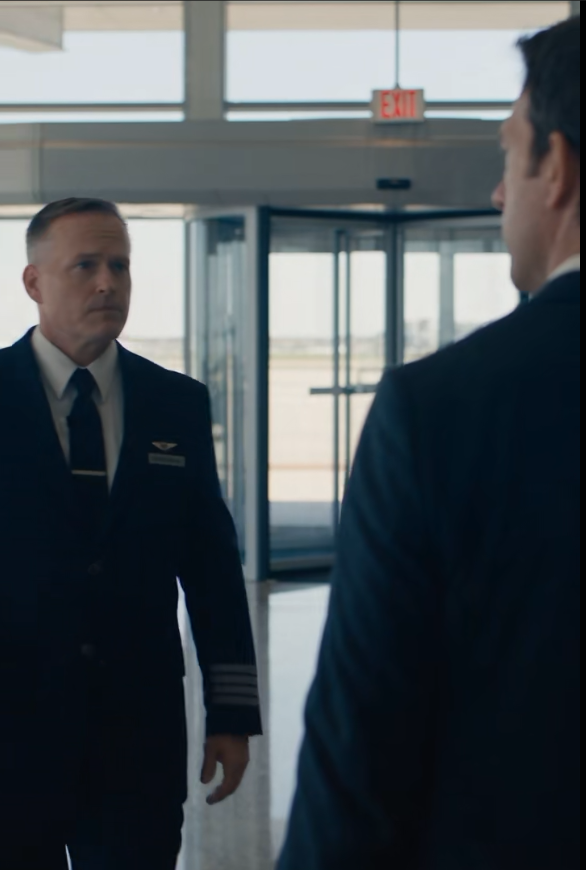
Finally Sarah said, “You all right?”
He gave a strained smile.
“I’m not sure.”
“That is a reasonable answer.”
He looked toward the hearing-room doors.
“I thought I was going to throw up.”
“You didn’t.”
“High standard.”
“It was sufficient.”
That made him laugh.
Then he became serious.
“I asked you to come because I thought he was going to make it about the helicopters.”
“He tried.”
“I thought maybe people would forget how it started.”
Sarah nodded.
“That is usually the strategy.”
Toby looked at her.
“Can I ask you something?”
“Yes.”
“When you were standing beside that car, did you know what you were going to do?”
“What do you mean?”
“Did you decide right then you were going to take this all the way?”
Sarah considered.
“No.”
Toby seemed surprised.
“No?”
“I was trying to get to the airport.”
He laughed again.
Sarah smiled faintly.
Then she said, “When he put on the cuffs, I was deciding one thing at a time.”
“What thing?”
“Whether to argue. Whether to identify myself. Whether to comply. Whether to make the call.”
“And the whole time you looked like you knew exactly what would happen.”
“I did not.”
Toby studied her.
“You were scared?”
Sarah glanced down at the fading marks on her wrists.
“Yes.”
It was the first time she had said it aloud.
Toby did not look relieved.
He looked sad.
Sarah understood why.
Competence did not erase fear.
Rank did not erase vulnerability.
The fact that she had managed the situation did not mean the situation had been safe.
Toby said quietly, “I’m sorry.”
Sarah shook her head.
“Do not apologize for something you did not do.”
“I worked for him.”
“You still do, technically.”
“That isn’t funny.”
“No.”
He looked toward the floor.
“I knew he could be rough.”
Sarah waited.
“I knew he wrote people up for attitude. I knew he liked making people sit in cells until they apologized.”
He swallowed.
“I didn’t know it was this bad.”
Sarah did not let him escape into ignorance.
“Didn’t know or didn’t ask?”
Toby looked at her.
The question hurt.
That was why she had asked it.
After several seconds he said, “Both.”
Sarah nodded.
He seemed almost surprised she had not softened it.
“What do I do with that?”
“You decide what you do next.”
“That’s it?”
“That’s most of life.”
Toby looked back at the hearing room.
For the first time, he seemed older than twenty-eight.
“Then I guess I start asking.”
Sarah held out her hand.
He shook it.
“Good luck, Deputy Miller.”
“You too, General.”
She started away.
“General?”
Sarah turned.
Toby hesitated.
“Your dad teach you to stay that calm?”
The question caught her.
“How did you know about my father?”
“You mentioned him in your statement yesterday. About keeping your hands visible.”
Sarah nodded.
“Yes.”
Toby said, “He did a good job.”
Sarah looked away for a moment.
Then back.
“Yes,” she said. “He did.”
She left before her voice could change further.
Part VI — Aftermath
The investigation took months.
Consequences rarely arrived with the cinematic speed of helicopters.
They came through subpoenas, interviews, data requests, hearings, archived footage, sworn statements, motions, and paper.
The original charges against Sarah were dismissed.
The dismissal order stated that available video evidence did not support the alleged traffic violation, resisting arrest, disorderly conduct, or failure to comply.
Sarah read the order once.
Then filed it.
Boyd’s problems continued.
The attempted record deletion became part of a state obstruction investigation.
The broader review of Oak Haven traffic enforcement uncovered enough discrepancies to trigger federal scrutiny of departmental practices.
Several old cases were reopened.
Not every complaint was sustained.
Not every disputed stop proved unlawful.
Sarah insisted on that distinction whenever anyone asked.
Evidence mattered in both directions.
Some motorists had committed violations.
Some arrests had been justified.
Others had not.
Patterns became clearer as investigators separated what could be proven from what merely looked suspicious.
Boyd stopped appearing on television.
His attorney began speaking for him.
Toby Miller remained with the department under an interim acting sheriff appointed through county procedures while the case moved forward.
Sarah wrote him once.
Not a personal letter.
A short note thanking him for preserving government-related evidence and cooperating with the secure-device recovery.
He wrote back on department stationery.
You told me to preserve the record. I think I finally understand why.
Sarah kept that letter.
She did not tell Reed.
He found out anyway.
Three months after Oak Haven, Sarah stood inside a Pentagon conference room facing thirty senior officers and civilian officials.
The presentation screen behind her displayed a title:
IDENTITY-INDEPENDENT PROCEDURAL SAFEGUARDS DURING INTERAGENCY INCIDENTS
Reed sat near the end of the table.
He had already made fun of the title twice.
Sarah ignored him.
Her proposal had grown out of one narrow problem exposed by her arrest: senior officials traveling with sensitive communications gear could become involved in ordinary civilian encounters, and existing response protocols focused heavily on protecting classified information after identity confirmation.
Sarah argued that training needed to address the opposite problem too.
Authority should not transform lawful treatment.
Identification could change security requirements.
It should not change constitutional ones.
One civilian official raised a hand.
“General Hayes, are we solving for an edge case?”
Sarah answered, “The secure-device issue is an edge case.”
She advanced the slide.
“The procedural issue is not.”
Data appeared.
Not from Oak Haven alone.
National complaint studies.
Suppression cases.
Evidence-preservation failures.
Interagency confusion.
The official leaned back.
Reed hid a smile.
Sarah continued.
“The lesson is not that local law enforcement must treat senior federal officials differently.”
She clicked again.
A single sentence filled the screen.
The lesson is that nobody should need to be important before procedure becomes important.
The room remained quiet for a moment.
Then questions began.
Technical ones.
Budget ones.
Jurisdiction ones.
Implementation ones.
Normal questions.
Sarah preferred them to applause.
Policies survived scrutiny better than emotion.
Afterward Reed joined her in the corridor.
“You put it on a slide.”
“What?”
“That sentence.”
“It was concise.”
“It was dramatic.”
“It was accurate.”
“Sarah Hayes knowingly used a dramatic sentence.”
“I reject the premise.”
Reed laughed.
They walked toward the elevators.
“You hear about Oak Haven?”
“Which part?”
“Miller.”
Sarah pressed the elevator button.
“What happened?”
“He’s running for sheriff.”
She turned.
“You’re joking.”
“No.”
“When?”
“Special election.”
“Why?”
“Apparently because half the county convinced him to.”
Sarah considered this.
“That seems unwise.”
Reed smiled.
“You like him.”
“I think he demonstrated integrity under pressure.”
“That is the most Sarah Hayes version of liking somebody I’ve ever heard.”
The elevator opened.
They stepped inside.
Reed pressed the lobby button.
“You going to call him?”
“No.”
“Why?”
“I am not inserting a Pentagon general into a local election.”
“Even privately?”
Sarah gave him a look.
“No.”
“Send him the letter?”
“No.”
“Text?”
“No.”
“Carrier pigeon?”
“Thomas.”
He raised both hands.
The elevator descended.
Then Sarah said, “I hope he does well.”
Reed looked at her.
She stared at the floor indicator.
He wisely said nothing.
Six weeks later, Sarah drove Interstate 89 again.