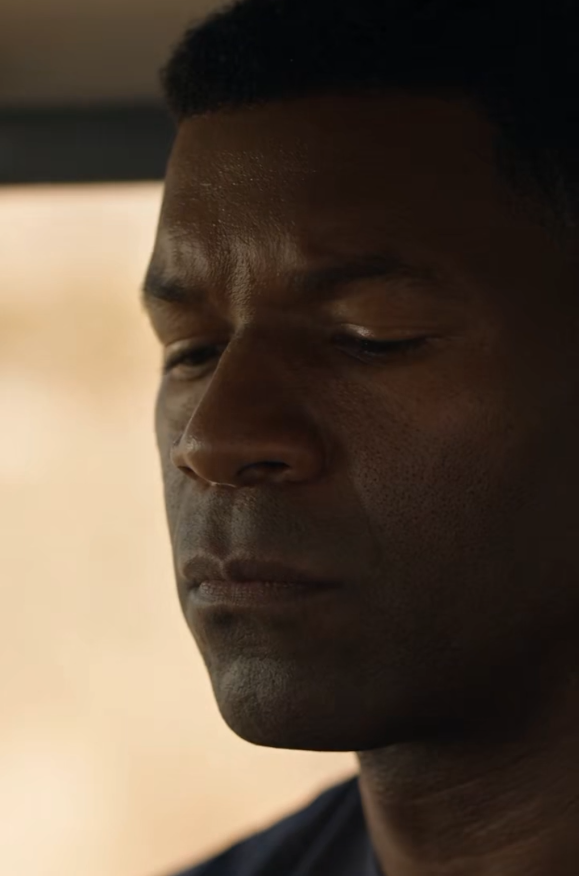
“No.”
“None?”
“No.”
Isaiah watched him.
This was the moment many people in the room had been waiting for.
A clean answer.
A confession or denial that would make the story easy.
But easy stories were often inaccurate ones.
State counsel produced three prior complaint files.
The truck driver was white.
The college student was Latino.
The retired Marine was Black.
The pattern did not point in only one direction.
It pointed toward power, certainty, and a habit of treating certain people as guilty once Cleary’s instincts selected them.
Race might have shaped Isaiah’s stop.
The evidence could not cleanly measure how much.
Isaiah refused to pretend certainty where none existed.
The attorney asked, “Why did you write the charging narrative before you finished searching the vehicle?”
Cleary looked at the document.
“I knew what I had.”
“But you didn’t.”
“I believed I did.”
“Why didn’t the retirement paperwork change your belief?”
Cleary’s answer came quietly.
“Because by then I thought the paperwork was part of it.”
“The more evidence you found, the more convinced you became?”
Cleary said nothing.
“Sheriff?”
“Yes.”
“And when Deputy Mooney said the federal verification number appeared legitimate?”
“I thought it could be spoofed.”
“When Mr. Brooks asked you to call it?”
“I thought he wanted control of the stop.”
“When he called it himself?”
“I stopped him.”
“When Army legal called back?”
“I thought he knew someone.”
“When they verified the record?”
Cleary stared at the table.
“I thought they were protecting him.”
The attorney paused.
Then asked the simplest question of the day.
“What evidence would have convinced you that you were wrong?”
Cleary opened his mouth.
No answer came.
Isaiah watched him.
Six weeks earlier, the silence would have satisfied him.
Now it did not.
It looked less like defeat than a man finally seeing the shape of the trap he had built around himself.
If every contradiction became confirmation, innocence became impossible.
Cleary looked at Isaiah.
“You were so damn calm.”
His attorney whispered, “Sheriff.”
Cleary ignored him.
“I kept waiting for you to act like somebody who’d been caught.”
Isaiah answered from his seat before anyone could stop him.
“I hadn’t been.”
The chair looked between them.
No one objected.
Cleary’s face folded inward slightly.
Not tears.
Not collapse.
Just exhaustion.
“I know that now.”
Those four words were the first admission he had made.
The hearing recessed.
Part VII — Reckoning
The legal consequences arrived slowly.
That surprised the public more than Isaiah.
Television liked the moment of the broken card.
The secure call.
The body-camera footage.
The confrontation.
Law moved differently.
Investigators reviewed records.
Prosecutors argued statutes.
Attorneys filed motions.
The county insurer became involved.
Cleary remained suspended.
Then resigned before the commission could vote on removal.
Two months later, state prosecutors charged him with official misconduct and falsification of records related to Isaiah’s arrest, along with separate counts tied to one prior case discovered during the review.
The federal investigation into destruction of the ID ended without a separate criminal charge after prosecutors concluded the state case addressed the most serious conduct and that proving specific federal intent would be difficult.
Mercer told Isaiah that over the phone.
He appreciated the lack of theatricality.
“So he doesn’t go to federal prison for snapping plastic.”
“No.”
“Good.”
Mercer paused.
“You sound relieved.”
“I didn’t want a fake ending.”
She understood.
The county commission adopted new rules requiring external review of complaints against the sheriff’s office, automatic preservation of body-camera footage connected to contested arrests, and supervisor documentation when federal or military credentials were challenged.
Mooney kept his job.
Barely.
He received a formal suspension and lost seniority.
Then, after Cleary resigned, the interim sheriff assigned him back to patrol.
When Mooney told Isaiah, he sounded embarrassed.
“I thought they’d fire me.”
“Maybe they should have.”
Mooney laughed.
“Still direct.”
“You called.”
“I know.”
A pause.
“Do you think I deserve to stay?”
Isaiah closed the toolbox he had been organizing in Naomi’s garage.
“That’s not mine to decide.”
“You say that a lot.”
“Because people keep trying to give me jobs I retired from.”
Mooney laughed again.
Then turned serious.
“I’m trying to do it differently.”
“Good.”
“That all?”
“What do you want, a certificate?”
“No.”
“Then good is enough.”
Isaiah hung up smiling.
His own civil claim was settled months later.
He resisted it at first.
Not because he believed the county owed him nothing.
Because he disliked the idea that money could become the summary.
Naomi changed his mind.
“You know hospitals settle cases every day,” she said over coffee.
“That supposed to comfort me?”
“No. It’s supposed to remind you compensation is not the same thing as revenge.”
He looked at her.
“You rehearse that?”
“Since breakfast.”
The settlement included reimbursement for legal expenses, compensation for unlawful detention, and a written acknowledgment that the charges lacked factual basis.
Isaiah cared most about the last part.
The record.
Accurate.
He used part of the money to establish a small legal-aid fund through an existing veterans’ nonprofit.
Not only for veterans.
That distinction mattered to him.
The fund covered initial consultations for people challenging questionable local arrests or credential disputes.
Naomi asked why.
“You could buy a boat.”
“I don’t want a boat.”
“You don’t know that.”
“I know exactly that.”
“You’re retired. Men your age buy boats.”
“I spent half my career trying not to be on water.”
She laughed.
He did too.
The story slowly left the national news.
Another scandal replaced it.
Then another.
Isaiah preferred that.
He took a job three days a week teaching crisis decision-making at a community college public-safety program.
Not tactics.
Judgment.
The first day, he wrote one sentence on a whiteboard:
WHAT EVIDENCE WOULD CHANGE YOUR MIND?
A young police recruit raised his hand.
“What’s the correct answer?”
Isaiah looked at him.
“That’s the wrong question.”
The class waited.
“The correct answer depends on the situation. The important part is that you have one.”
He did not tell them about Cleary.
Not that day.
Weeks later, during a lesson on confirmation bias, a student recognized him from the body-camera video.
“Sir, were you that guy in Coopersville?”
The room shifted.
Isaiah looked at the student.
“Yes.”
“What was it like when the Pentagon called?”
Several students leaned forward.
Isaiah capped the marker.
“That’s the least important part.”
They seemed disappointed.
So he told them the important part.
The card.
The papers.
The database.
The verification number.
Each chance to stop.
Each chance missed.
“When people tell that story,” Isaiah said, “they like the phone call because it feels like power answering power.”
The students listened.
“But the phone call didn’t make me innocent.”
He looked around the room.
“I already was.”
No one wrote for a moment.
Then pens began moving.
Part VIII — The Last Piece
Nine months after the traffic stop, Isaiah received an envelope with no return address beyond the county attorney’s office.
Inside was a letter.
Arthur Cleary had written it as part of a restorative process connected to his plea agreement.