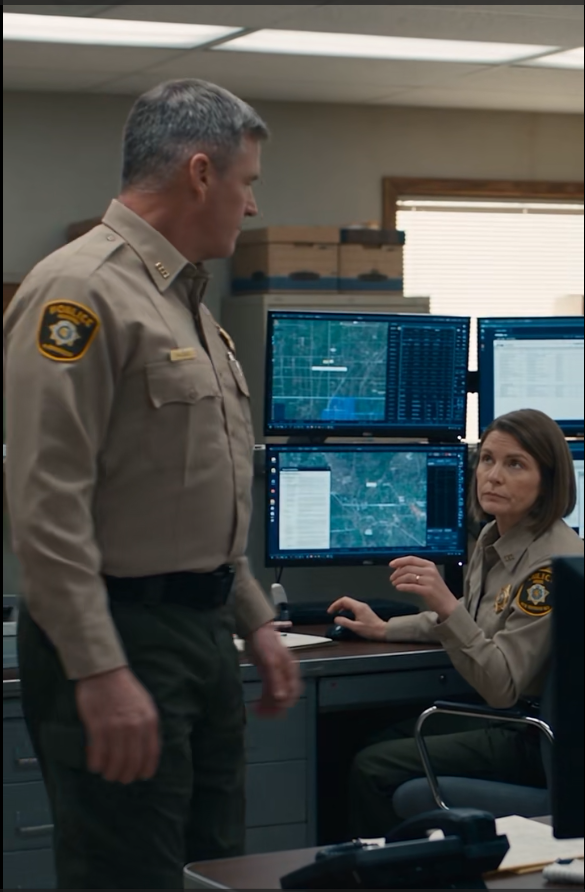
He did not enter.
His earlier ease had disappeared.
“Ms. Reynolds.”
Sarah remained standing near the bench.
“General Reynolds,” he corrected.
She looked at him.
“Yes?”
Ryker shifted one hand against his belt.
“We need to clear something up.”
Sarah said nothing.
He glanced toward the camera above the door.
The gesture was quick.
Not quick enough.
“Why didn’t you tell me who you were?”
Sarah’s face remained neutral.
“Would it have changed how you treated me?”
Ryker exhaled through his nose.
“That’s not what I asked.”
“It’s the relevant question.”
“I’m trying to resolve this.”
“You denied me access to counsel.”
“You were going to get a phone call.”
“I requested one immediately.”
“You weren’t denied. It was delayed.”
Sarah watched him carefully.
Language.
Already changing.
She filed it away.
Ryker continued.
“This whole thing could have gone differently.”
“Yes.”
“If you’d identified yourself properly.”
“I identified myself by name.”
“You said federal employee.”
“I am one.”
Ryker’s jaw tightened.
“You know what I mean.”
Sarah let silence sit between them.
He was trying to move responsibility.
Not toward innocence.
Toward ambiguity.
He wanted the mistake to become mutual.
Sarah would not help him.
“Am I still under arrest?”
Ryker looked down the corridor.
Miller stood near booking.
Brenda remained at the dispatch desk.
Both were listening.
Ryker lowered his voice.
“We’re working that out.”
“That is either yes or no.”
His eyes returned to her.
“For the moment, yes.”
“Then I am again requesting counsel.”
Ryker turned away.
“Get her a phone.”
Brenda moved immediately.
Miller stayed where he was.
Sarah saw something in his expression she had seen in young officers before.
The moment when loyalty to a superior and loyalty to facts separated.
Ryker disappeared into his office.
The door closed.
Seconds later, Sarah heard him speaking rapidly on another line.
Brenda approached cell four with a cordless phone.
“I can bring you to the interview room if you want privacy.”
Sarah looked at her.
“Is it recorded?”
Brenda hesitated.
“Yes.”
“I’ll make the call here.”
Brenda passed the phone through the opening.
Sarah dialed from memory.
Not her command staff.
An attorney.
A civilian attorney she had known for years, licensed in Georgia, someone who understood both criminal procedure and military bureaucracy.
When he answered, Sarah said only what was necessary.
“This is Sarah. I’ve been arrested in Oak Haven County. Traffic stop. Disorderly conduct, resisting, reckless driving. I denied consent to a vehicle search. The sheriff searched anyway. I requested counsel during booking and was denied immediate access. Pentagon duty desk has now contacted the office.”
The attorney went quiet.
“Are you safe?”
“Yes.”
“Injured?”
“No.”
“Do not give a statement.”
“I haven’t.”
“Do not sign anything.”
“I won’t.”
“I’m coming.”
Sarah glanced toward Ryker’s office.
“Bring someone who understands records preservation.”
Her attorney understood immediately.
“I’ll make calls.”
She hung up.
Brenda took the phone.
“Thank you.”
The dispatcher nodded.
Then, before leaving, she said quietly, “General?”
Sarah looked at her.
Brenda’s voice dropped.
“The hallway cameras keep ninety days.”
Sarah said nothing.
Brenda held her gaze for half a second.
Then walked away.
That was the first clue that Ryker’s authority inside the building was not as complete as he believed.
Twenty minutes later, Sarah was moved from the cell to a small interview room.
No cuffs.
Ryker sat across from her.
Miller stood by the wall.
A camera was mounted in the corner.
Sarah deliberately looked at it before sitting.
Ryker noticed.
He folded his hands.
“General, obviously there’s been some confusion.”
Sarah waited.
“I think we can get this straightened out without turning it into something bigger.”
“Is that an offer to release me?”
Ryker leaned back.
“We’re reviewing the charges.”
“You filed them.”
“I entered preliminary charges based on what was known at the time.”
“Reckless driving was added during booking.”
Miller looked at Ryker.
Sarah caught the movement.
Ryker did too.
He turned his head slightly.
“Deputy?”
Miller straightened.
“You observed unsafe operation.”
Miller swallowed.
“I observed what I wrote.”
Ryker’s face went still.
“What did you write?”
“Failure to maintain lane.”
“Same thing.”
“No, sir.”
The room changed.
Quietly.
Sarah said nothing.
Ryker stared at Miller.
Miller’s ears reddened.
Ryker turned back to Sarah.
“There’s no need to make this adversarial.”
“You arrested me.”
“You were noncompliant.”
“I complied with every lawful order you gave.”
“You refused the vehicle search.”
“That was not an order.”
Ryker’s mouth pressed into a line.
Sarah continued.
“I want to know whether I am free to leave.”
Ryker looked toward the camera.
Then at Miller.
Then back to Sarah.
“Yes.”
Sarah did not move.
Ryker seemed surprised.
“Your property will be returned.”
“Is my rental vehicle still outside?”
Another pause.
“No.”
“Where is it?”
“Impound.”
“Why?”
“Incident-related tow.”
“Was anything removed from the vehicle?”
Ryker’s answer came half a second too late.
“No.”
Sarah looked at Miller.
Miller looked at the floor.
There it was again.
A crack.
Sarah stood.
“I need that answer documented.”
Ryker rose too.
“I just answered you.”
“I said documented.”
His voice sharpened.
“You’re free to go, General.”
Sarah remained where she was.
“Am I being released with charges pending, or have the charges been dismissed?”
Ryker’s neck reddened.
“Pending review.”
“Then provide me the charging documents.”
“You’ll get copies.”
“When?”
“Now,” Miller said.
Ryker turned.
Miller did not look away this time.
“I can print them.”
Ryker stared at him.
Sarah understood then that whatever happened next would not be only about her.
Institutions rarely broke in one dramatic moment.
They broke along old seams.
A deputy who had seen too much.
A dispatcher tired of pretending.
A sheriff who had confused silence with obedience.
Sarah gathered her property.
Both phones.
Wallet.
Keys.
Watch.
No government documents had been in her purse.
Her secure phone showed multiple missed calls.
She did not turn it on inside the building.
Before leaving, she signed only the property receipt.
Nothing else.
Outside, the light had changed.
Late afternoon now.
Long shadows across the parking lot.
Her rental car was gone.
Her attorney had not arrived yet.
Ryker came out behind her.
“General.”
Sarah turned.
He stopped several feet away.
“This didn’t need to become federal.”
She studied him.
“I didn’t make the Pentagon call you.”
“You know what I mean.”
“No,” Sarah said. “I know what you wish you meant.”
His face tightened.
She continued.
“If I had been a teacher, a nurse, a cashier, or unemployed, would I still be standing outside right now?”
Ryker said nothing.
Sarah looked back at the building.
At the camera above the entrance.
Then at him.
“That question is why this isn’t over.”
Part IV — The Record
Sarah’s attorney, Daniel Cho, arrived forty-three minutes later.
He found her sitting on a concrete bench outside the sheriff’s office, one phone in her hand and the other still powered off.
Daniel was fifty-one, lean, careful, and allergic to unnecessary drama.
He sat beside her without greeting.
“You okay?”
“Yes.”
“You sure?”