Sarah kept the letter.
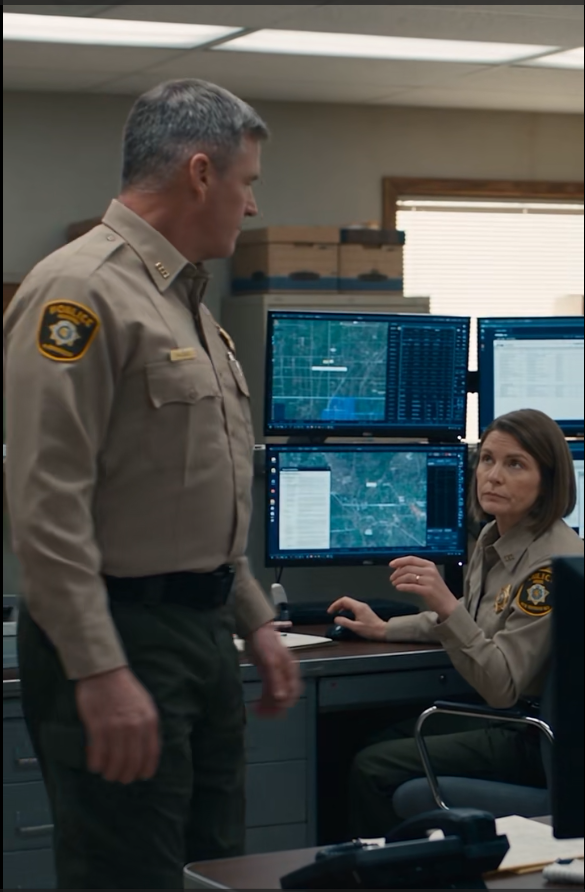
Brenda Lawson was promoted to dispatch supervisor.
When asked by a reporter whether she considered herself a whistleblower, Brenda answered, “No. I answered a phone.”
Sarah liked that.
It was ordinary.
That was the point.
The Pentagon changed nothing formal because of Sarah’s arrest.
No new special protocol for generals.
No secret emergency intervention policy.
Sarah insisted on that.
There would be no privileged extraction system for senior officers.
Instead, the incident was incorporated into ethics training in a different way.
Not as a story about a general.
As a story about status.
A question was added to one leadership seminar Sarah occasionally taught:
Would you object to mistreatment if you did not know the person’s rank?
She never told students where the question came from.
Most recognized it anyway.
Six months after the stop, Sarah finally made the drive to her aunt’s house outside Savannah without interruption.
Same region.
Different rental car.
She passed the turnoff toward Oak Haven County.
For a moment, she considered taking Route 119.
She almost laughed at herself.
Then she did.
The highway looked smaller than she remembered.
Same pines.
Same faded center line.
Same hot light.
She drove carefully.
At the place where Miller had pulled her over, she slowed slightly.
No memorial.
No marker.
Nothing to indicate that a life had bent there.
That was how most significant places were.
Ordinary until memory attached itself.
Sarah continued south.
Her aunt was waiting on the porch when she arrived.
“You took long enough.”
Sarah got out of the car.
“I had traffic.”
Her aunt gave her a look.
“Not funny.”
“A little funny.”
They hugged.
Inside, the house smelled like coffee, baked peaches, and old wood.
Sarah put her bag down.
Her aunt looked at her wrists.
The marks had vanished months ago.
Still, she looked.
Sarah noticed.
“They healed.”
“I know.”
Her aunt poured coffee.
They sat at the kitchen table.
For a while they spoke about ordinary things.
Neighbors.
Family.
A leaking roof.
A cousin’s new job.
The price of groceries.
Eventually her aunt said, “You still think about it?”
“Yes.”
“Every day?”
“No.”
“Good.”
Sarah looked into her cup.
“Sometimes I think about the call.”
“The Pentagon?”
“Yes.”
Her aunt waited.
Sarah continued.
“Everyone focuses on the call because that’s when the sheriff realized who I was.”
“Makes a good story.”
“It does.”
“But?”
Sarah looked toward the window.
“The real story happened before the phone rang.”
Her aunt nodded.
“Because he didn’t know.”
“Yes.”
Outside, cicadas buzzed in the trees.
Sarah leaned back.
“For five minutes, I was whoever he thought I was.”
Her aunt’s expression softened.
“And who was that?”
Sarah considered.
“Someone he believed nobody would come looking for.”
The words settled between them.
Her aunt reached across the table and touched Sarah’s hand.
This time Sarah did not straighten.
Did not explain.
Did not turn the moment into an argument or lesson.
She simply let her hand remain there.
Later that evening, Sarah stood on the porch while sunset spread over the yard.
Her secure phone rested inside the house.
Her rank insignia was hundreds of miles away.
No aides.
No briefings.
No stars on her shoulders.
Just Sarah.
A car moved along the distant road and vanished behind the trees.
She thought of cell four.
Of the steel bench.
Of the camera above the door.
Of Ryker asking why she had not told him who she was.
At the time, she had answered with a question.
Would it have changed how you treated me?
Months later, she finally understood the full answer.
Yes.
It had changed everything.
And that was precisely why she had remained silent.
Sarah watched the last sunlight disappear beyond the pines.
Then she went inside, leaving the phone untouched on the table.
For once, nobody needed to know where the general was.
It was enough that Sarah Reynolds knew exactly who she was.