The formal charges against Richard Hale were filed on a Monday morning, six weeks after the night of the ballroom.
Emma was in a meeting when Diane texted her.
She stepped into the hallway to read it.
*Filed this morning.
All fourteen counts.
His attorney asked for a continuance.
Judge denied it.
They have the server records, the forensic signatures, everything.
It's done.*
Emma read it twice.
Then she typed back: *Thank you for telling me.*
She stood in the hallway for a moment, looking through the glass at the conference room where three families were waiting to speak with her about housing assistance and medical referrals.
People who had come in carrying the particular exhaustion of needing help and not knowing where to start.
She put her phone in her pocket and went back in.
Victoria Langford's name appeared in the financial press four days later — not in connection with the criminal charges, which were Richard's alone, but in a quieter story about a firm restructuring, a silent partnership dissolved, a board seat vacated.
The kind of story that people in certain circles understood without needing it explained.
Emma read the first paragraph on her lunch break and set her phone face-down on the desk.
She didn't read the rest.
Her father called that evening.
He sounded different — lighter, she thought, though she couldn't name exactly what had changed.
"The hospital called," he said.
"Something about a foundation covering the account.
Emma, what did you—"
"I didn't do anything, Dad," she said.
"Someone helped us."
A long pause.
"Why would someone—"
"Because I was in the right place," she said.
"And I did the right thing.
And sometimes that's enough."
Her father was quiet for a moment.
She could hear him breathing.
"Are you all right?" he asked.
"Yes," she said.
And meant it fully, perhaps for the first time in eight months.
Her sister called twenty minutes later, crying in the good way, the way that meant relief had finally found somewhere to go.
Emma sat on her kitchen floor with her back against the cabinet and let her sister talk, and laughed in the right places, and didn't tell her how close it had been.
There would be time for that later.
Or maybe there wouldn't, and that was all right too.
She made tea when the call ended.
Stood at the window while it steeped.
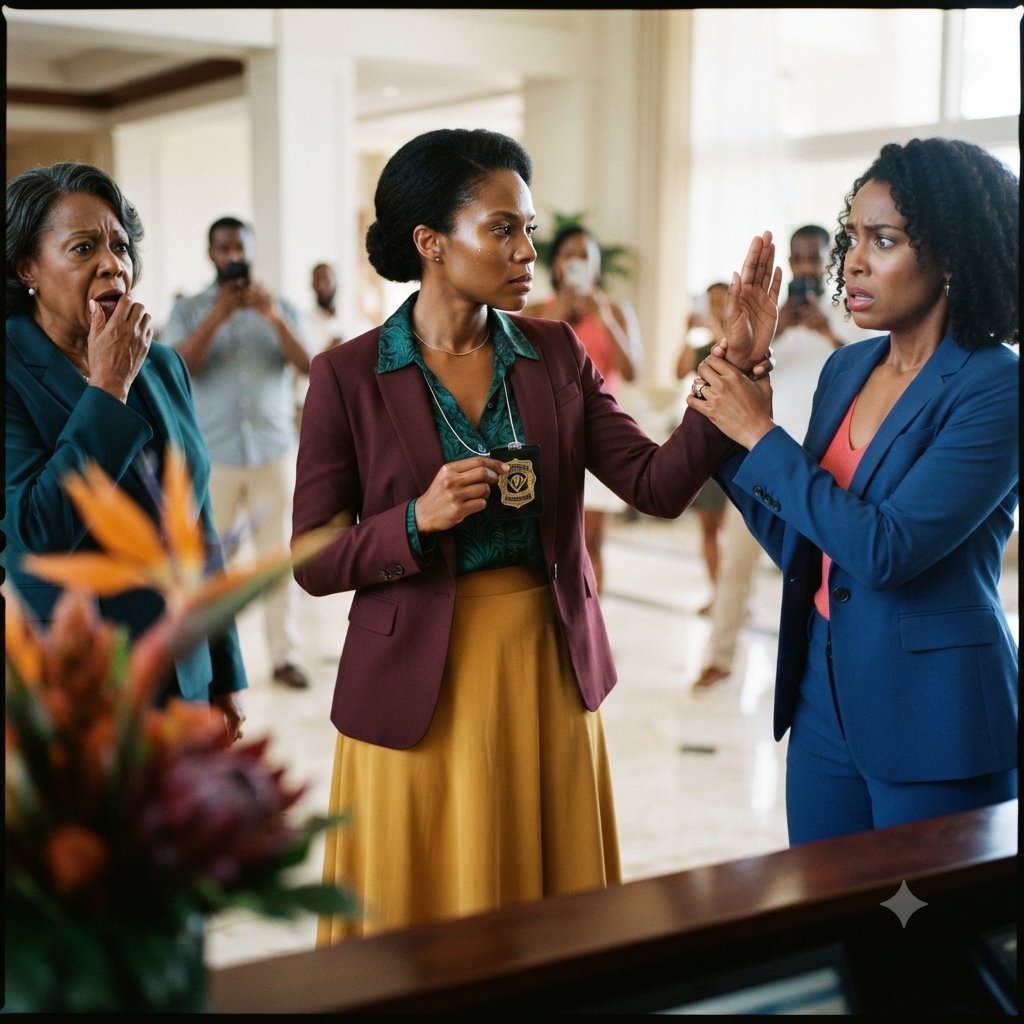
The city outside was doing what it always did — indifferent, enormous, continuous — and she was a twenty-four-year-old woman who had caught a wrist in midair and refused to let go, and everything that had followed had followed from that.
One choice.
One moment.
She thought about Isabella's hand over hers.
Cool fingers, deliberate pressure.
*You already did.*
She thought about the forty people who hadn't moved.
She thought about Gerald saying *I'm not letting you go* in a corridor that smelled like catering warmers and carpet cleaner, with the sounds of a party falling apart somewhere behind him.
She thought about her father's voice, lighter.
The tea was ready.
She poured it, wrapped both hands around the mug, and sat down at her kitchen table — the same table where the hospital bills had been stacked in their unopened envelopes for eight months.
The envelopes were gone now.
The table was just a table.
She sat there for a long time, not thinking about anything in particular, just sitting — and it was the most peaceful she had felt in longer than she could remember.
---
*Sometimes the bravest thing isn't a grand gesture.
It's one ordinary person, in one unguarded moment, choosing not to look away — even when everyone else does.*
Have you ever been in a moment where you had to choose between what was safe and what was right?
Share your story in the comments — we'd love to hear it.