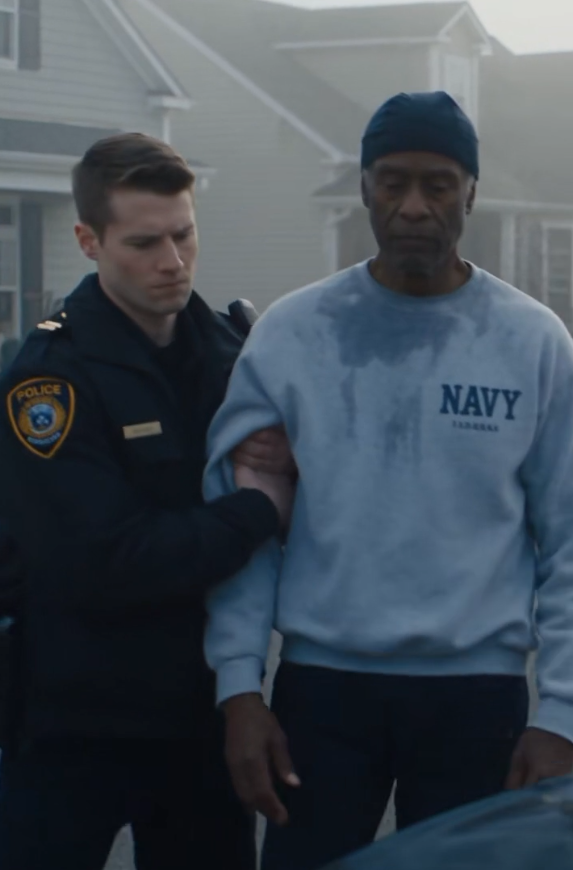
“What happened after they found out?”
“Things became extremely polite.”
Leah gave one humorless laugh.
“Of course.”
“Leah.”
“No, Dad.”
She set the mug down.
“They put you in cuffs for jogging?”
“They detained me during an investigation.”
“You’re doing that thing.”
“What thing?”
“The language thing. Where you make something sound reasonable by describing it like an after-action report.”
Isaiah leaned back.
“And you’re doing the thing where you decide the conclusion before all the facts are in.”
“I have the bruises in front of me.”
“So do I.”
They looked at each other.
Leah broke first.
Not because she lost.
Because pain crossed her face.
Physical pain.
Brief and sharp.
Her hand moved automatically toward what remained of her right leg.
Isaiah stood.
“I’m fine.”
“I know.”
“You looked like you were about to—”
“I know what I looked like.”
She waited until the discomfort passed.
Then she looked toward the tall windows.
“You remembered.”
“What?”
“The sunlight.”
Isaiah followed her gaze.
Late afternoon had filled the rear of the house with a warm, clear light.
Leah swallowed.
“It doesn’t feel like storage.”
He said nothing.
She looked at him again.
“So what are you going to do?”
“I haven’t decided.”
“That’s a lie.”
“I haven’t decided what the decision will be.”
“That’s more accurate.”
His phone rang on the counter.
He looked at the screen.
The police chief.
Leah saw his expression.
“Take it.”
Isaiah answered.
“Montgomery.”
“General, this is the chief.”
“I know.”
“We have reviewed both body-camera recordings.”
Isaiah waited.
The chief’s next breath was audible.
“There are problems.”
“What kind?”
“The stop was not consistent with how Officer Higgins described it in his preliminary report.”
Isaiah looked across the kitchen.
Leah was watching him.
“What did he write?”
“That you became confrontational when asked for identification. That you refused to provide an address initially. That you made an aggressive movement toward him when advised you were being detained.”
Isaiah’s expression did not change.
Leah saw something anyway.
She rolled closer.
The chief continued.
“The video does not support those statements.”
“Was the report completed before or after my identity was confirmed?”
A pause.
“After.”
Isaiah looked through the window.
That mattered.
It mattered more than the humiliation.
More than the handcuffs.
A bad decision made under pressure could be corrected.
A false account written after the truth was known was something else entirely.
“Where is Sergeant Carter’s report?”
“He had not completed it when we began the review.”
“Has he now?”
“Yes.”
“And?”
Another pause.
“His account aligns with the video.”
Leah mouthed, What?
Isaiah held up one finger.
The chief said, “There’s something else.”
Isaiah waited.
“Sergeant Carter submitted a supplemental statement approximately twenty minutes ago.”
“What does it say?”
“That Officer Higgins asked him before your identity was confirmed whether they should describe your comments about the watch commander as threatening.”
Isaiah’s gaze hardened.
“Did Carter agree?”
“No.”
“Did he report the conversation when it happened?”
“No.”
“Why is he reporting it now?”
“He says because he failed to stop the arrest and doesn’t intend to fail again.”
Isaiah looked down.
There it was.
The third moment.
The one Carter had finally chosen differently.
The chief said, “Officer Higgins is off street duty pending investigation.”
“Understood.”
“There will be an external review.”
“Who requested it?”
“I did.”
“Good.”
“General, I also want to tell you directly that I am under significant pressure.”
“From whom?”
The chief hesitated.
“Your command. The Pentagon. Local officials. Everybody is asking what happens next.”
Isaiah’s voice cooled.
“My command does not decide what happens to your officer.”
“I understand.”
“Make sure they understand too.”
The chief was silent.
Isaiah continued.
“I will not have military rank turned into leverage in a municipal personnel investigation.”
“General, with respect, your rank is already part of this.”
“It is part of the attention. It is not evidence.”
Leah looked at him differently.
The chief said, “Then what do you want?”
Isaiah answered without hesitation.
“The same process you would use if I were a retired mechanic named Isaiah Montgomery.”
The chief gave a tired exhale.
“I’m not sure we can pretend that’s possible.”
“I didn’t ask you to pretend.”
Isaiah’s eyes settled on his daughter.
“I asked you to try.”
They ended the call.
Leah waited.
Isaiah told her about the report.
She did not interrupt.
When he finished, her anger had changed shape.
Less heat.
More precision.
“He lied after he knew who you were.”
“Yes.”
“And Carter?”
“Corrected the record late.”
“That doesn’t erase what he did.”
“No.”
“But it matters.”
“Yes.”
Leah moved her chair toward the window.
After a while she said, “You know what people are going to say.”
Isaiah stayed at the table.
“What?”
“That this only became serious because they found out who you were.”
He did not answer.
“They’re going to be right,” she said.
“Some of them.”
“All of them.”
“No.”
Leah turned.
“Dad.”
“Careful with absolutes.”
She almost smiled.
Almost.
Then she looked at his wrists.
“What are you going to do when the chief offers you a quiet resolution?”
“He hasn’t.”
“He will.”
“How do you know?”
“Because you’re a four-star general and his officer handcuffed you during a morning run.”
Isaiah folded his arms.
“What would you do?”
Leah looked down at the empty space below her right knee.
For a moment, he thought she would avoid the question.
Then she said, “I’d make sure this wasn’t only about me.”
He watched her.
She looked back at him.
“You taught me that.”
The offer came the next morning.
Not a settlement.
Not exactly.
The chief called and proposed a private meeting before the outside investigation began.
No media.
No public statement beyond acknowledgment of the incident.
Higgins would remain off patrol.
Carter would cooperate.
Department leadership would conduct a policy review.
“We can handle this professionally,” the chief said.
Isaiah stood in the bright kitchen while Leah worked with her physical therapist in the hallway. He could hear the muted instructions, the careful movements, the scrape of equipment against the floor.
“What does professionally mean?”
“It means we establish facts without turning the department into a national spectacle.”
Isaiah looked toward the hallway.
Leah took one difficult step between parallel supports.
“Are you asking me not to speak publicly?”
“I’m asking whether publicity helps your goal.”
“That depends on the goal.”
“What is it?”
Isaiah watched Leah reset her balance.
“My goal is to know whether your department believes the problem began when they learned who I was.”
The chief did not answer immediately.
“That is not what I believe.”
“Then say what you believe.”
“I believe the stop should have ended when your address could be verified.”
Isaiah waited.
The chief continued.
“I believe the handcuffing was unnecessary based on the footage. I believe Officer Higgins’s initial report is a serious concern.”
“And Carter?”
“He failed to intervene.”
“Yes.”
“But he corrected the record.”
“Eventually.”
“Yes.”
Isaiah looked down at his wrists.
The bruising had started to fade.
“That’s the meeting I’ll attend.”