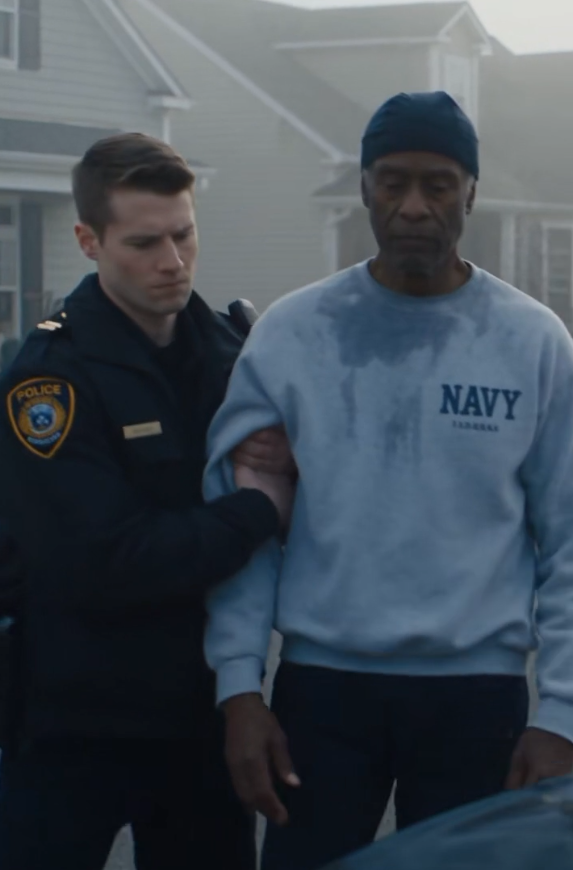
“No. You’re asking me to tell you what’s inside your own head.”
Higgins’s face reddened.
“I stop people all the time.”
“That may be true.”
“I didn’t know who you were.”
“I know.”
“If I’d known—”
Isaiah’s gaze sharpened.
Higgins stopped.
That unfinished sentence contained the entire problem.
If I’d known.
Isaiah spoke quietly.
“If you had known, what?”
Higgins looked down the hallway.
He had no answer that helped him.
Isaiah stepped closer, not threateningly, simply enough that Higgins had to look at him.
“You keep thinking your mistake was failing to recognize a general.”
“That’s not what I said.”
“It’s what you keep trying not to say.”
Higgins’s breathing changed.
Isaiah continued.
“You did not owe me respect because of four stars. You owed me judgment because you wore one badge.”
Higgins looked away.
Isaiah left him there.
Outside, Leah waited near the curb.
“You went easy on him,” she said.
“I wasn’t sentencing him.”
“You could’ve.”
“No.”
“With one phone call?”
Isaiah looked at her.
“That would prove the wrong thing.”
Leah considered that.
Then nodded toward the parking lot.
“Help me into the car.”
“I thought you didn’t need help.”
“I don’t need help. I’m asking for it.”
Isaiah smiled.
“Important distinction.”
“Don’t make me regret it.”
He held the passenger door while she transferred herself from the wheelchair.
As he folded the chair into the trunk, the chief approached.
“General.”
Isaiah closed the trunk.
“We’ll have findings soon.”
“I know.”
“There’s something I should tell you before you hear it elsewhere.”
Isaiah waited.
“We checked the dispatch history for the burglary complaints.”
The chief rubbed the back of his neck.
“None of them involved a suspect description matching you.”
Isaiah did not react.
The chief continued.
“The calls involved nighttime vehicle break-ins and entry to unoccupied garages. Officer Higgins knew that.”
Isaiah looked through the car window at Leah.
“So there was no specific description.”
“No.”
“Nothing connecting me beyond being present.”
“No.”
The chief seemed to expect anger.
Isaiah felt something colder.
Clarity.
“Include that in the findings.”
“We will.”
“And do not soften it.”
The chief nodded.
“I won’t.”
Isaiah opened the driver’s door.
The chief said, “General.”
Isaiah looked back.
“I’ve been thinking about what you said at the station.”
“Which part?”
“That the problem wasn’t arresting the wrong man.”
Isaiah waited.
The chief looked toward the municipal building.
“You were right.”
Isaiah got into the car.
“Then prove it.”
Part V — The Choice
The case became public before the department finished its review.
Not because Isaiah released it.
Not because the Pentagon did.
Someone inside the local government confirmed that a four-star Army general had been detained during a morning run in Pine Valley.
By evening, camera crews had appeared near Willow Creek.
Satellite vans parked two streets away.
Reporters called the house.
Commentators who had never met Isaiah discussed what the incident represented.
Some called it obvious profiling.
Others called it an unfortunate misunderstanding transformed into politics.
Some defended the officers without seeing the footage.
Others demanded immediate firings without reading a report.
Isaiah watched none of it.
Leah did.
This irritated him.
“You have better things to do.”
She sat on the couch with her leg supported on a cushion, television muted while captions crawled under a photograph of her father in dress uniform.
“This is fascinating.”
“It is noise.”
“It is people talking about you like you’re dead.”
“Turn it off.”
“You look good in that photo.”
“Leah.”
She switched off the screen.
The silence felt better.
Her rehabilitation equipment stood near the window.
Isaiah had spent the morning adjusting a temporary handrail along the hallway.
Leah watched him tighten the final bracket.
“You know the press is outside because you haven’t said anything.”
“Yes.”
“They’ll leave faster if you make a statement.”
“No, they’ll change questions.”
She smiled.
“You really do understand them.”
The doorbell rang.
Isaiah froze.
Leah looked toward the entrance.
“You expecting someone?”
“No.”
He crossed the living room and checked through the side window.
Carter stood on the porch.
Alone.
No uniform.
Isaiah opened the door but did not invite him inside.
“Sergeant.”
“General.”
Carter held an envelope.
“I won’t take much of your time.”
Isaiah looked at the envelope.
“What is that?”
“My resignation.”
Isaiah’s expression changed slightly.
“I didn’t ask for it.”
“I know.”
“Then why are you bringing it to me?”
“I haven’t submitted it.”
Isaiah said nothing.
Carter looked past him toward the house.
“I thought you should know.”
“No.”
Carter frowned.
“No?”
“You thought I should absolve you.”
“That’s not—”
“It is.”
Isaiah stepped onto the porch and closed the door behind him.
Cold air moved between them.
Carter looked tired enough to have aged since Tuesday.
“I’ve been a cop twenty-seven years,” he said. “I’ve made mistakes. I’ve covered for bad moods. I’ve looked the other way on things I told myself weren’t important. Nothing like this.”
“Nothing like what?”
Carter looked at him.
Isaiah continued.
“Nothing involving a general?”
“No.”
“Nothing involving cameras?”
Carter’s mouth tightened.
“No.”
“Nothing that embarrassed the department?”
“No.”
Isaiah waited.
Carter looked down at the envelope.
“Nothing where I had to watch myself decide not to do the right thing in real time.”
That answer was different.
Isaiah leaned against the porch railing.
Carter said, “I’ve replayed it a hundred times.”
“Stop.”
Carter looked up.
“Replaying a failure is useful until you start using guilt as a substitute for correction.”
Carter frowned.
“What am I supposed to do?”
“I don’t know.”
“I thought you might.”
“No.”
Isaiah looked through the porch glass at Leah moving carefully from the couch to her chair.
“I’ve commanded soldiers for decades. One of the worst habits leaders develop is believing every mistake requires either forgiveness or destruction.”
Carter listened.
“Sometimes,” Isaiah continued, “it requires you to stay and fix what you helped normalize.”
Carter stared at the envelope.
“You think I should stay?”
“I did not say that.”
“Then what are you saying?”
“Decide whether resigning costs you more than staying.”
Carter said nothing.
“If leaving is the harder act because you no longer deserve the position, leave. If staying and admitting what you did every time a younger officer repeats the same pattern is harder, then consider why you’re choosing the easier door.”
Carter’s eyes moved back to the envelope.
After a while, he folded it in half.
Then again.
Not tearing it.
Just making it smaller.
“Thank you.”
Isaiah shook his head.
“Don’t thank me yet.”
Carter almost smiled.
He turned to leave, then stopped.
“General.”
“Yes?”
“I’m going to testify at the public review.”
Isaiah looked at him.
“The union attorney told me not to.”
“Why?”
“Because I’ve already given a statement.”
“That’s advice worth considering.”
“I did.”
Carter slipped the folded envelope into his coat pocket.
“I’m going anyway.”
Isaiah nodded.
This time, he did not tell him what to do.
The department announced its findings one week after the arrest.