“You could have told them.”
“Yes.”
“Why didn’t you?”
He considered the answer.
At first, he had believed it was tactical.
Naming rank during a tense roadside encounter could sound like a threat.
Later, he had told himself he wanted to see whether the officers would follow procedure without being impressed.
But months had passed.
The truer answer was simpler.
“Because I shouldn’t have needed to.”
Leah nodded.
Then started walking again.
Isaiah joined her.
A patrol cruiser appeared at the far end of Willow Creek.
Leah noticed it first.
She glanced at him.
He kept moving.
The cruiser approached.
For one brief second, Isaiah felt the old calculation return automatically.
Speed.
Distance.
Hands.
Visibility.
Training was like that.
So was memory.
The cruiser slowed.
Isaiah looked toward the driver.
Mitchell Carter sat behind the wheel.
He was no longer wearing sergeant’s stripes.
Temporary reassignment.
Accountability made visible.
Carter saw them.
His hands remained on the wheel.
He did not activate the lights.
Did not stop.
Did not lower the window to create a public moment out of a private one.
He simply nodded once.
Isaiah returned it.
The cruiser continued down the street.
Leah watched it disappear into the fog.
“That was Carter?”
“Yes.”
“He didn’t stop.”
“No.”
They resumed walking.
At the corner, Leah rested a hand against a stone wall.
Isaiah waited.
“You can go run,” she said.
“I’ll walk you back.”
“I know where the house is.”
“I’m aware.”
“I’m thirty-two.”
“I remember.”
“You’re impossible.”
“I have documentation suggesting otherwise.”
She stared at him.
Then laughed hard enough that she had to steady herself.
Isaiah smiled.
After a moment, Leah straightened.
“I mean it. Go.”
He hesitated.
She pointed toward the road.
“Six miles.”
“You sure?”
“Yes.”
Isaiah turned.
Then Leah called after him.
“Dad.”
He looked back.
She stood alone at the corner in the cold morning light, balanced on the life she had been forced to rebuild.
Her expression had become serious.
“When people tell the story, they’re going to say they arrested a four-star general.”
Isaiah waited.
Leah looked toward the street where Carter’s cruiser had disappeared.
“That’s not really the story, is it?”
Isaiah looked at his daughter.
At the houses.
At the quiet road.
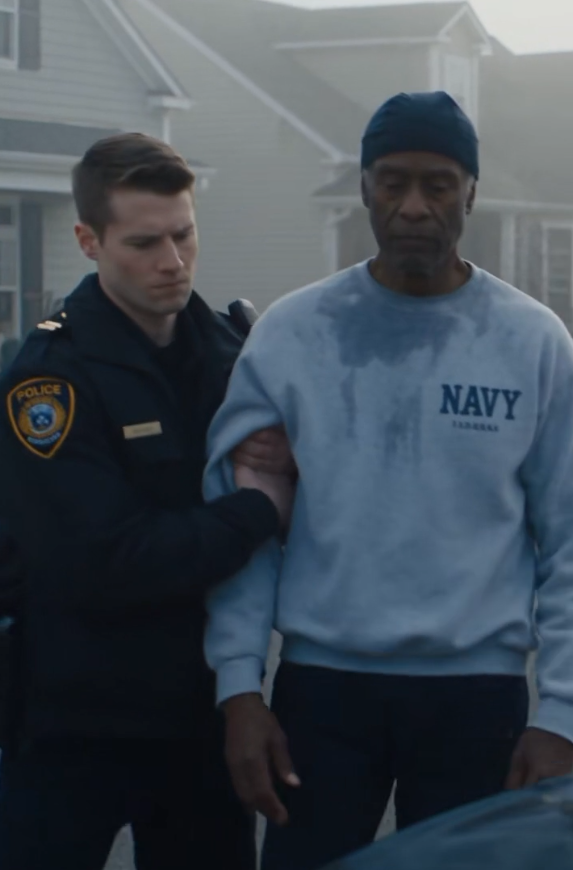
At the place where one officer had made a bad assumption, another had remained silent, and a man in running clothes had become important only after a database told them he was.
“No,” he said.
Leah nodded.
“What’s the story?”
Isaiah thought of Higgins standing at the microphone.
Carter holding an unsigned resignation.
The chief changing policy.
Leah taking her first unsupported steps down the hallway.
Then he looked at the faded gray sweatshirt he had worn when none of his titles were visible.
“The story is who we are before we know who we’re dealing with.”
Leah held his gaze for another second.
Then she pointed down the street.
“Go run, General.”
Isaiah shook his head.
“Captain.”
She smiled.
He turned and began to jog.
His stride settled slowly into rhythm.
Breath.
Footfall.
Breath.
Footfall.
Behind him, Leah started back toward 442 Willow Creek Lane at her own pace.
Ahead, the fog was lifting from the road.
And for the first time since that Tuesday morning, Isaiah did not count the cars behind him.