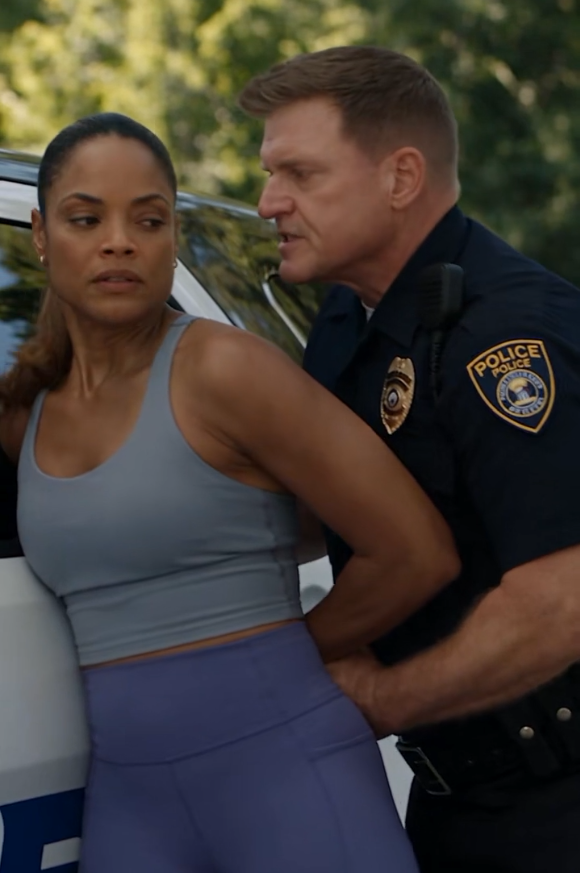
Leadership changed.
Training changed.
Complaint review moved outside the direct chain of command.
Dispatch records were linked automatically to stop reports.
Report revisions became visible.
None of it fixed everything.
Systems do not become honest because someone signs a document.
They become harder to manipulate when the document changes incentives.
The lieutenant retired before the disciplinary process concluded.
The city made clear that retirement did not end all review, but employment consequences became largely academic.
The younger officer received substantial discipline after the separate investigation into my stop.
He was not criminally charged.
The evidence did not support proving a criminal offense beyond a reasonable doubt.
That decision angered some people.
It relieved others.
I had no role in it.
That was the point.
The heavier officer was disciplined for his conduct and reporting, though less severely.
He had stopped the younger officer from escalating verbally.
He had also participated in the detention and post-stop narrative.
Two things could be true.
The public often dislikes that.
Law requires it.
Months after the decree, I was finally allowed to read the complete individual investigative file.
I did it alone.
By then, the bruising was long gone.
The shoulder strain had healed.
The internet had moved on.
The file was four inches thick.
Witness interviews.
Camera transcripts.
Medical records.
Radio logs.
Report drafts.
Supervisor messages.
At the back was the younger officer’s second interview.
One passage stopped me.
The investigator had asked why he noticed me that morning.
His answer:
“Because we were told to increase pedestrian contacts in the burglary zone.”
Not because I matched a description.
Because they had been encouraged to stop more people.
The investigator asked who issued the instruction.
The younger officer named the lieutenant.
The same lieutenant again.
Then came another question.
“Were you told to focus on any demographic group?”
“No.”
“Were you told to stop Black pedestrians?”
“No.”
“Then why did you identify her as a possible suspect?”
A long pause appeared in the transcript.
His answer was only six words.
“She looked out of place there.”
I read the line again.
My house was three blocks away.
I had lived there four years.
Paid property taxes.
Knew which neighbor overwatered his lawn and which dog escaped every spring.
Yet to him, I had looked out of place.
There was no policy memo for that.
No training slide.
No explicit order.
That was why structural work was harder than finding villains.
Most systems did not depend on people waking up and deciding to do wrong.
They depended on ordinary assumptions becoming routine, routine becoming paperwork, paperwork becoming official truth.
I closed the file.
My deputy appeared in the doorway.
“You finished?”
“Yes.”
“Anything surprising?”
I considered the question.
“No.”
Then I looked at the file.
“Which is surprising.”
She came in and sat across from me.
For a while, neither of us spoke.
Then she asked, “Do you regret staying?”
“No.”
“Do you regret the run?”
That made me laugh.
“No.”
“You still run without ID?”
“Yes.”
“That seems stubborn.”
“It is.”
She smiled.
Then her expression changed.
“The woman from across the street sent something.”
She handed me an envelope.
Inside was a small photograph.
Nothing official.
Nothing important.
A neighborhood block gathering held that spring.
People standing around folding tables.
Children with paper cups.
Someone grilling in the background.
I was near the edge of the frame, talking to an older neighbor.
Three feet behind me stood the woman who had been pushing the stroller.
On the back she had written:
You were never out of place.
I stared at the words longer than I expected.
My deputy pretended not to notice.
“Nice picture,” she said.
“Terrible lighting.”
“Very federal response.”
I put the photograph in my desk drawer.
Not with the case materials.
With personal things.
The decree monitor issued the first quarterly report three months later.
Compliance was uneven.
Body-camera activation improved sharply.
Complaint processing time dropped.
Pedestrian stops decreased.
Report-edit attribution was messy at first.
Some supervisors complained it slowed them down.
Good.
Careful work sometimes should.
One finding caught my attention.
After edit attribution became mandatory, the number of post-review additions involving suspect descriptions fell by more than half.
Not because officers stopped writing complete reports.
Because supervisors stopped silently strengthening them.
The system had changed behavior simply by making authorship visible.
My supervisor brought the report into my office.
“You’re smiling.”
“No, I’m not.”
“You absolutely are.”
I took the pages.
“This is one quarter.”
“You are impossible.”
“We need a year before drawing conclusions.”
He sat down.
“You know the city wants to recognize the federal team at the next council meeting.”
“No.”
“I assumed.”
“We should not be receiving awards from the entity we sued.”
“Technically we didn’t sue.”
“You know what I mean.”
He laughed.
Then grew more serious.
“There’s something else.”
I waited.
“Washington wants you back.”
“For what?”
“A supervisory role.”
I looked at him.
“Promotion?”
“Effectively.”
“I hate effectively.”
“More authority. Fewer field investigations.”
“There it is.”
“You can’t do this forever.”
“Do what?”
“Live in case files.”
“I’m good at it.”
“Yes.”
He paused.
“That’s not always a reason to keep doing something.”
I looked toward the window.
For years, I had believed advancement meant increasing scale.
More staff.
Bigger cases.
More authority.
But this investigation had reminded me that institutional change was built from details people higher up rarely touched.
Dispatch timestamps.
Draft histories.
The difference between “walking” and “fleeing.”
The person who asks where a sentence came from.
“I’ll think about it,” I said.
He nodded.
Then smiled.
“That means no.”
“It means I’ll think about it.”
“It means you’ll write a twelve-page memo explaining why no is institutionally preferable.”
“Probably eight.”
He left.
I did think about it.
For two weeks.
Then I turned the job down.
Not because I had lost ambition.
Because I had finally defined it differently.
A month later, I ran the same route again on a cool Saturday morning.
The season had changed.
Leaves skittered along the curb.
The air smelled clean instead of baked.
When I reached the intersection, a patrol cruiser approached from behind.
For one second, my body reacted before my mind did.
Shoulders tightened.
Stride shortened.
I hated that.
The cruiser slowed.
I kept running.
It pulled alongside.
The window came down.
Different officer.
A woman maybe in her thirties.
I had seen her once at a community meeting but had never spoken with her.
She raised two fingers from the steering wheel.
“Morning.”
I looked over.
“Morning.”
That was all.
She drove on.
No revelation.
No apology.
No symbolic speech.
Just an ordinary interaction on an ordinary street.
I continued toward home.
At the next corner, the woman who had witnessed my stop was outside with her child, who was now old enough to wobble along beside the stroller instead of sitting in it.
She recognized me.
“Still running without your phone?”
I slowed.
“How do you know that?”
She smiled.
“People talk.”
“That sounds threatening.”
“It’s a neighborhood.”
Her child dropped a toy onto the sidewalk.
She bent to pick it up.
Then looked at me.
“You know, I almost didn’t come to your house that day.”
“I know.”
“I was embarrassed.”
“You had nothing to be embarrassed about.”
“I walked away.”
“You came back.”
She considered that.
Then nodded.
“I guess I did.”
I started jogging backward for a few steps.
“See you around.”
“Try not to get arrested.”
“No promises.”
She laughed.
I turned forward again.
Three blocks later, my house came into view.
Same porch.
Same narrow driveway.
Same kitchen window catching the morning light.
Nothing about it looked like a place I had ever needed to prove belonged to me.
I stopped at the gate to catch my breath.
Inside, on the kitchen counter, my badge sat beside a coffee mug.
Almost exactly where it had been that August morning.
For a moment, I thought about taking it with me next time.
Then I understood why I kept resisting the idea.
The badge had protected me only after they learned what it meant.
The case had never been about making sure people like me could identify themselves as powerful enough to be treated carefully.
It was about whether the person with no badge, no title, no federal office, and no one important to call would be treated lawfully too.
I picked up the badge.
Turned it once in my hand.
Then placed it back on the counter.
Outside, another runner passed my house.
Dark athletic clothes.
No visible phone.
No identification that I could see.
Just a person moving through the neighborhood.
And for the first time since that morning, the sight did not make me think of suspicion, reports, officers, or courtrooms.
It made me think of something much simpler.
A street should be allowed to be just a street.
A runner should be allowed to be just a runner.
And the truth should not depend on who is powerful enough to make someone write it down correctly.