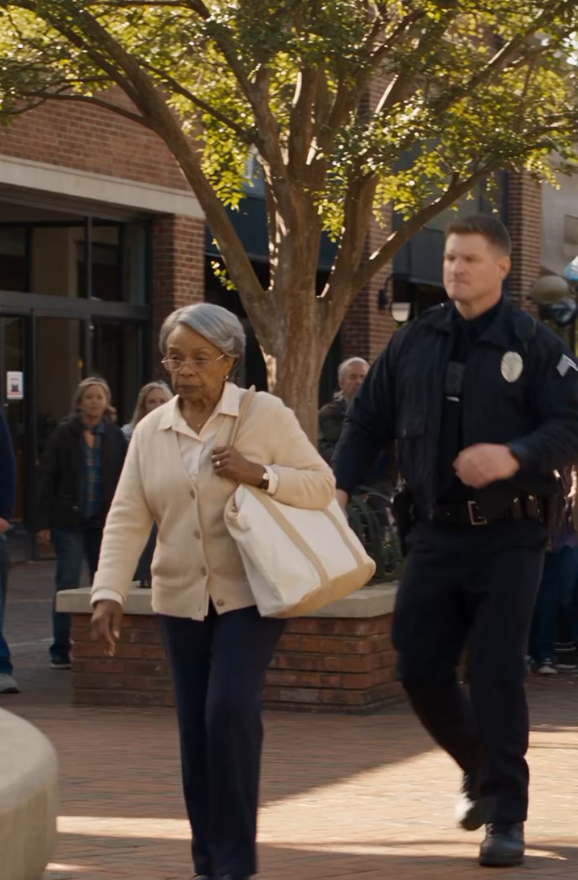
I understood where this was going.
“You want to offer him something.”
“We’re considering limited immunity on the false-report charge in exchange for truthful testimony and resignation.”
“No.”
The word left me immediately.
My mother turned toward me.
The prosecutor remained calm.
“Colonel—”
“He watched Keegan hit her. He blocked witnesses. He lied.”
“Yes.”
“And now he gets immunity because he became useful.”
“That’s one way to describe it.”
“It’s the accurate way.”
My mother said, “Nyla.”
I stood.
I needed movement.
The prosecutor said, “Without Hollow, we still have video evidence. But his testimony establishes that Keegan consciously adopted the robbery explanation after the fact. It makes the fabrication much harder to explain away.”
“He’s on the video saying it.”
“And a defense attorney will argue context. Hollow can explain context.”
“He participated.”
“Yes.”
The prosecutor did not soften the word.
That helped.
“He participated, and we have to decide whether punishing both men equally serves the case.”
I looked at my mother.
She had gone very still.
“What do you want?” I asked her.
The prosecutor answered.
I cut him off.
“I asked my mother.”
Odessa looked at the dark television screen.
Then at me.
“I want the truth to be complete.”
“That’s not an answer.”
“It is.”
“He lied about you.”
“Yes.”
“He helped Keegan.”
“Yes.”
“He could have stopped it.”
“Maybe.”
“He could have stepped between you.”
“Yes.”
I heard the anger returning to my own voice.
“Then why should he walk away?”
My mother’s eyes remained on mine.
“Because there is a difference between mercy and pretending nothing happened.”
I shook my head.
“He’ll resign and go home.”
“He’ll live with what he did.”
“That is not punishment.”
“No.”
Her voice stayed quiet.
“It is consequence.”
I looked away.
My mother continued.
“You want the world to balance because he stood there while I fell.”
“Yes.”
“That is not unreasonable.”
“Then why are you arguing with me?”
“Because I know you.”
I turned back.
“You want him punished because he deserves punishment.”
“Yes.”
“And because it would make you feel that someone restored order.”
I did not answer.
She leaned forward.
“Nyla, there was no order to restore. There was only a choice made by one man, then another choice made by the man beside him, then another choice made when they wrote their reports.”
She nodded toward the prosecutor.
“Now we make ours.”
I thought of Iraq.
Afghanistan.
Places where the difference between justice and revenge sometimes depended on one exhausted person still caring about the difference.
My mother had never been there.
Yet she understood it perfectly.
The prosecutor said, “We don’t need your permission to negotiate with Hollow.”
“I know.”
“But your position matters.”
I sat again.
“What exactly would he get?”
“Resignation. Permanent loss of local law-enforcement certification pending state review. No prosecution for the initial false statement if he testifies truthfully and submits to the administrative findings.”
“So he’s done as an officer.”
“Yes.”
“And if he lies again?”
“The agreement disappears.”
I looked at my mother.
She gave me nothing.
This one had to be mine.
That was the part I resented most.
If she had ordered me to accept it, I could have blamed obedience.
Instead, she left me with judgment.
I took a long breath.
“Do it.”
The prosecutor nodded.
Something inside me resisted even after the words were spoken.
I had made harder decisions involving larger consequences.
None had felt as personal.
Three days later, Brent Hollow resigned.
His statement admitted that he knowingly signed an inaccurate incident report.
He admitted Keegan had proposed using the jewelry-store robbery to justify the stop.
He admitted that Odessa had not attacked either officer.
He admitted he had failed to intervene when Keegan’s conduct escalated.
The department revoked his access before noon.
He turned in his badge that afternoon.
He asked to meet my mother once more.
Odessa agreed.
I did not want her to.
Again, she ignored me.
They met at the library.
Hollow arrived carrying a new canvas book bag.
My mother looked at it.
He said, “I didn’t know what else to bring.”
“That’s an odd apology gift.”
“I know.”
She took the bag.
Examined the stitching.
Then handed it back.
Hollow looked confused.
She said, “Donate it.”
“To the library?”
“No. Fill it with books first.”
His mouth opened.
Closed.
“Yes, ma’am.”
She nodded.
Then went back to shelving books.
That was all.
When Hollow left, I asked, “You forgave him?”
She slid a book into place.
“I did not say that.”
“You took his apology.”
“Yes.”
“That’s not forgiveness?”
“No.”
She looked over her glasses.
“Sometimes it’s just allowing another person to begin doing better without pretending the past disappeared.”
I leaned against the shelf.
“You make everything sound simple.”
“No.”
She adjusted another book.
“I make things sound short.”
There was a difference.
I knew that.
The final decision on Keegan came six weeks after Lincoln Square.
The district attorney filed charges for battery, filing a false police report, and official misconduct.
The department scheduled termination proceedings.
Keegan requested a public hearing.
His attorney said he wanted the entire truth heard.
So did I.
I just wasn’t sure we meant the same truth.
Part V — What Happened at 10:13
The hearing room was too small for the number of people who wanted to watch Travis Keegan defend himself.
The department moved the proceeding to a municipal chamber downtown.
Rows of wooden seats faced a raised panel.
Cameras were allowed in the back.
My mother sat beside me in the front row.
She wore the same navy dress she had worn to internal affairs.
Her cheek had healed.
The only visible reminder of Lincoln Square was a faint pink mark near her temple where the glasses had cut her skin.
Keegan entered with his attorney.
For the first time since the square, we were in the same room.
He looked thinner.
The confidence had not disappeared.
It had changed form.
Less swagger.
More discipline.
He did not look at my mother.
He looked at me.
Only once.
Then sat.
The hearing began with procedure.
Policy.
Evidence.
Chain of command.
The kind of language that can make human behavior sound almost mechanical.
Then they played the bystander video.
Keegan pulling the bag.
My mother reaching.
The slap.
Her glasses crossing the frame.
A murmur moved through the chamber.
My mother watched without expression.
I watched her instead.
The department’s counsel asked Keegan if the video accurately showed his physical contact with Odessa.
His attorney objected to the wording.
They argued briefly.
Eventually Keegan answered.
“Yes.”
“Did you intend to strike Dr. Freeman in the face?”
“No.”
“What did you intend?”
“To disengage her hand from my equipment and create distance.”
I felt my mother shift beside me.
Counsel asked, “What equipment?”
“My duty belt.”
The video played again.
Odessa’s hand never came near his belt.
Keegan continued.
“It happened quickly.”
Then the body-camera recording played.
The room heard dispatch announce a male suspect.
Gray hoodie.
Black backpack.
Then Keegan’s voice.
“If this becomes a thing, we make the robbery fit.”