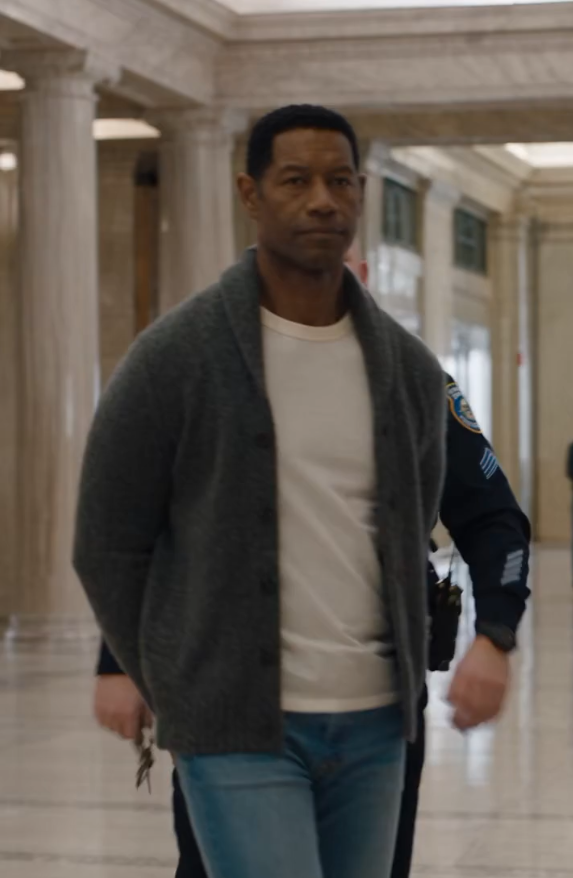
“They're adaptable.”
She gave me a flat look.
I almost smiled.
Then my phone rang.
Chief Granger.
I answered.
“Where are you?”
“My office.”
“Stay there.”
“That sounds ominous.”
“I've seen the lobby footage.”
I sat straighter.
“Already?”
“The fixed security cameras.”
“And?”
A pause.
“He had no basis to take you into custody.”
Khloe watched my face.
Granger continued.
“You complied with every physical instruction. Miller attempted to intervene twice.”
“What about the audio?”
“Clear.”
“You people.”
Another pause.
“Yes.”
I looked at the ice pack in my hand.
“Bodycam?”
“Being uploaded.”
“Jenkins?”
“Turned in his badge and weapon. Union counsel is with him.”
“Good.”
“I wouldn't use that word yet.”
“What aren't you telling me?”
Granger was silent for half a second too long.
“The fixed camera shows Jenkins watching you in line before you reached the detector.”
I stood.
Pain moved through my shoulder.
“How long?”
“Approximately forty seconds.”
“That doesn't prove anything.”
“No.”
“But you think it matters.”
“Yes.”
“Why?”
Another pause.
“Because Miller gave a preliminary verbal statement.”
“What did he say?”
“He said Jenkins made a comment before you reached the screening station.”
Khloe came closer.
“What comment?”
Granger answered.
“He asked Miller if he wanted to see how quickly he could identify somebody who didn't belong upstairs.”
The office became very quiet.
I looked through the window at the city below.
Traffic moved along the street.
People crossed at the light.
Ordinary morning.
“What did Miller say?”
“He told him he didn't know what he meant.”
“And Jenkins?”
“Said he'd learn.”
I closed my eyes for a moment.
Not because I was shocked.
Because I wasn't.
That was worse.
“Chief.”
“Yes.”
“How many complaints has Jenkins had?”
“I don't know off the top of my head.”
“You've known him for twenty-two years.”
“I said I don't know the number.”
“That isn't what I asked.”
Granger's voice tightened.
“David.”
“How many serious complaints?”
“I will pull the file.”
“Do that before the hearing ends.”
“I have an investigation to manage.”
“So manage it.”
Silence.
Khloe watched me.
I lowered my voice.
“William, residents have spent years telling us this happens.”
“I know.”
“No. You know they said it. That is different.”
“Be careful.”
“With what?”
“With deciding what one officer proves before the evidence is complete.”
I looked at the red mark on my wrist.
“You said that before.”
“I still mean it.”
“And I still think you're missing the point.”
“Which is?”
“I do not need Jenkins to represent every officer in this department.”
I paused.
“I need to know whether the system gave him twenty-two years to become this comfortable.”
Granger said nothing.
“Pull the file.”
I ended the call.
Khloe stood near my desk.
“You're angry.”
“Yes.”
“You don't sound angry.”
“That's because I have a meeting.”
She studied me.
“You're going to use this in the speech.”
“No.”
That surprised her.
“Why not?”
“Because we don't know enough yet.”
She gestured toward my wrists.
“We know some things.”
“We know what happened to me. We don't know what happened before me.”
“You've heard the stories.”
“So have you.”
“And now?”
“Now I want records.”
Khloe slowly nodded.
“That sounds like the lawyer again.”
“He never left.”
She went to the small closet in the corner and pulled out the spare charcoal blazer I kept there.
I changed out of the fleece carefully.
The blazer hid most of the T-shirt.
The jeans remained.
Khloe looked me over.
“Still terrible.”
“Democracy survives.”
She handed me my budget folder.
“David.”
I looked up.
“If you go back in there, don't make yourself prove you're fine.”
I said nothing.
“You don't owe anybody toughness.”
“I know.”
She held my gaze until I nodded.
Then we went back downstairs.
The council chamber was fuller than before.
Word had spread.
Every media seat was occupied.
People lined the rear wall.
Chief Granger stood near the entrance.
He looked at my cheek, then my shoulder.
“You sure?”
“No.”
That answer seemed to surprise him.
I continued past.
“But I'm going in.”
Part V — The Hearing
I had written an opening statement the night before.
Twelve minutes.
Carefully balanced.
Fiscal discipline.
Public safety.
Trust.
Service delivery.
I placed those pages on the lectern.
Then I closed the folder.
The council president looked toward me.
“Mr. Mayor, before we begin, I believe all of us want to acknowledge what occurred this morning.”
I adjusted the microphone.
“Thank you.”
“If you would prefer to postpone—”
“I wouldn't.”
A murmur moved through the chamber.
I looked toward the council.
“What happened in the lobby is being investigated. There is video evidence, witness testimony, and an established process that must be followed. I will not use this hearing to prejudge that investigation.”
Near the back, Chief Granger watched me.
I continued.
“But I will say one thing.”
I looked toward the public seats.
“If the only lesson we take from this morning is that an officer accidentally handcuffed the wrong man, then we will have learned nothing.”
No one moved.
“I was not entitled to better treatment because I am mayor.”
My wrists were visible against the lectern.
The red marks had deepened.
“I was entitled to lawful treatment because I walked into a public building.”
The chamber stayed quiet.
I opened the budget folder.
“This proposal was written before this morning.”
A few people shifted.
“That matters.”
I turned a page.
“The funding for crisis response was written before this morning. The violence-prevention grants were written before this morning. The training allocation was written before this morning. And the proposal for independent review of serious police complaints was written before this morning.”
I looked toward the council.
“None of it was designed to punish officers. It was designed to strengthen trust in institutions whose power is legitimate only when the public believes that power can be examined.”
One council member leaned toward his microphone.
“Mayor Harrison, with respect, isn't it difficult to separate today's incident from your advocacy of this review structure?”
“Yes.”
The answer surprised him.
I continued.
“It would be dishonest to say otherwise.”
Another council member spoke.
“Then perhaps the prudent thing would be to delay this portion until the investigation concludes.”
“Why?”
“To prevent the appearance that policy is being made in reaction to a personal event.”
I looked at him.
“The proposal existed yesterday.”
“Yes, but circumstances have changed.”
“No. Circumstances became visible.”
That produced the first audible reaction from the gallery.
I waited for it to settle.
“Residents have described interactions like mine for years. They did not become more credible because one happened to me. If anything, it should trouble us that many people needed to see a mayor in handcuffs before taking those accounts seriously.”
The council member leaned back.
I turned to the budget.
For the next ninety minutes, we did the work.
Actual work.
Funding projections.
Staffing levels.
Response times.
Liability costs.
Training schedules.
Oversight authority.
Not every question was friendly.
That was fine.
Government should survive unfriendly questions.
Near the end, Chief Granger slipped out of the chamber.
Twenty minutes later, Khloe placed a handwritten note beside my folder.
GRANGER HAS FILE. WANTS PRIVATE MEETING.
I read it once.
Then folded it.