The hearing recessed shortly after noon.
Reporters surged toward the aisle.
Khloe intercepted them.
“The mayor will speak when the internal review has progressed.”
Questions flew over her shoulder.
“Mayor Harrison, do you want Officer Jenkins fired?”
“Do you still trust Chief Granger?”
“Was the arrest racially motivated?”
“Are you filing a lawsuit?”
I kept walking.
The last question followed me through the side door.
“Mayor, do you believe this proves the police department is racist?”
I stopped.
Khloe nearly collided with me.
I turned.
The reporters quieted.
“No,” I said. “It proves we need facts.”
Then I added, “And it proves facts should not depend on who is wearing the handcuffs.”
I left before they could ask another question.
Granger was waiting in my office.
A thick paper file sat on the table between us.
He did not sit.
Neither did I.
“How many?” I asked.
“Formal complaints?”
“Yes.”
“Twelve.”
Khloe closed the door behind us.
I looked at Granger.
“Over twenty-two years.”
“Yes.”
“How many involving biased language or unequal treatment?”
“Four.”
My throat tightened.
“Findings?”
He looked at the file.
“Three not sustained.”
“And the fourth?”
“Informal counseling.”
“What does that mean?”
“It means a supervisor addressed it without formal discipline.”
“What did he do?”
Granger was quiet.
I knew the answer before he spoke.
“Commented that a Black city employee looked like he'd wandered into the wrong building.”
Khloe swore under her breath.
“When?”
“Six years ago.”
“Here?”
“Yes.”
“In City Hall?”
“Yes.”
I turned away.
For a moment, I could not trust myself to speak.
The marble pillar.
The housing office comment.
You people.
The ease of it.
Twenty-two years had not made Jenkins careless.
It had taught him what he could survive.
“Who handled that complaint?”
I asked the question without turning.
Granger did not answer.
I faced him.
“William.”
His expression told me.
“You?”
“I was deputy chief.”
The room seemed to contract.
Khloe looked from him to me.
“What was the complaint?”
Granger picked up the file but did not open it.
“A city employee reported the comment. Jenkins said he meant the employee was in a restricted hallway without a visible badge.”
“And?”
“The employee's badge was clipped to his belt.”
“Did you believe Jenkins?”
“I believed there wasn't enough evidence to sustain intentional bias.”
“That is not what I asked.”
Granger's jaw moved.
“No.”
I stared at him.
“Then why informal counseling?”
“Because that was how these things were handled.”
The sentence sat between us.
Not an excuse.
Worse.
A description.
I pulled out a chair and sat.
My shoulder hurt less now, which somehow made everything else sharper.
Granger remained standing.
“You told me not to build policy from anecdotes.”
“Yes.”
“You had this file.”
“I had thousands of personnel decisions over decades.”
“You remembered the complaint.”
“Yes.”
“You remembered enough to know what it was when I asked.”
“Yes.”
“Did you ever review whether complaints like that formed patterns?”
“No.”
“Why?”
He looked tired for the first time since I had known him.
“Because the department didn't track them that way.”
“You ran the department.”
“For the last four years.”
“And before that you helped run it.”
“Yes.”
Khloe sat against the edge of my desk, arms crossed.
Granger looked at me.
“You want me to tell you I failed.”
“I want you to tell me what happened.”
“I did.”
“No. You told me the policy.”
His face hardened.
“I gave Jenkins informal counseling because I thought I could correct behavior without destroying a career over one ugly remark.”
“Did it work?”
“No.”
The word came immediately.
That mattered.
Granger continued.
“I told myself it was proportionate. I told myself I knew him. I told myself the employee had been heard. I told myself formal discipline would create more resistance than change.”
He looked at the file.
“And six years later, he put you against a pillar.”
“No.”
Granger looked up.
“He did not put me against a pillar because you counseled him six years ago.”
“I know.”
“Don't make this simpler so you can punish yourself.”
His eyes narrowed.
“I'm not looking for comfort.”
“Good.”
Khloe gave me a warning glance.
I ignored it.
“What I need is honesty.”
“You have it.”
“Then answer this. If it had been somebody else this morning—someone with no title, no reporters waiting, no chief of staff calling his phone—what would have happened?”
Granger's face did not move.
But he took too long.
I leaned back.
“That is the whole argument.”
Part VI — Miller
Toby Miller asked to speak with me two days later.
Not through the chief.
Not through the union.
He sent an email to Khloe requesting ten minutes “in whatever setting the mayor considers appropriate.”
Khloe read it aloud.
“Sounds like a hostage note.”
“He's nervous.”
“He should be.”
“He tried to intervene.”
“Twice.”
“That matters.”
“He still followed Jenkins down the hall.”
“That matters too.”
She nodded.
“So?”
“Bring him in.”
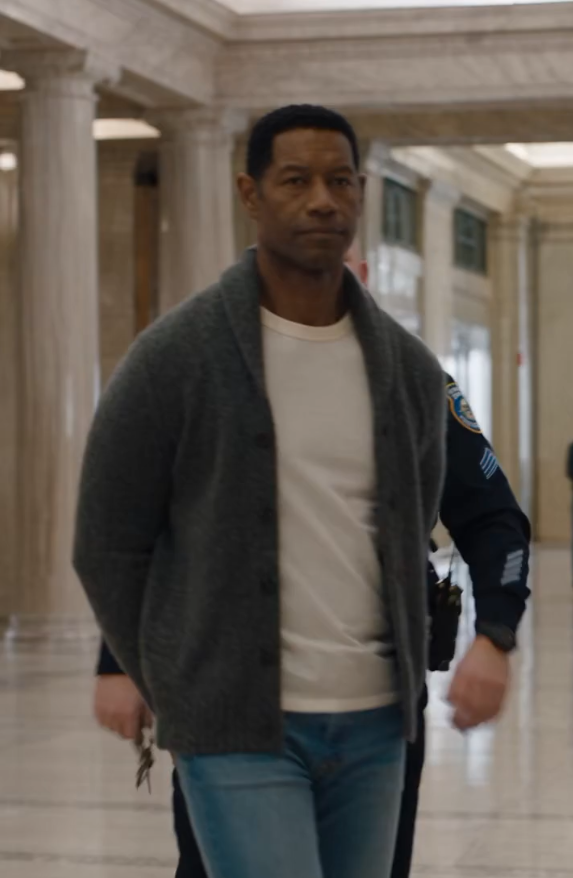
Miller arrived at four-thirty wearing civilian clothes.
Gray sweater.
Dark trousers.
Without the uniform he looked younger.
He sat across from my desk and kept his hands clasped.
“Mayor Harrison.”
“Toby.”
He looked slightly startled that I used his first name.
“You asked to talk.”
“Yes, sir.”
“Then talk.”
He swallowed.
“I should have stopped him.”
I said nothing.
“I knew he was wrong before he touched you.”
“How?”
“The comment.”
“The one downstairs.”
“Yes.”
“And when he told me the housing offices were across the street?”
Miller's face changed.
“I heard that too.”
“When he said ‘you people’?”
“Yes.”
“When he arrested me for trespassing?”
“Yes.”
I waited.
His hands tightened together.
“I kept thinking Chief Jenkins—”
“Officer Jenkins.”
“Right. Sorry.”
He rubbed one thumb across his knuckle.
“I kept thinking he had more experience. That maybe there was something I wasn't seeing.”
“Was there?”
“No.”
“Then why didn't you stop him?”
Miller looked at the floor.
“Because he was my field supervisor.”
“That isn't an answer.”
“It is.”
He looked up.
“It's just not a good one.”
That caught me.
He continued.
“Everybody knows what happens if you're the young officer who challenges a senior guy in front of civilians.”
“What happens?”
“You become the officer nobody wants as backup.”
“You think they would leave you unsupported?”
“I think people have a lot of ways to make you understand you've become a problem.”
“Did Jenkins ever do that to someone?”
Miller hesitated.
“I don't know.”
“You think he would.”
“Yes.”
I sat back.
“Why are you telling me this?”
“Because the investigation asked whether I thought you were dangerous.”
“And?”
“I said no.”
“That seems straightforward.”
“They asked when I decided that.”
“When did you?”
“Before you reached the metal detector.”
I studied him.
“How could you know that?”
“I couldn't.”
He looked uncomfortable.
“That was the point.”
I said nothing.
Miller took a breath.
“I realized afterward that Jenkins had already decided you were trouble before you did anything. And I had decided you probably weren't before you did anything. Neither one of us knew you.”
“That bothers you.”
“Yes.”
“Good.”
He looked surprised.
“It should bother you.”
I leaned forward.
“The goal is not to become an officer who makes better guesses about strangers.”